A proton pump inhibitor (PPI)
Rabeprazole
A proton pump inhibitor that lowers stomach acid to ease reflux and heal ulcers; it works best taken before food.
What is Rabeprazole?
Rabeprazole is a proton pump inhibitor (PPI) used to reduce the amount of acid the stomach makes. It is used for conditions such as acid reflux, heartburn, indigestion and stomach or gut ulcers, and it works best when taken before food. It is usually effective and well tolerated, though long-term use is reviewed because of possible effects on bone, magnesium and vitamin B12.
Education and reference only. This is a plain-language guide to Rabeprazole — it deliberately contains no doses. Doses depend on the person, the brand and the reason for treatment, and belong with your prescriber. Always check the BNF, the product labelling (SmPC) and follow medical advice.
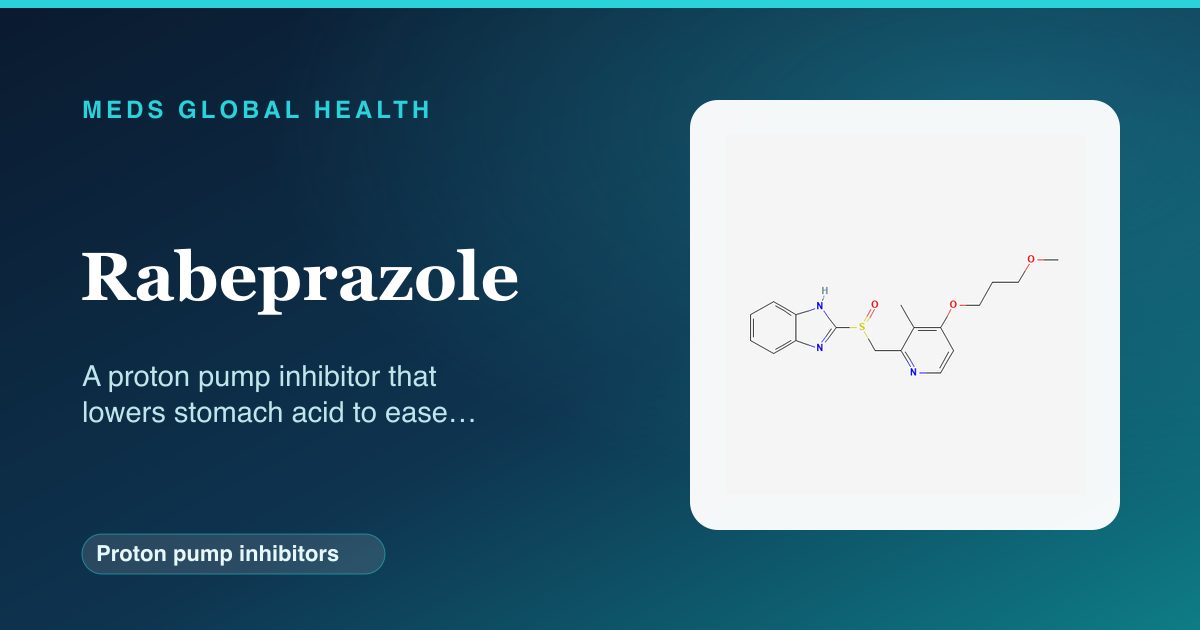
What it is
Rabeprazole is a proton pump inhibitor (PPI) used in the UK to lower the amount of acid produced by the stomach. By reducing acid, it eases the burning of acid reflux and heartburn, helps stomach and duodenal ulcers to heal, and protects the stomach lining when it has been irritated. It is taken regularly for the length of the prescribed course and is usually effective and well tolerated, though it is reviewed periodically rather than simply continued without thought, as there are some considerations with long-term use.
How it works
Rabeprazole switches off the 'proton pumps' in the cells lining the stomach — the final step that releases acid into the stomach. By blocking these pumps it markedly reduces how much acid is made, which lets inflamed tissue and ulcers heal and relieves the symptoms of too much acid, such as heartburn and reflux. Because the pumps are activated by eating, it works best when taken before food.
Company & origin
Originated / developed by: Originally developed by Eisai..
Rabeprazole is a proton pump inhibitor (PPI) used in the UK to reduce stomach acid in conditions such as acid reflux, heartburn and stomach ulcers.
What it treats
Conditions Rabeprazole is used for
Practical use
How to take Rabeprazole
General, dose-free guidance — always follow your prescriber's and the leaflet's specific instructions.
- Take it before food, usually in the morning, so it is working when the stomach makes acid.
- Swallow the tablet whole with a drink of water; do not crush or chew it.
- Take it regularly for the full course your prescriber recommends, even once symptoms settle.
- If you miss a dose, take it as soon as you remember unless it is nearly time for the next one — do not double up.
- After a long course, do not stop suddenly without advice, as acid can rebound; your prescriber may reduce it gradually.
- Seek medical advice for 'alarm' symptoms such as difficulty swallowing, weight loss, or signs of bleeding (black stools or vomiting blood).
Weighing it up
Advantages & disadvantages of Rabeprazole
Advantages
- It is effective at reducing stomach acid, easing reflux and heartburn and helping ulcers heal.
- It is generally well tolerated, with most people having few side effects.
- Once-daily dosing before food is simple and convenient.
Disadvantages
- Long-term use carries possible concerns such as bone thinning, low magnesium and reduced vitamin B12 absorption.
- Acid suppression can mask the symptoms of a more serious underlying problem, so 'alarm' symptoms still need checking.
- Stopping a long course suddenly can cause a temporary rebound in acid and return of symptoms.
Practical use
Good to know
Rabeprazole works best taken before food, usually in the morning, so the medicine is active when the stomach is making acid. It is taken regularly for the prescribed course rather than only when symptoms flare. With long-term use, prescribers consider possible effects such as a small increase in the risk of bone thinning, low magnesium and reduced absorption of vitamin B12, so it is reviewed periodically and used at the lowest effective amount. Stopping a long course suddenly can cause a temporary rebound in acid, so it may be reduced gradually. Importantly, 'alarm' symptoms such as difficulty swallowing, unintended weight loss, vomiting blood or black tarry stools should always be checked, as acid suppression can mask a more serious problem.
Who should not take it / use with caution
- Anyone who has had a serious allergic reaction to rabeprazole or another PPI.
- People with 'alarm' symptoms (such as difficulty swallowing, weight loss or signs of bleeding) should be assessed first rather than simply treated.
- Used with caution in people with significant liver problems, low magnesium, or osteoporosis, who may need closer review.
Monitoring
- Review of whether the medicine is still needed and at the lowest effective amount, especially with long-term use.
- Checking magnesium and, where relevant, vitamin B12 with prolonged treatment.
- Reviewing any new or persistent 'alarm' symptoms that may need further investigation.
Side effects
- Headache, and tummy upset such as wind, bloating, constipation or diarrhoea.
- Nausea and, sometimes, dizziness.
- Rarely, low magnesium with long-term use, which can cause tiredness, cramps or an irregular heartbeat.
- Rarely, reduced vitamin B12 absorption or a small increase in gut infections; very rarely, serious skin reactions (seek advice).
Key interactions
- It can reduce the absorption of some medicines that need acid to be taken up, and may affect how certain HIV medicines work.
- It can interact with some other medicines, so always tell your prescriber and pharmacist about everything you take.
- Long-term use may add to the effect of other medicines that lower magnesium, such as some water tablets (diuretics).
Available as: Tablets.
Answers
Rabeprazole: frequently asked questions
When is the best time to take rabeprazole?
It works best taken before food, usually in the morning, so the medicine is active when your stomach is producing acid. Swallow the tablet whole with water and take it regularly for the course your prescriber recommends.
Can I stop rabeprazole suddenly?
After a short course this is usually fine, but after a long course stopping suddenly can cause a temporary rebound in acid and return of symptoms. If you have taken it for a while, ask your prescriber, who may reduce it gradually.
Is it safe to take rabeprazole long term?
Many people take a PPI long term, but it is reviewed periodically because prolonged use is linked with possible effects on bone, magnesium and vitamin B12 absorption. The aim is to use the lowest effective amount for as long as it is genuinely needed.
Does rabeprazole interact with other medicines?
It can affect the absorption of some medicines and interact with others, including certain HIV treatments. Always tell your prescriber and pharmacist about all your medicines, including anything bought over the counter.
What symptoms should I get checked rather than just treat?
Difficulty swallowing, unintended weight loss, persistent vomiting, vomiting blood, or black tarry stools are 'alarm' symptoms that need medical assessment. Because acid suppression can mask a more serious problem, these should always be checked.
The wider class
About Proton pump inhibitors
Rabeprazole belongs to the proton pump inhibitors class. For how the class as a whole works, its shared safety principles and monitoring, see the full guide.
Browse by body system
Authoritative sources
- BNF
- NICE CKS
Building a medicines information resource?
We create evidence-led, dose-free drug and formulary references for teams.