A proton pump inhibitor (PPI)
Pantoprazole
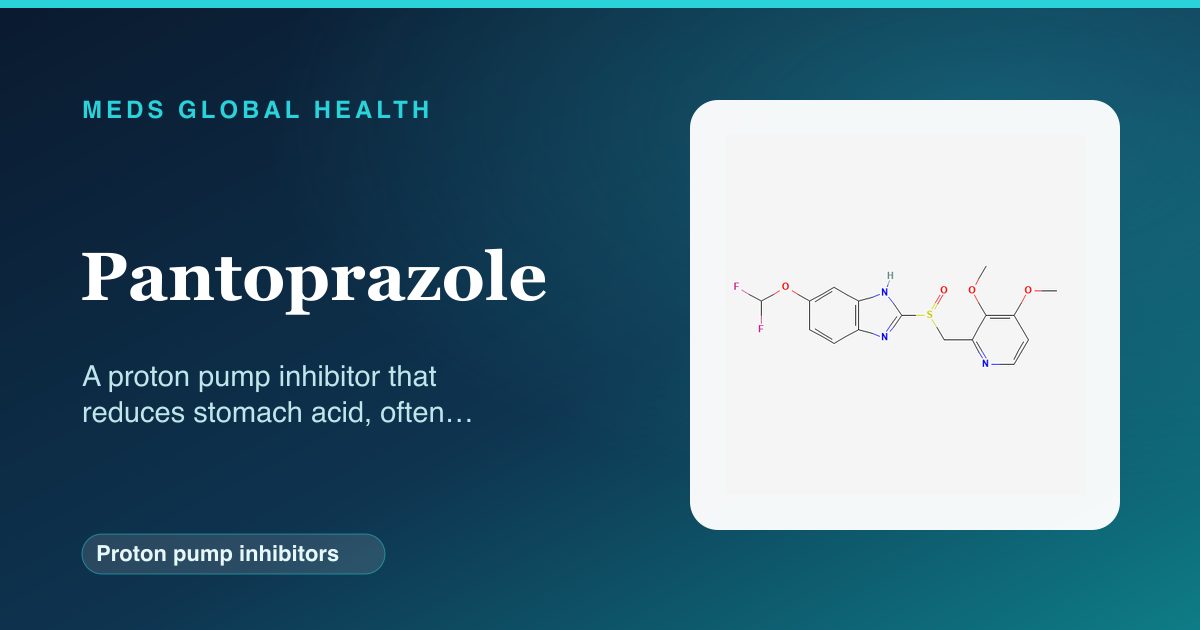
A proton pump inhibitor that reduces stomach acid, often preferred with clopidogrel because it has fewer drug interactions.
What is Pantoprazole?
Pantoprazole is a proton pump inhibitor (PPI) that strongly reduces the amount of acid the stomach makes. It is used for acid reflux and heartburn (GORD), to heal and prevent stomach and gut ulcers, and to protect the stomach from acid-related damage.
Education and reference only. This is a plain-language guide to Pantoprazole — it deliberately contains no doses. Doses depend on the person, the brand and the reason for treatment, and belong with your prescriber. Always check the BNF, the product labelling (SmPC) and follow medical advice.
What it is
Pantoprazole is a proton pump inhibitor (PPI), a medicine that strongly reduces the amount of acid the stomach makes. It is used for acid reflux and heartburn (GORD), to heal and prevent stomach and duodenal ulcers, and to protect the stomach lining when other medicines (such as anti-inflammatory painkillers) are likely to irritate it. A practical advantage of pantoprazole is that it has fewer drug interactions than some other PPIs, which is why it is often chosen for people taking clopidogrel. It is taken as a tablet, usually once a day.
How it works
The stomach lining contains tiny "pumps" (proton pumps) that release acid. Pantoprazole switches these pumps off, sharply cutting acid production. With less acid, an inflamed gullet or an ulcer can heal, reflux symptoms settle, and the stomach is better protected against irritation. Because it acts on the pumps themselves, the effect builds over a few days and lasts well beyond a single tablet.
Company & origin
Originated / developed by: Byk Gulden (later Altana/Nycomed, now Takeda).
Pantoprazole was discovered in the mid-1980s by the German firm Byk Gulden (later Altana Pharma, then Nycomed). It was first marketed in Germany in 1994; the originator lineage was eventually acquired by Takeda.
What it treats
Conditions Pantoprazole is used for
Practical use
How to take Pantoprazole
General, dose-free guidance — always follow your prescriber's and the leaflet's specific instructions.
- Take it before food, usually in the morning, swallowing the tablet whole with water.
- Take it regularly for the length of time advised, even if symptoms settle quickly.
- Do not crush or chew the tablet, as it has a special coating.
- Tell your doctor if you have ongoing diarrhoea, as this occasionally needs checking.
- Mention it before certain stomach tests, and review long-term use with your doctor or pharmacist periodically.
Weighing it up
Advantages & disadvantages of Pantoprazole
Advantages
- Very effective at controlling acid and relieving heartburn and reflux.
- Helps stomach and gut ulcers to heal and prevents them coming back.
- Taken once a day and generally well tolerated.
- Protects the stomach in people taking anti-inflammatory painkillers.
Disadvantages
- Long-term use is linked to lower magnesium and vitamin B12 levels and possibly weaker bones.
- Can slightly increase the risk of gut infections and certain pneumonias.
- May cause headache, wind, diarrhoea or constipation.
- Stopping suddenly after long use can cause a temporary rebound in acid.
- Should be reviewed regularly so it is not continued for longer than needed.
Practical use
Good to know
It is usually taken once a day, and works best taken before food — often before breakfast — so the acid pumps are switched off when a meal would normally stimulate them; swallow the tablets whole rather than crushing them. Many people only need a short course, while others take it longer term to keep symptoms or ulcers under control; the aim is the lowest effective use, reviewed from time to time. It is often the preferred PPI when stomach protection is needed alongside clopidogrel, because it does not blunt clopidogrel's effect the way omeprazole and esomeprazole can. With long-term use, watch for low magnesium or vitamin B12 over time, and a slightly higher chance of certain bone fractures and gut infections; stopping suddenly after long use can cause a temporary "rebound" of acid, so it is sometimes stepped down. Importantly, do not let it mask warning signs — unexplained weight loss, difficulty swallowing, or signs of bleeding (black stools, vomiting blood) need prompt assessment.
Who should not take it / use with caution
- People with a known allergy to pantoprazole or similar PPIs.
- Used with caution and review in people on long-term treatment, because of effects such as low magnesium or B12 over time.
- Anyone with "alarm" symptoms — unexplained weight loss, trouble swallowing, persistent vomiting, or signs of bleeding — who needs investigation rather than simply masking symptoms.
Monitoring
- Whether symptoms or an ulcer are settling
- Need for ongoing treatment (review and step down where possible)
- Magnesium and vitamin B12 with long-term use
Side effects
- Headache, diarrhoea or constipation, wind, or tummy discomfort.
- Feeling sick, dizziness, or a dry mouth.
- With long-term use, low magnesium or vitamin B12, an association with certain bone fractures, and a higher risk of some gut infections; rarely, an allergic reaction or, very rarely, a serious skin reaction.
Key interactions
- Unlike omeprazole and esomeprazole, pantoprazole has little effect on clopidogrel, which is why it is often the preferred PPI alongside it.
- By reducing stomach acid, it can change how some medicines are absorbed (for example certain antifungals and some HIV medicines).
- Care is taken with methotrexate (especially at higher intensity) and with some other medicines; share your full medicine list with your pharmacist.
Available as: Gastro-resistant tablets, designed to be swallowed whole. An intravenous form is used in hospital in some situations.
Answers
Pantoprazole: frequently asked questions
Why is pantoprazole preferred if I take clopidogrel?
Some PPIs, especially omeprazole and esomeprazole, can reduce how well clopidogrel works. Pantoprazole has much less of this effect, so it is often the PPI of choice when stomach protection is needed alongside clopidogrel. If you take both, your pharmacist can confirm your PPI is a suitable one.
When should I take pantoprazole?
It generally works best taken before food, often before breakfast, so the acid pumps are blocked when a meal would otherwise switch them on. Swallow the tablet whole. Follow the timing your prescriber or the leaflet advises, and try to take it at a consistent time each day.
Is it safe to take a PPI long-term?
Many people take PPIs safely for long periods, but long-term use is linked to issues such as low magnesium or vitamin B12, certain bone fractures and gut infections, so the aim is the lowest effective use with occasional review. Do not stop a long course abruptly, as acid can briefly "rebound"; ask about stepping down.
Can pantoprazole hide something serious?
It can ease symptoms so well that warning signs are missed. Unexplained weight loss, difficulty or pain on swallowing, persistent vomiting, or signs of bleeding (black stools, vomiting blood) should always be checked promptly rather than simply treated with a PPI.
What is the difference between pantoprazole and Protium?
They are the same medicine — pantoprazole is the generic (active-ingredient) name and Protium is a brand name. Generic pantoprazole contains the identical active ingredient.
The wider class
About Proton pump inhibitors
Pantoprazole belongs to the proton pump inhibitors class. For how the class as a whole works, its shared safety principles and monitoring, see the full guide.
Browse by body system
Authoritative sources
- BNF: Pantoprazole.
- electronic Medicines Compendium (SmPC): Pantoprazole (Protium).
- NICE CKS: Pantoprazole.
- NICE: Gastro-oesophageal reflux disease and dyspepsia.
Keep reading
Related articles
Building a medicines information resource?
We create evidence-led, dose-free drug and formulary references for teams.