A penicillin antibiotic for UTIs
Pivmecillinam
A penicillin antibiotic used in the UK mainly to treat lower urinary tract infections such as cystitis.
What is Pivmecillinam?
Pivmecillinam is a penicillin-type antibiotic used mainly to treat lower urinary tract infections (cystitis). It works by killing the bacteria that cause the infection, and it is one of the first-choice antibiotics recommended for cystitis in the UK. Like all antibiotics, it should be taken as a full course and is not suitable for people allergic to penicillin.
Education and reference only. This is a plain-language guide to Pivmecillinam — it deliberately contains no doses. Doses depend on the person, the brand and the reason for treatment, and belong with your prescriber. Always check the BNF, the product labelling (SmPC) and follow medical advice.
What it is
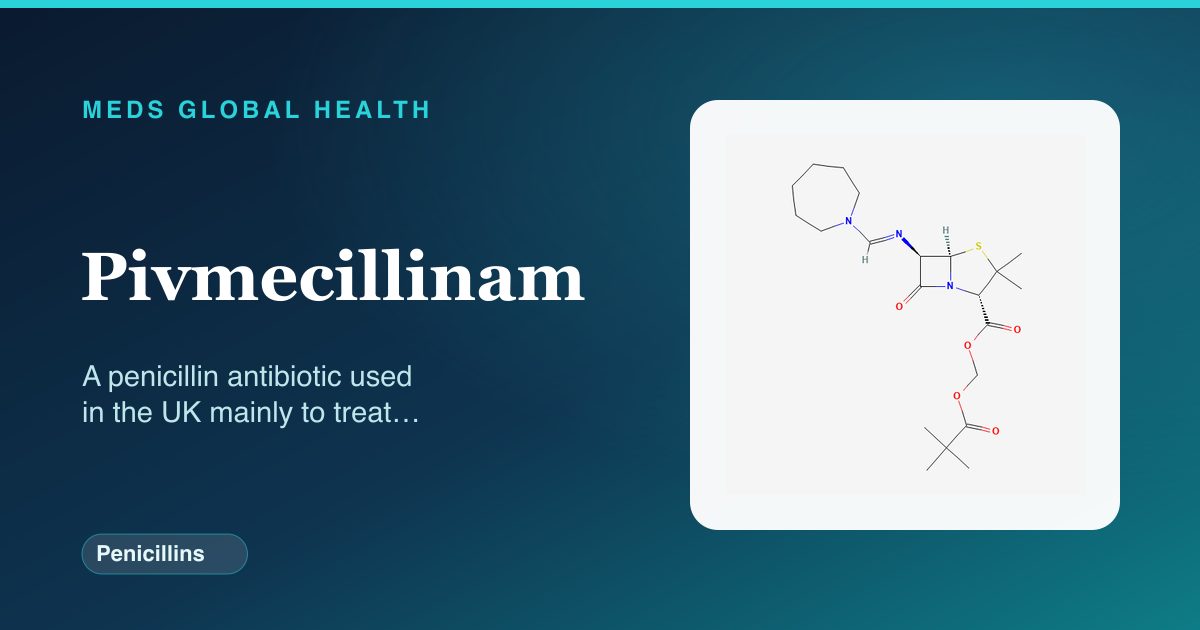
Pivmecillinam is an antibiotic in the penicillin family that is used in the UK to treat lower urinary tract infections, such as cystitis. Once taken, the body converts it into its active form, mecillinam, which concentrates in the urine and attacks the bacteria there. It is a recommended first-choice treatment for uncomplicated cystitis because it is effective against many of the common bacteria that cause these infections.
How it works
Pivmecillinam is a 'prodrug' that the body rapidly converts into mecillinam, the active antibiotic. Mecillinam interferes with the way bacteria build and maintain their cell walls. Without an intact cell wall the bacteria cannot survive, so the infection is cleared. Because it concentrates in the urine, it is well suited to treating bladder infections.
Company & origin
Originated / developed by: Originally developed by the Danish company Leo Pharma..
Pivmecillinam is a penicillin-type antibiotic developed in Scandinavia, where it has long been a common treatment for urinary tract infections. In the UK it is now a recommended first-choice option for lower urinary tract infections.
Practical use
How to take Pivmecillinam
General, dose-free guidance — always follow your prescriber's and the leaflet's specific instructions.
- Take it with food and a full glass of water to help absorption and reduce stomach upset.
- Space the doses evenly through the day, as advised on the label.
- Always complete the full course, even if your symptoms settle within a day or two.
- Keep drinking plenty of fluids while you are being treated for a urinary infection.
- If you miss a dose, take it when you remember unless it is nearly time for the next one — do not double up.
Weighing it up
Advantages & disadvantages of Pivmecillinam
Advantages
- It is a recommended first-choice treatment for uncomplicated cystitis in the UK.
- It concentrates in the urine, making it well suited to bladder infections.
- It tends to have less impact on bacterial resistance than some broader antibiotics.
Disadvantages
- It is mainly useful for lower urinary infections and is not a general-purpose antibiotic.
- It cannot be used by anyone with a penicillin allergy.
- Like all antibiotics, it can cause stomach upset and thrush.
Practical use
Good to know
Pivmecillinam is taken as a short course, and it is important to finish the whole course even if you feel better quickly, so that the infection is fully cleared and resistance is less likely. It should be taken with food and plenty of water to help it work and to reduce stomach upset. As it is a penicillin, it must not be taken by anyone with a penicillin allergy. If your symptoms do not improve, or get worse, contact your GP or pharmacist.
Who should not take it / use with caution
- Anyone who is allergic to penicillin or other beta-lactam antibiotics.
- People with certain rare metabolic conditions affecting carnitine, which a prescriber will check for.
- People with severe kidney problems, in whom it may not reach the urine effectively (a prescriber will advise).
Monitoring
- No routine blood tests are usually needed for a short course.
- Your symptoms should start to improve within a couple of days — seek advice if they do not.
Side effects
- Feeling sick, mild stomach upset or diarrhoea.
- Thrush (a fungal infection), as with other antibiotics.
- Allergic reactions such as a rash; rarely, a serious allergic reaction.
Key interactions
- Medicines that affect carnitine levels (a prescriber or pharmacist will check).
- Other antibiotics in some situations — tell your pharmacist what you are taking.
- Always mention any new or recent antibiotic courses to your prescriber.
Available as: tablets
Answers
Pivmecillinam: frequently asked questions
What is pivmecillinam used for?
It is used mainly to treat lower urinary tract infections, such as cystitis. It is one of the recommended first-choice antibiotics for uncomplicated cystitis in the UK.
Can I take it if I am allergic to penicillin?
No. Pivmecillinam is a penicillin-type antibiotic, so it should not be taken by anyone with a penicillin allergy. Tell your prescriber or pharmacist if you have ever reacted to penicillin.
Should I take it with food?
Yes. It is best taken with food and a full glass of water, which helps it work and reduces the chance of stomach upset.
Do I need to finish the whole course?
Yes. Complete the full course even if you feel better quickly, so the infection is fully cleared and resistance is less likely to develop.
What should I do if my symptoms do not improve?
If your symptoms do not start to improve within a couple of days, get worse, or you develop a fever or back pain, contact your GP or pharmacist for advice.
The wider class
About Penicillins
Pivmecillinam belongs to the penicillins class. For how the class as a whole works, its shared safety principles and monitoring, see the full guide.
Browse by body system
Authoritative sources
- BNF
- NICE CKS
Building a medicines information resource?
We create evidence-led, dose-free drug and formulary references for teams.