An anti-sickness (5-HT3) medicine
Granisetron
A powerful anti-sickness medicine used to prevent nausea and vomiting from chemotherapy, radiotherapy and surgery; the main nuisance effects are constipation and headache, and it needs care in people with heart-rhythm concerns.
What is Granisetron?
Granisetron is a 5-HT3 (serotonin) antagonist anti-sickness medicine used in the UK mainly to prevent and treat the nausea and vomiting caused by chemotherapy, radiotherapy and surgery. It blocks serotonin signals that trigger the vomiting reflex. It is usually very well tolerated, with constipation and headache being the most common side effects.
Education and reference only. This is a plain-language guide to Granisetron — it deliberately contains no doses. Doses depend on the person, the brand and the reason for treatment, and belong with your prescriber. Always check the BNF, the product labelling (SmPC) and follow medical advice.
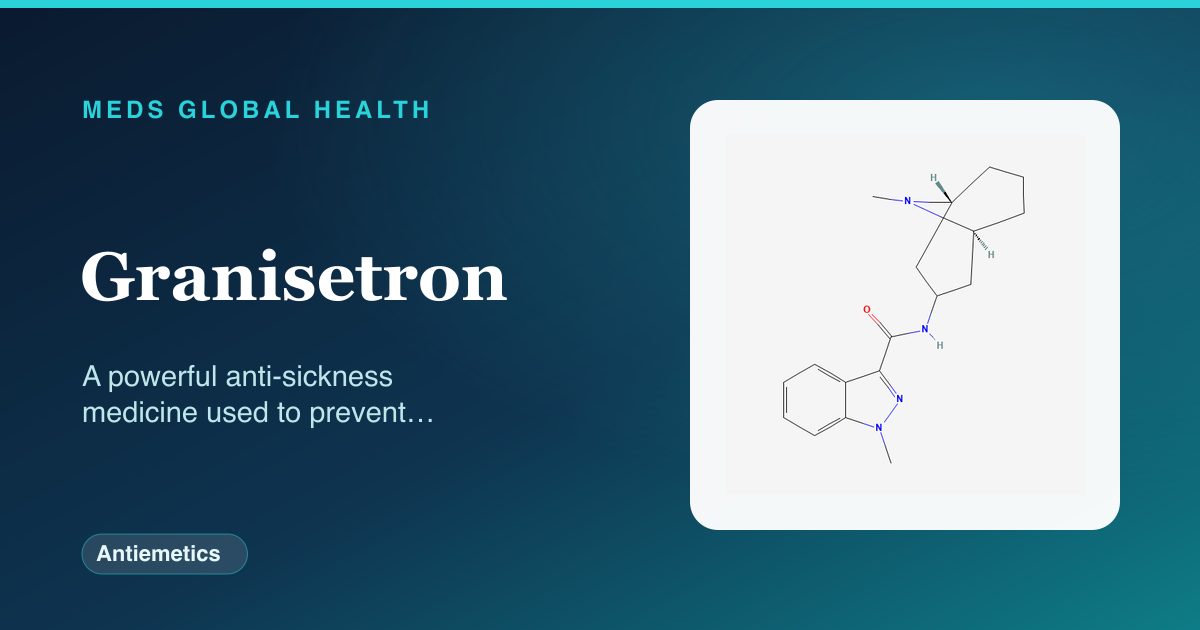
What it is
Granisetron is an antiemetic, meaning it prevents and treats sickness (nausea and being sick). It belongs to a group called 5-HT3 antagonists. These are particularly useful for the strong sickness that can come with cancer treatments such as chemotherapy and radiotherapy, and for sickness after an operation. It is usually given in hospital or as part of cancer care.
How it works
Chemotherapy, radiotherapy and surgery can cause the body to release a chemical called serotonin, which acts on 5-HT3 receptors in the gut and the part of the brain that controls vomiting. This triggers nausea and being sick. Granisetron blocks these 5-HT3 receptors, so the vomiting signal is interrupted and the sickness is prevented or reduced. Because it acts on this specific pathway, it is very effective for treatment-related sickness.
Company & origin
Originated / developed by: Available in the UK as branded Kytril and as generic granisetron..
Granisetron is a 5-HT3 receptor antagonist anti-sickness medicine used in UK hospitals and cancer care.
Practical use
How to take Granisetron
General, dose-free guidance — always follow your prescriber's and the leaflet's specific instructions.
- It may be given as a tablet by mouth, as an injection or drip, or as a skin patch, depending on the situation.
- For chemotherapy or surgery it is usually given before treatment to prevent sickness starting.
- Tablets are swallowed with water and can be taken with or without food.
- If you are sick shortly after a tablet, tell your team rather than simply taking another.
- It is given as a course around your treatment rather than continuously long term.
Weighing it up
Advantages & disadvantages of Granisetron
Advantages
- Very effective at preventing sickness from chemotherapy, radiotherapy and surgery.
- Generally well tolerated, with few troublesome side effects.
- Available in several forms, including a patch for longer cover.
- Can be combined with other anti-sickness medicines for stronger protection.
Disadvantages
- Commonly causes constipation.
- Can cause headache.
- May affect the heart's rhythm (QT interval), needing caution in some people.
- Usually a hospital or specialist medicine rather than something to use at home routinely.
Practical use
Good to know
Granisetron is often given before chemotherapy or surgery to stop sickness before it starts, sometimes alongside a steroid for added effect. Constipation is a common side effect, so it helps to keep up fluids and fibre. Like other medicines in its group, it can affect the heart's rhythm (the QT interval), so it is used with care in people with heart problems or low blood salts.
Who should not take it / use with caution
- People who have had an allergic reaction to granisetron or similar 5-HT3 medicines.
- People with a known heart-rhythm problem affecting the QT interval, without specialist advice.
- People with very low blood levels of potassium or magnesium until these are corrected.
Monitoring
- Heart rhythm (ECG) in people at risk of QT problems.
- Blood salts such as potassium and magnesium where relevant.
- Whether constipation develops and needs managing.
Side effects
- Constipation.
- Headache.
- Tiredness or weakness.
- Less commonly, changes in heart rhythm.
- Rarely, a serious allergic reaction.
Key interactions
- Other medicines that can affect the heart's QT rhythm.
- Other serotonin medicines, which together can rarely cause serotonin syndrome.
- Certain medicines that affect how granisetron is broken down by the liver.
Available as: Tablets by mouth, injection or infusion, and a skin patch.
Answers
Granisetron: frequently asked questions
What is granisetron used for?
It is used to prevent and treat the nausea and vomiting caused by chemotherapy, radiotherapy and surgery. It is one of the most effective anti-sickness medicines for these situations.
Does granisetron cause constipation?
Yes, constipation is one of the most common side effects. Keeping up fluids and fibre, and telling your team if it becomes troublesome, can help.
How is granisetron given?
It can be given as a tablet, as an injection or drip, or as a skin patch, depending on the treatment you are having.
Is granisetron safe for the heart?
For most people it is well tolerated, but it can affect the heart's rhythm (the QT interval), so it is used with care in people with heart problems or low blood salts.
When is granisetron taken before chemotherapy?
It is usually given shortly before chemotherapy or surgery so that it can prevent sickness before it starts, sometimes alongside a steroid.
The wider class
About Antiemetics
Granisetron belongs to the antiemetics class. For how the class as a whole works, its shared safety principles and monitoring, see the full guide.
Browse by body system
Authoritative sources
- BNF
- NICE CKS
Building a medicines information resource?
We create evidence-led, dose-free drug and formulary references for teams.