A cannabis-related anti-sickness medicine
Nabilone
A man-made cannabis-related medicine for chemotherapy sickness when standard anti-sickness drugs have not worked.
What is Nabilone?
Nabilone is a man-made medicine related to cannabis, used to control nausea and vomiting caused by chemotherapy when the usual anti-sickness medicines have not worked well enough. It acts on the same system in the body that cannabis does. Because of this, it can cause drowsiness, dizziness and changes in mood or perception, so it is started carefully and you should not drive while affected. It is a controlled drug, so it is prescribed and supplied under stricter rules than most medicines.
Education and reference only. This is a plain-language guide to Nabilone — it deliberately contains no doses. Doses depend on the person, the brand and the reason for treatment, and belong with your prescriber. Always check the BNF, the product labelling (SmPC) and follow medical advice.
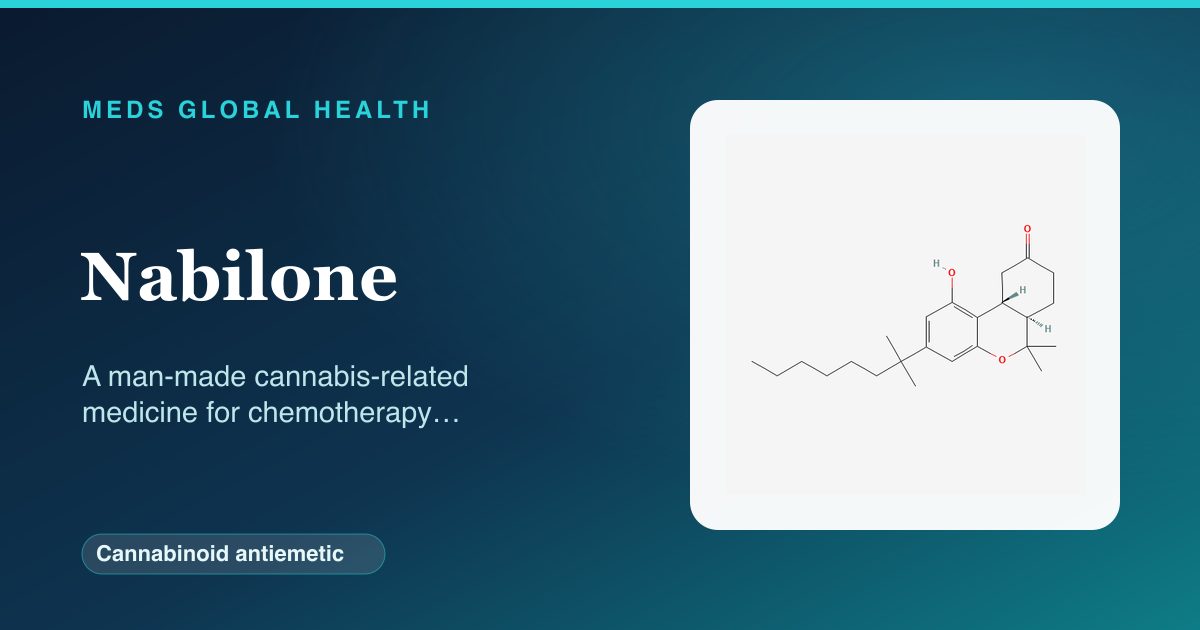
What it is
Nabilone is a synthetic (man-made) cannabinoid, a medicine related to the active substances in cannabis. It is used to prevent and treat the nausea and vomiting that chemotherapy can cause, usually when standard anti-sickness medicines have not given enough relief. It is taken as a capsule by mouth, often around the time of chemotherapy. Because of how it works, it is a controlled drug and is prescribed and dispensed under stricter rules.
How it works
Nabilone acts on cannabinoid receptors in the brain, part of the body's own cannabinoid system, including areas that influence nausea and vomiting. By acting on this system, it can calm the sickness triggered by chemotherapy. The same action on the brain explains its other effects, such as drowsiness, dizziness, a dry mouth and changes in mood, thinking or perception. It is generally reserved for when more usual anti-sickness medicines have not worked well enough.
Company & origin
A man-made cannabinoid used in the UK as an anti-sickness medicine for chemotherapy when standard treatments have not worked.
Practical use
How to take Nabilone
General, dose-free guidance — always follow your prescriber's and the leaflet's specific instructions.
- Take it as a capsule exactly as prescribed, often starting around the time of chemotherapy.
- Take the first dose when you can rest, as drowsiness and dizziness are common at the start.
- Do not drive or operate machinery while you are affected, and avoid alcohol and other sedatives.
- Tell your team about any history of mental health problems, as it can sometimes worsen them.
- Report distressing effects such as confusion, low mood, anxiety or frightening thoughts promptly.
Weighing it up
Advantages & disadvantages of Nabilone
Advantages
- Can control chemotherapy sickness when standard anti-sickness medicines have not worked well enough.
- Taken as a simple capsule by mouth.
- Offers another option for difficult, hard-to-treat nausea and vomiting.
Disadvantages
- Commonly causes drowsiness, dizziness and changes in mood, thinking or perception.
- Can occasionally cause confusion, low mood or distressing mental effects, especially in those prone to them.
- Being a controlled drug, it involves stricter prescribing and supply rules.
Practical use
Good to know
Nabilone is usually a second-line choice, used when standard anti-sickness medicines have not controlled chemotherapy sickness well enough. Because it is cannabis-related and acts on the brain, mind-altering effects are part of its profile: drowsiness, dizziness, a feeling of being 'high' or detached, low mood, anxiety or, occasionally, confusion or disturbing thoughts. For this reason it is started carefully, often with the first dose taken when you can rest, and you should not drive or operate machinery while affected. Alcohol and other sedating medicines add to drowsiness. It is a controlled drug, so there are extra rules around prescribing and supply. Tell your team about any mental health conditions, as it can sometimes make these worse, and report any frightening or distressing mental effects promptly.
Who should not take it / use with caution
- People with serious mental health conditions such as psychosis should generally avoid it, as it can make them worse.
- Used with caution in those with mood or anxiety problems, heart disease or a history of substance misuse.
- Care is needed in older people and anyone particularly sensitive to its mind-altering effects.
Monitoring
- Checking how well it controls nausea and vomiting and whether it is tolerated.
- Watching for mental effects such as low mood, anxiety, confusion or distressing thoughts.
- Reviewing drowsiness, dizziness and heart rate, particularly when starting.
Side effects
- Drowsiness, dizziness, dry mouth and a feeling of being 'high' or detached are common.
- Mood changes, anxiety, low mood, headache or a faster heartbeat in some people.
- Less often, confusion, disturbing thoughts or hallucinations, which should be reported.
Key interactions
- Alcohol and other sedating medicines, such as some painkillers, sleeping tablets and antihistamines, add to drowsiness.
- Medicines that affect mood or the mind may add to its mental effects.
- It may add to the effects of medicines that speed or slow the heart.
Available as: Capsules taken by mouth.
Answers
Nabilone: frequently asked questions
Is nabilone the same as cannabis?
It is a man-made medicine related to cannabis that acts on the same system in the body, but it is a regulated medicine used for chemotherapy sickness, not recreational cannabis.
Why has it been chosen for me?
It is usually offered when standard anti-sickness medicines have not controlled your chemotherapy sickness well enough.
Will it affect my mind?
It can cause drowsiness, dizziness and changes in mood, thinking or perception; tell your team if these are distressing, and do not drive while affected.
Can I drive while taking it?
No, not while you feel drowsy, dizzy or otherwise affected, and you should avoid alcohol and other sedating medicines.
Why are there extra rules around getting it?
It is a controlled drug, so prescribing and supplying it follow stricter rules than for most medicines.
The wider class
About Cannabinoid antiemetic
Nabilone belongs to the cannabinoid antiemetic class. For how the class as a whole works, its shared safety principles and monitoring, see the full guide.
Browse by body system
Authoritative sources
- BNF
- NICE CKS
Building a medicines information resource?
We create evidence-led, dose-free drug and formulary references for teams.