A dopamine agonist for high prolactin
Quinagolide
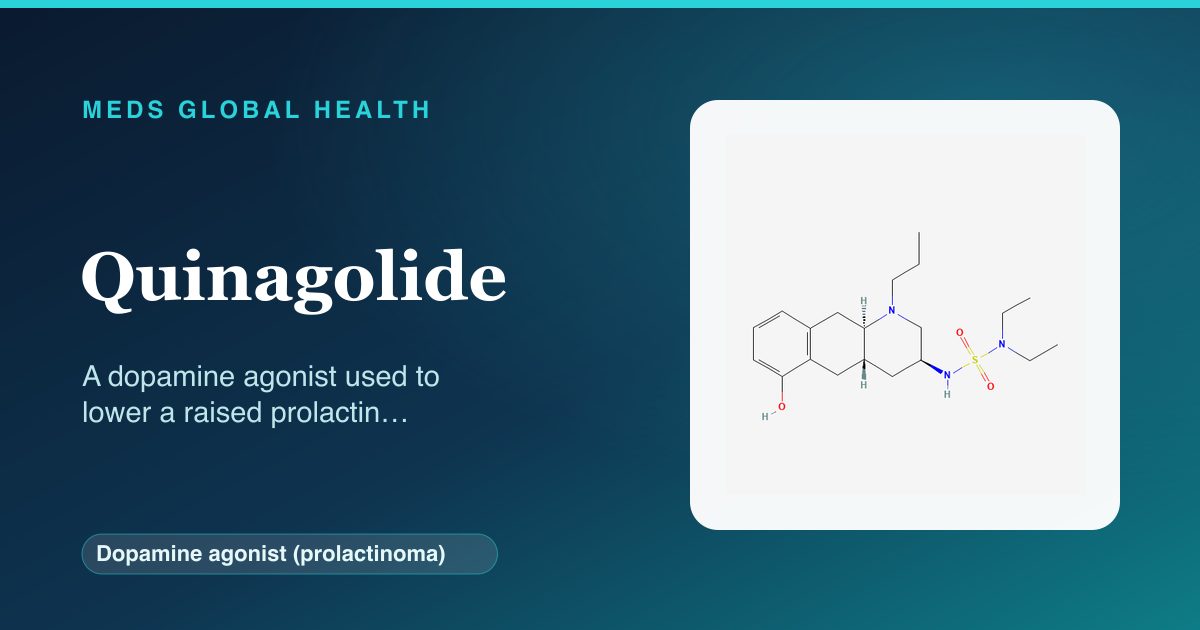
A dopamine agonist used to lower a raised prolactin hormone, for example from a prolactinoma.
What is Quinagolide?
Quinagolide is a medicine that lowers a high level of the hormone prolactin in the blood. Too much prolactin, often from a small benign pituitary growth called a prolactinoma, can cause missed periods, milk-like discharge from the breasts, reduced fertility and low sex drive. Quinagolide acts like the brain chemical dopamine, which naturally keeps prolactin in check, so it brings prolactin down, can shrink the growth and often restores periods and fertility. It is a non-ergot type, taken once a day at bedtime with food, and is sold as Norprolac.
Education and reference only. This is a plain-language guide to Quinagolide — it deliberately contains no doses. Doses depend on the person, the brand and the reason for treatment, and belong with your prescriber. Always check the BNF, the product labelling (SmPC) and follow medical advice.
What it is
Quinagolide is a dopamine agonist, meaning it mimics dopamine, the brain chemical that normally tells the pituitary gland to make less prolactin. It is used when prolactin is too high, most often because of a prolactinoma, a small non-cancerous growth in the pituitary gland. High prolactin can stop periods, cause breast milk production when not breastfeeding, lower fertility and reduce sex drive. Quinagolide is a 'non-ergot' dopamine agonist, a slightly different family from the older ergot-derived ones, and is taken by mouth once a day. It is sold under the brand name Norprolac.
How it works
Prolactin is normally kept in check by dopamine released in the brain; when this control is lost, or a prolactinoma over-produces the hormone, prolactin rises and causes symptoms. Quinagolide acts on the same dopamine receptors, switching the pituitary gland back towards making less prolactin. As prolactin falls, periods and fertility often return and breast discharge settles, and over time a prolactinoma can shrink. Because it is taken once daily, levels are kept steadily under control.
Company & origin
A non-ergot dopamine agonist used in the UK to lower a high prolactin hormone level; sold as Norprolac.
Practical use
How to take Quinagolide
General, dose-free guidance — always follow your prescriber's and the leaflet's specific instructions.
- Take it once a day at bedtime, with food or a snack, which helps reduce nausea and dizziness.
- Your prescriber will usually start you on a low strength and increase it gradually to help you settle in.
- Stand up slowly when you start it, as it can lower your blood pressure and make you feel light-headed.
- Use reliable contraception if you do not wish to become pregnant, as fertility can return quickly; if you do want to conceive, discuss the plan with your specialist.
- Do not stop it suddenly without advice, as prolactin can rise again; tell your prescriber if you might be pregnant.
Weighing it up
Advantages & disadvantages of Quinagolide
Advantages
- Effectively lowers a high prolactin level and can shrink a prolactinoma.
- Often restores periods and fertility and eases breast discharge and low sex drive.
- A non-ergot type taken just once a day, without the heart-valve concern of older ergot agonists.
Disadvantages
- Can cause nausea, dizziness, light-headedness on standing and tiredness, especially at first.
- Fertility can return before periods are regular, so contraception needs careful thought.
- Like other dopamine medicines, it can rarely trigger impulsive urges such as gambling.
Practical use
Good to know
Quinagolide is usually started at a low strength and built up slowly to reduce side effects, and it is best taken at bedtime with food, as this lessens nausea and dizziness. It is a 'non-ergot' dopamine agonist, which means it does not carry the heart-valve concern linked to older ergot types such as cabergoline or bromocriptine at high doses. A key point is that it can restore fertility quite quickly, sometimes before periods become regular again, so contraception advice is important if pregnancy is not wanted; equally, if pregnancy is the goal, the plan is usually discussed with a specialist. Dizziness on standing and sleepiness can occur, especially at first, so care is needed with driving. As with other dopamine medicines, impulsive urges such as gambling or excessive shopping can rarely develop and should be reported.
Who should not take it / use with caution
- It is used with caution in people with serious liver or kidney problems.
- People with certain psychiatric illnesses or a history of impulse-control problems need careful assessment.
- It is generally avoided in pregnancy unless a specialist advises continuing it.
Monitoring
- Blood tests to check the prolactin level falls and stays controlled.
- Scans of the pituitary gland to see whether a prolactinoma is shrinking, as advised.
- Reviewing periods, fertility, mood and any impulsive behaviour, with family encouraged to report changes.
Side effects
- Nausea, vomiting, dizziness and tiredness, mainly when starting or increasing it.
- Light-headedness or fainting on standing because of lowered blood pressure, and headache.
- Less commonly, low mood, sleep problems, blocked nose and rarely impulsive urges such as gambling or shopping.
Key interactions
- Alcohol can worsen its side effects and reduce how well it is tolerated.
- Medicines that block dopamine, such as some antipsychotics and anti-sickness drugs, can oppose its effect and raise prolactin.
- Other medicines that lower blood pressure can add to dizziness on standing.
Available as: Tablets taken by mouth, usually once a day at bedtime.
Answers
Quinagolide: frequently asked questions
What is quinagolide used for?
It lowers a high level of the hormone prolactin, often caused by a prolactinoma, which can cause missed periods, breast discharge, reduced fertility and low sex drive.
Why should I take it at bedtime with food?
Taking it at night with food helps reduce nausea and dizziness, which are most likely when you first start or increase it.
Can it help me get pregnant?
Yes, by lowering prolactin it often restores fertility, sometimes quite quickly; if you want to conceive, plan it with your specialist, and use contraception if you do not.
Is it linked to heart-valve problems like some other dopamine agonists?
No. Quinagolide is a non-ergot dopamine agonist and does not carry the heart-valve concern linked to older ergot types at high doses.
What should I do if I notice unusual urges such as gambling?
Tell your prescriber, as dopamine medicines can rarely trigger impulsive behaviour, which usually settles when the medicine is reviewed.
The wider class
About Dopamine agonist (prolactinoma)
Quinagolide belongs to the dopamine agonist (prolactinoma) class. For how the class as a whole works, its shared safety principles and monitoring, see the full guide.
Browse by body system
Authoritative sources
- BNF
- NICE CKS
Building a medicines information resource?
We create evidence-led, dose-free drug and formulary references for teams.