A short-acting benzodiazepine for anxiety and panic
Alprazolam
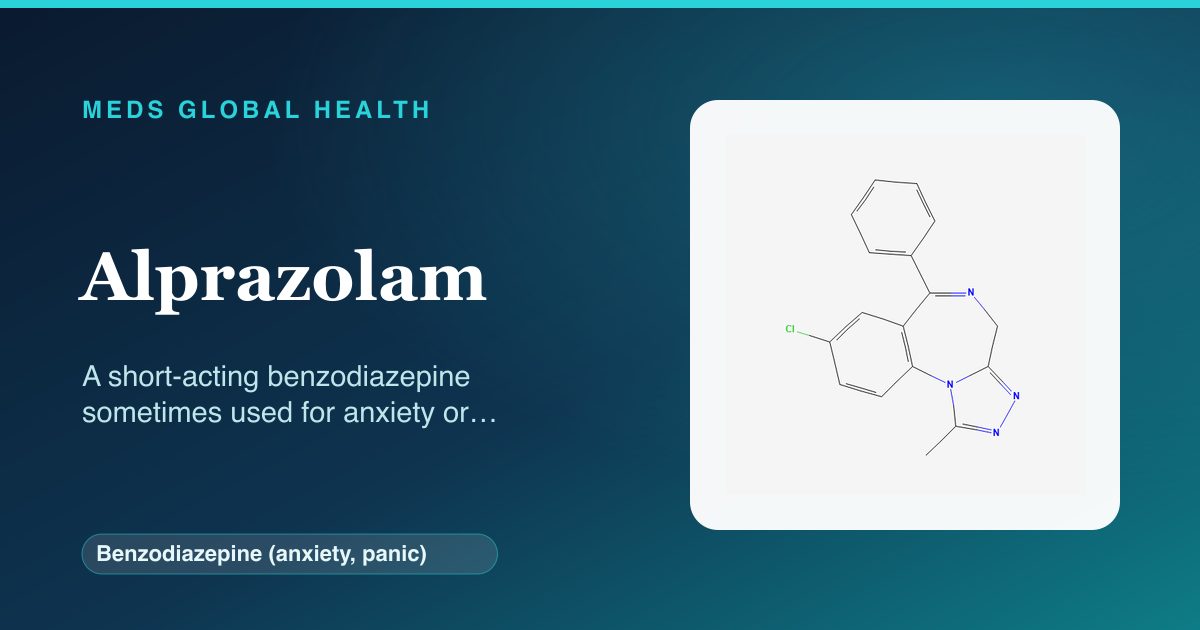
A short-acting benzodiazepine sometimes used for anxiety or panic, but not a first-line UK treatment because of dependence and sedation.
What is Alprazolam?
Alprazolam is a short-acting benzodiazepine that calms the nervous system and is sometimes used for severe anxiety or panic. In the UK it is not a first-line treatment and is a controlled drug, because it can cause dependence and withdrawal even after a short time, makes you drowsy, and is dangerous when combined with opioids or alcohol. It is usually meant only for short-term use. It should never be stopped suddenly after regular use, as withdrawal can be severe, and it must not be mixed with alcohol or strong painkillers.
Education and reference only. This is a plain-language guide to Alprazolam — it deliberately contains no doses. Doses depend on the person, the brand and the reason for treatment, and belong with your prescriber. Always check the BNF, the product labelling (SmPC) and follow medical advice.
What it is
Alprazolam is a benzodiazepine, a group of medicines that calm the brain and nervous system. It is short-acting and is sometimes used for anxiety or panic attacks, although in the UK it is not a usual first choice and is a controlled drug because of its potential for misuse and dependence. UK guidance prefers other treatments, such as talking therapies and certain antidepressants, for ongoing anxiety, reserving benzodiazepines for short-term or crisis use. It is taken by mouth as tablets, normally for as short a time as possible under careful supervision.
How it works
Alprazolam boosts the effect of a natural calming chemical in the brain called GABA, which dampens down nerve activity. This reduces feelings of anxiety, tension and panic and produces a calming, sedating effect. Because it is short-acting, its effects come on relatively quickly and wear off sooner than some other benzodiazepines, which is part of why it can be habit-forming and why withdrawal symptoms can appear between doses. The same brain-slowing effect is why it causes drowsiness and is so dangerous when combined with other things that slow the brain, such as opioids and alcohol.
Company & origin
A short-acting benzodiazepine that is not first-line in the UK and is a controlled drug, sometimes used for severe anxiety or panic.
What it treats
Conditions Alprazolam is used for
Practical use
How to take Alprazolam
General, dose-free guidance — always follow your prescriber's and the leaflet's specific instructions.
- Take it exactly as prescribed, usually for as short a time as possible, and never increase the dose yourself.
- Do not drink alcohol or take opioid painkillers with it, as the combination can dangerously slow breathing.
- Do not stop it suddenly after regular use; the dose must be reduced gradually to avoid severe withdrawal.
- Be cautious about driving or operating machinery, as it causes drowsiness and slows reactions.
- Keep it secure and never share it, as it is a controlled drug with potential for misuse.
Weighing it up
Advantages & disadvantages of Alprazolam
Advantages
- Can quickly relieve severe anxiety or panic when used for a short time.
- Taken by mouth as a simple tablet.
- May be useful in a crisis or for a clearly limited period under supervision.
Disadvantages
- Can cause dependence and withdrawal, sometimes within weeks, so it is not first-line in the UK.
- Causes drowsiness and impairs concentration, reactions and driving.
- Dangerous, and potentially fatal, when combined with opioids or alcohol.
Practical use
Good to know
The most important thing to understand about alprazolam is that it can lead to dependence and withdrawal, sometimes within just a few weeks, which is why it is meant for short-term use and is not a first-line UK treatment. It makes you drowsy and can affect concentration, reaction times and driving. A crucial safety point is that combining it with opioids (strong painkillers) or alcohol can dangerously slow breathing and can be fatal. It should never be stopped abruptly after regular use, as withdrawal can cause severe anxiety, sleep problems and, rarely, seizures; the dose is reduced gradually under medical guidance. It is a controlled drug, so it must be kept securely and never shared.
Who should not take it / use with caution
- People with severe breathing problems or sleep apnoea, as it can further slow breathing.
- People with a history of substance misuse or dependence, except in special circumstances.
- People with severe liver problems, and it is avoided in pregnancy and breastfeeding unless clearly needed.
- People who have had a serious allergic reaction to benzodiazepines should not take it.
Monitoring
- Reviewing how long it is being used, to keep the course as short as possible.
- Watching for signs of dependence, excessive drowsiness or low mood.
- Planning a gradual dose reduction when stopping rather than stopping suddenly.
Side effects
- Drowsiness, tiredness and reduced concentration.
- Unsteadiness, dizziness or memory problems.
- With longer use, tolerance, dependence and withdrawal symptoms between or after doses.
- Rarely, paradoxical effects such as agitation or, when combined with other sedatives, dangerously slowed breathing.
Key interactions
- Opioid painkillers greatly increase the risk of dangerously slowed breathing and sedation.
- Alcohol and other sedating medicines add to its drowsiness and breathing effects.
- Some medicines that affect the liver can raise or lower its levels, so a full medicines list is important.
Available as: Tablets taken by mouth.
Answers
Alprazolam: frequently asked questions
What is alprazolam used for?
It is a short-acting benzodiazepine sometimes used for severe anxiety or panic, though it is not a first-line treatment in the UK.
Why isn't it recommended in the UK?
It can cause dependence and withdrawal even after a short time and carries a risk of misuse, so UK guidance prefers other treatments and reserves it for short-term use.
Can I drink alcohol while taking it?
No. Combining it with alcohol, or with opioid painkillers, can dangerously slow your breathing and can be fatal.
Can I stop it suddenly?
No. After regular use it should be reduced gradually under medical guidance, as stopping suddenly can cause severe withdrawal including, rarely, seizures.
Is it a controlled drug?
Yes. It is a controlled drug because of its potential for dependence and misuse, so it must be kept securely and never shared.
The wider class
About Benzodiazepine (anxiety, panic)
Alprazolam belongs to the benzodiazepine (anxiety, panic) class. For how the class as a whole works, its shared safety principles and monitoring, see the full guide.
Browse by body system
Authoritative sources
- BNF
- NICE CKS
Building a medicines information resource?
We create evidence-led, dose-free drug and formulary references for teams.