A short-acting benzodiazepine sleeping tablet
Triazolam
A short-acting benzodiazepine used for the short-term treatment of severe insomnia.
What is Triazolam?
Triazolam is a short-acting benzodiazepine used for the short-term treatment of severe insomnia (difficulty sleeping). It is taken by mouth at bedtime. Because it can cause dependence and withdrawal, it is used only briefly and is a controlled drug. It can cause next-day drowsiness and memory effects, and it is dangerous when combined with alcohol or opioids, which can dangerously slow breathing. It interacts with many medicines that affect a liver pathway called CYP3A. It is for short-term use only, under medical supervision.
Education and reference only. This is a plain-language guide to Triazolam — it deliberately contains no doses. Doses depend on the person, the brand and the reason for treatment, and belong with your prescriber. Always check the BNF, the product labelling (SmPC) and follow medical advice.
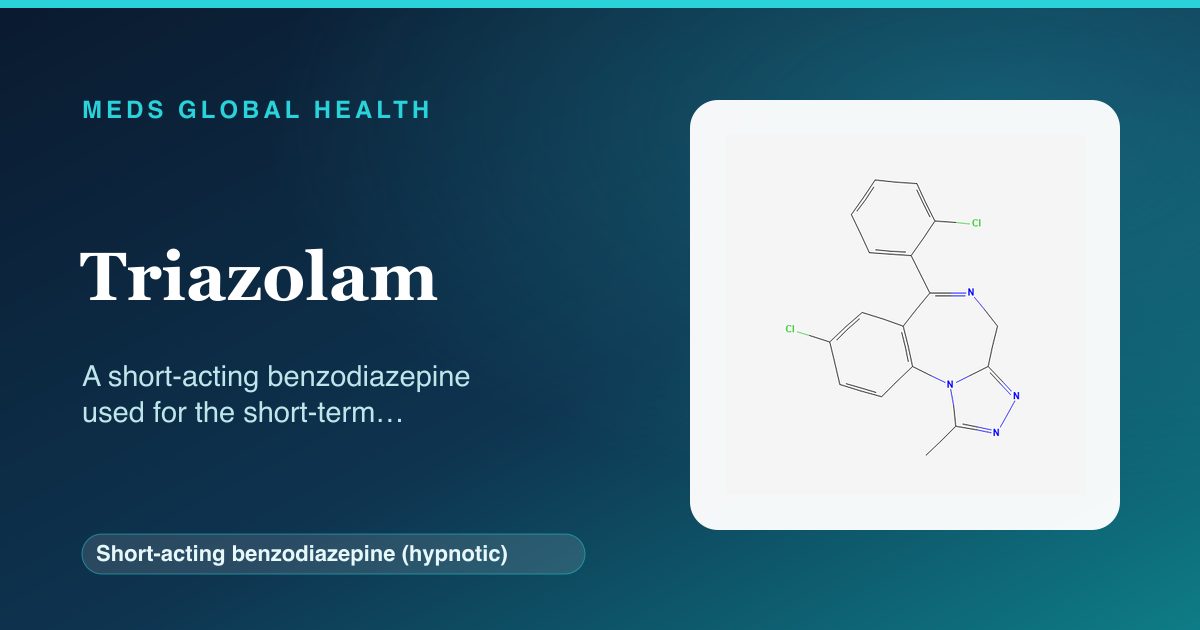
What it is
Triazolam is one of the benzodiazepine medicines, and it is short-acting, meaning it works and wears off relatively quickly. It is used for the short-term treatment of severe insomnia, where difficulty getting to sleep is causing significant distress. It is taken by mouth as a tablet at bedtime. Because benzodiazepines can cause dependence and other problems with longer use, triazolam is intended only for brief courses and is a controlled drug. It is prescribed under medical supervision, with the aim of using it for as short a time as possible.
How it works
Triazolam works by boosting the effect of a calming chemical messenger in the brain called GABA, which dampens down nerve activity. This produces a sedative, sleep-promoting effect that helps people fall asleep. Because it is short-acting, it is more focused on getting to sleep than on the whole night, and it tends to leave the body relatively quickly. The same calming action on the brain is also why it can cause drowsiness, memory effects and, with regular use, dependence, and why it is dangerous when combined with other things that slow the brain and breathing.
Company & origin
A short-acting benzodiazepine used for the short-term treatment of severe insomnia; a controlled drug, used only briefly.
What it treats
Conditions Triazolam is used for
Practical use
How to take Triazolam
General, dose-free guidance — always follow your prescriber's and the leaflet's specific instructions.
- Take it by mouth at bedtime exactly as prescribed, and only for the short course you are given.
- Do not drink alcohol or take opioid painkillers with it, as together they can dangerously slow your breathing.
- Do not drive or operate machinery if you feel drowsy, as next-day drowsiness can occur.
- Do not stop it suddenly after regular use; ask your prescriber how to come off it safely.
- Tell your prescriber about all your other medicines, as many interact with it.
Weighing it up
Advantages & disadvantages of Triazolam
Advantages
- Can help with falling asleep in short-term, severe insomnia.
- Short-acting, so it tends to leave the body relatively quickly.
- Taken as a simple tablet at bedtime.
Disadvantages
- Can cause dependence and withdrawal, so it is for short-term use only.
- Causes next-day drowsiness and memory effects.
- Dangerous with alcohol or opioids and interacts with many CYP3A medicines.
Practical use
Good to know
The most important points with triazolam are about dependence and safe use. Even over fairly short periods the body can become used to it, so stopping suddenly can cause withdrawal symptoms such as rebound sleeplessness, anxiety and, rarely, more serious effects; this is why it is used only short-term and stopped carefully. It can cause next-day drowsiness that affects driving and concentration, and it can cause memory problems, including not remembering events after taking it. A crucial safety point is that combining it with alcohol or with opioid painkillers can dangerously slow breathing and cause excessive sedation, which can be life-threatening. It interacts with many medicines that affect a liver pathway called CYP3A, which can greatly increase its effect. It is a controlled drug and should only be taken as prescribed, for as short a time as possible.
Who should not take it / use with caution
- People who have had a serious allergic reaction to benzodiazepines should not take it.
- It is avoided in people with severe breathing problems or severe sleep apnoea, as it can worsen breathing.
- It is generally avoided in people with a history of dependence on alcohol or other substances.
- It is avoided in pregnancy and breastfeeding except on specialist advice, and used with caution in older people.
Monitoring
- Reviewing whether it is still needed, keeping any course as short as possible.
- Watching for signs of dependence, daytime drowsiness or memory problems.
- Planning how to stop it safely after regular use to avoid withdrawal.
Side effects
- Next-day drowsiness, dizziness or unsteadiness.
- Memory problems, including not remembering events after taking it.
- Dependence and withdrawal symptoms, such as rebound sleeplessness and anxiety, especially after regular use.
- Rarely, confusion or unusual behaviour, particularly in older people.
Key interactions
- Alcohol and opioid painkillers add to its sedating effect and can dangerously slow breathing.
- Medicines that block the liver pathway CYP3A (such as some antifungals, certain antibiotics and grapefruit juice) can greatly increase its effect.
- Other sedating medicines add to drowsiness, so tell your prescriber everything you take.
Available as: Tablets taken by mouth.
Answers
Triazolam: frequently asked questions
What is triazolam used for?
It is a short-acting benzodiazepine used for the short-term treatment of severe insomnia, helping people fall asleep when difficulty sleeping is causing significant distress.
Why can I only take it for a short time?
Benzodiazepines like triazolam can cause dependence and withdrawal even over fairly short periods, so it is used only briefly and is a controlled drug.
Can I drink alcohol while taking it?
No. Combining it with alcohol, or with opioid painkillers, can dangerously slow your breathing and cause excessive sedation, which can be life-threatening.
Will it make me drowsy the next day?
It can cause next-day drowsiness and memory effects, so do not drive or operate machinery if you feel drowsy after taking it.
How do I stop taking it?
Do not stop suddenly after regular use, as this can cause withdrawal symptoms; ask your prescriber how to come off it safely.
The wider class
About Short-acting benzodiazepine (hypnotic)
Triazolam belongs to the short-acting benzodiazepine (hypnotic) class. For how the class as a whole works, its shared safety principles and monitoring, see the full guide.
Browse by body system
Authoritative sources
- BNF
- NICE CKS
Building a medicines information resource?
We create evidence-led, dose-free drug and formulary references for teams.