A Z-drug for short-term insomnia
Zopiclone
A Z-drug sleeping tablet used for short-term treatment of insomnia; it can cause next-day drowsiness, a metallic taste and dependence with regular use.
What is Zopiclone?
Zopiclone is a 'Z-drug' sleeping tablet used for the short-term treatment of insomnia. It helps you fall asleep but can cause next-day drowsiness, a bitter or metallic taste, and dependence if used regularly, so it is meant only for short courses. It should be taken just before bed and not combined with alcohol.
Education and reference only. This is a plain-language guide to Zopiclone — it deliberately contains no doses. Doses depend on the person, the brand and the reason for treatment, and belong with your prescriber. Always check the BNF, the product labelling (SmPC) and follow medical advice.
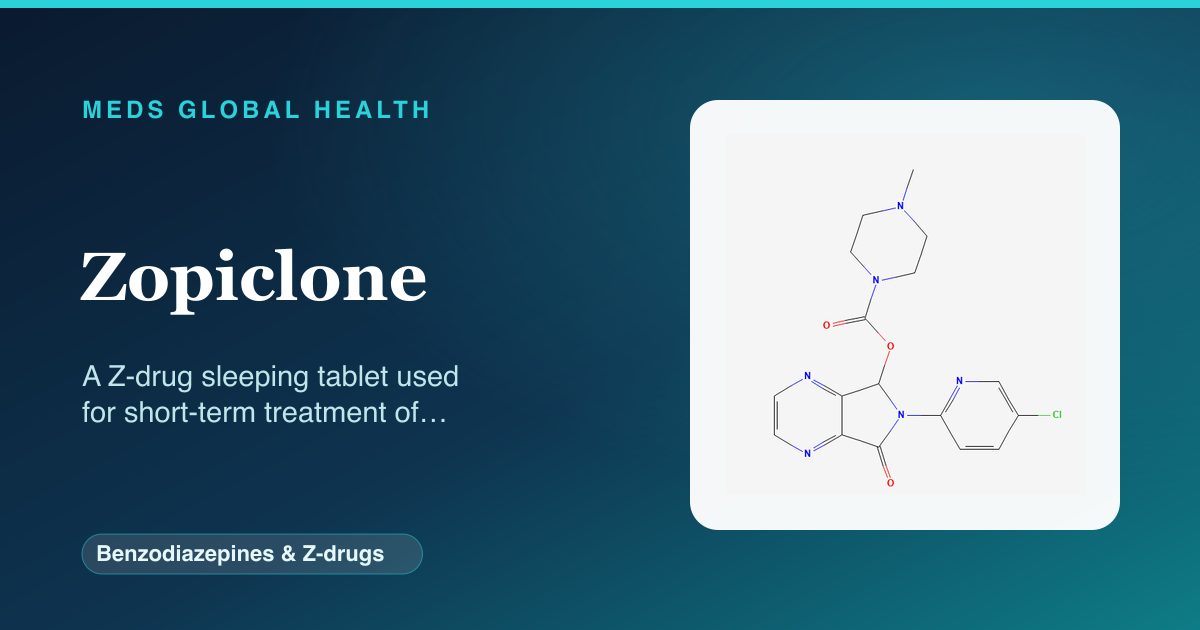
What it is
Zopiclone is a 'Z-drug', a group of sleeping tablets that work in a similar way to benzodiazepines but are chemically different. It is used in the UK for the short-term treatment of insomnia that is severe, disabling or causing marked distress. It is intended to be taken for a short period only, because the body becomes used to it and dependence can develop, and because sleeping tablets work best as a temporary aid alongside good sleep habits rather than as a long-term solution.
How it works
Zopiclone enhances the effect of GABA, the brain's main calming chemical messenger, at a particular site on the GABA receptor. By strengthening GABA's natural braking action it quietens activity in the brain, helping you fall asleep more easily and stay asleep. This sedating action is also why it can leave some next-day drowsiness, particularly if taken late or if sleep is cut short.
Company & origin
Originated / developed by: Originally developed by Rhône-Poulenc (later part of Sanofi)..
Zopiclone was developed in France and introduced in the 1980s as one of the first 'Z-drugs' for insomnia.
What it treats
Conditions Zopiclone is used for
Practical use
How to take Zopiclone
General, dose-free guidance — always follow your prescriber's and the leaflet's specific instructions.
- Take it just before you get into bed, only when you can allow time for a full night's sleep.
- Use it for the short period your prescriber advises — it is not intended for long-term nightly use.
- Do not drink alcohol with it, as this increases sedation and the risk of slowed breathing.
- Do not drive or operate machinery if you feel drowsy, including the next morning.
- Expect a possible bitter or metallic taste, which is harmless and wears off.
- After regular use, reduce it gradually with your prescriber rather than stopping suddenly, to avoid rebound insomnia.
Weighing it up
Advantages & disadvantages of Zopiclone
Advantages
- Effective at helping people fall asleep in the short term.
- Useful for a brief period of severe insomnia alongside good sleep habits.
- Shorter-acting than long-acting benzodiazepines, which can mean less carry-over for some people.
Disadvantages
- Can cause next-day drowsiness that affects driving and concentration.
- Tolerance and dependence develop with regular use, so it is only for short courses.
- Commonly causes a bitter or metallic taste.
- Rebound insomnia can occur when it is stopped, so it should be reduced gradually after regular use.
Practical use
Good to know
It is taken just before going to bed, when you are ready to sleep, and only when you can allow a full night's sleep, as taking it too late can cause next-day drowsiness. It is for short-term use only — usually no more than a couple of weeks — because tolerance and dependence can develop. A common and harmless side effect is a bitter or metallic taste in the mouth. Do not drink alcohol with it, and do not drive or operate machinery if you feel drowsy, including the morning after. After regular use it should be reduced gradually rather than stopped abruptly, to avoid rebound insomnia.
Who should not take it / use with caution
- People with significant breathing problems, severe sleep apnoea or marked respiratory weakness, where it can slow breathing.
- People with a history of alcohol or drug dependence need particular caution because of the dependence risk.
- Used with caution in older or frail people (greater risk of falls and confusion), significant liver impairment, myasthenia gravis, and in pregnancy and breastfeeding.
Monitoring
- Review to keep use short and to plan stopping.
- Watching for next-day drowsiness, falls in older people and signs of dependence.
- A gradual reduction plan after regular use to limit rebound insomnia.
Side effects
- A bitter or metallic taste in the mouth.
- Next-day drowsiness, dizziness and reduced concentration.
- Dry mouth and, occasionally, headache.
- With regular use: tolerance, dependence and rebound insomnia on stopping; rarely, doing things while not fully awake.
Key interactions
- Alcohol and other sedatives (opioids, benzodiazepines, sedating antihistamines) — additive drowsiness and slowed breathing.
- Some medicines that affect liver enzymes can raise or lower its levels and effects.
- Tell your pharmacist about all your medicines, including those bought over the counter.
Available as: Available as tablets.
Answers
Zopiclone: frequently asked questions
How long can I take zopiclone for?
It is meant for short-term use only, usually no more than a couple of weeks, because tolerance and dependence can develop with regular use.
Why does zopiclone leave a metallic taste?
A bitter or metallic taste is a common and harmless side effect of zopiclone. It usually settles after the dose wears off.
Can I drive after taking zopiclone?
Do not drive if you feel drowsy, including the morning after. It can impair driving, so wait until you feel fully alert.
Is zopiclone addictive?
Dependence can develop with regular use, which is why it is used short-term and reduced gradually rather than stopped abruptly.
When should I take it?
Take it just before getting into bed, and only when you can allow a full night's sleep, to reduce next-day drowsiness.
The wider class
About Benzodiazepines & Z-drugs
Zopiclone belongs to the benzodiazepines & z-drugs class. For how the class as a whole works, its shared safety principles and monitoring, see the full guide.
Browse by body system
Authoritative sources
- BNF
- NICE CKS
Building a medicines information resource?
We create evidence-led, dose-free drug and formulary references for teams.