A benzodiazepine (used in epilepsy and sometimes anxiety)
Clonazepam
A benzodiazepine used to help control certain types of epilepsy; it can cause drowsiness and dependence, so it must not be stopped suddenly.
What is Clonazepam?
Clonazepam is a benzodiazepine used in the UK mainly to help control certain types of epilepsy, and sometimes for severe anxiety or other specialist conditions. It calms over-activity in the brain, which reduces seizures, but it causes drowsiness and can lead to dependence with regular use. Because of this it should never be stopped suddenly, as this can trigger seizures and withdrawal.
Education and reference only. This is a plain-language guide to Clonazepam — it deliberately contains no doses. Doses depend on the person, the brand and the reason for treatment, and belong with your prescriber. Always check the BNF, the product labelling (SmPC) and follow medical advice.
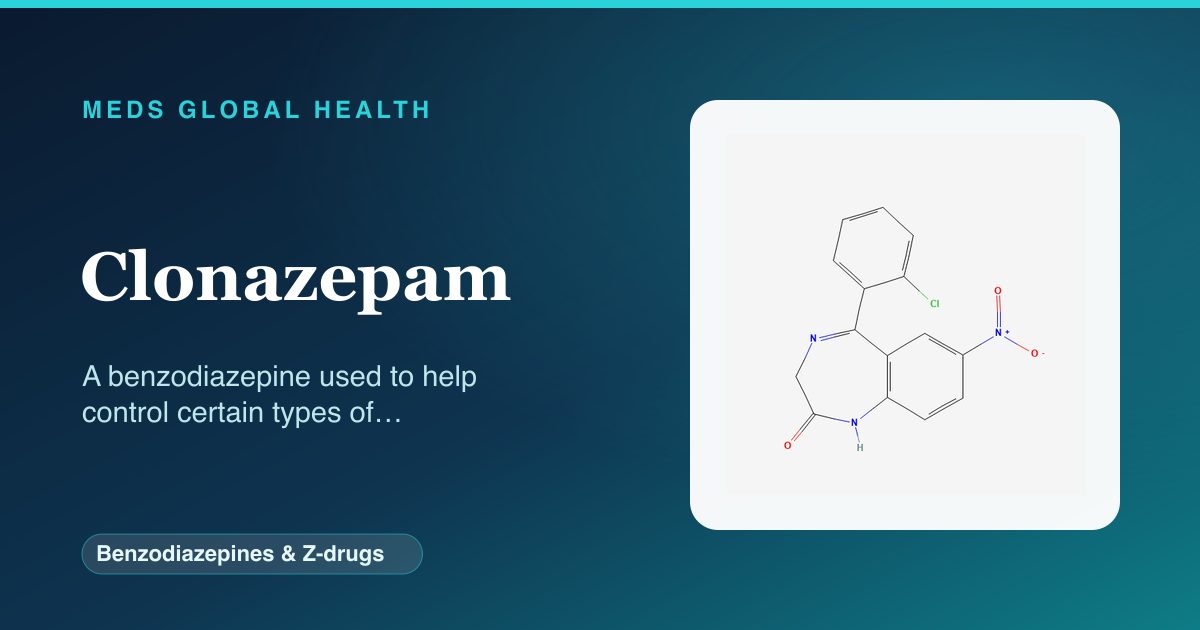
What it is
Clonazepam is a long-acting benzodiazepine prescribed in the UK to help control certain seizure disorders, and sometimes used by specialists for severe anxiety, panic and other conditions. It works on the brain's calming chemical messenger system, reducing excessive electrical activity that can cause seizures. It is an effective medicine but, like other benzodiazepines, it causes drowsiness and the body becomes used to it over time, so it is generally used carefully and reviewed regularly rather than continued indefinitely without thought.
How it works
Clonazepam boosts the action of GABA, the brain's main calming (inhibitory) chemical messenger. By making GABA more effective, it dampens down over-excitable nerve signals, which is how it reduces seizure activity and produces a calming, sedating effect. The same action on the brain explains its main side effects of drowsiness, slowed reactions and, with regular use, tolerance and dependence.
Company & origin
Originated / developed by: Developed by Roche..
Clonazepam is a benzodiazepine introduced by Roche in the early 1970s, originally for epilepsy, and is now used in the UK for certain seizure disorders and, in some cases, for severe anxiety and other specialist indications.
What it treats
Conditions Clonazepam is used for
Practical use
How to take Clonazepam
General, dose-free guidance — always follow your prescriber's and the leaflet's specific instructions.
- Take it regularly as prescribed to keep seizures controlled, even on days when you feel well.
- Expect drowsiness, especially when starting or after an increase, and avoid driving or operating machinery until you know how it affects you.
- Do not drink alcohol while taking it, as this greatly increases drowsiness and the risk of slowed breathing.
- If you miss a dose, take it as soon as you remember unless it is nearly time for the next one — do not double up.
- Never stop taking it suddenly; speak to your prescriber, who will reduce it slowly to avoid seizures and withdrawal.
Weighing it up
Advantages & disadvantages of Clonazepam
Advantages
- It is effective at controlling certain seizure types and can work when other treatments have not.
- Its long-acting nature gives steady cover and can mean less frequent dosing.
- It also has a calming effect that can help in severe anxiety or panic when used by a specialist.
Disadvantages
- Regular use leads to tolerance and dependence, so it tends not to be a long-term first choice where alternatives exist.
- It must never be stopped suddenly, as this can cause seizures and a difficult withdrawal.
- Drowsiness, slowed reactions and impaired concentration are common and can affect driving and daily activities.
Practical use
Good to know
Clonazepam is taken regularly to keep seizures under control rather than only when symptoms occur. It commonly causes drowsiness, especially at first, and you should not drive or operate machinery until you know how it affects you — under UK drug-driving law it is an offence to drive if you are impaired. Alcohol adds to the drowsiness and should be avoided. With regular use the body becomes dependent on it, so it must never be stopped abruptly; stopping suddenly can cause seizures and a difficult withdrawal, so any change is made gradually under medical supervision.
Who should not take it / use with caution
- People with severe breathing problems or sleep apnoea, where extra sedation is risky.
- People with significant liver disease, or who misuse alcohol or other sedating drugs, unless specialist-managed.
- Older people, in whom it is used with particular caution because of drowsiness, confusion and falls.
Monitoring
- Regular review of how well seizures are controlled and whether the medicine is still needed.
- Watching for excessive drowsiness, unsteadiness and signs of dependence.
- Planned, gradual reduction rather than abrupt stopping if it is to be withdrawn.
Side effects
- Drowsiness, tiredness and dizziness, especially when starting.
- Unsteadiness, slowed reactions and poor concentration.
- Sometimes increased saliva or breathing secretions, particularly in children.
- With regular use, tolerance and dependence; sudden stopping can cause seizures and withdrawal.
Key interactions
- Other sedating medicines such as strong painkillers (opioids), sleeping tablets, gabapentin or pregabalin increase drowsiness and breathing risk.
- Alcohol adds to the sedation and should be avoided.
- Some medicines that affect liver enzymes can change clonazepam levels, so tell your prescriber about all your medicines.
Available as: Tablets and an oral solution.
Answers
Clonazepam: frequently asked questions
Can I stop clonazepam if I feel better?
No — never stop it suddenly. Stopping abruptly can trigger seizures and a difficult withdrawal. If you want to stop, speak to your prescriber, who will lower it slowly over time.
Does clonazepam make you drowsy?
Yes, drowsiness is one of its most common effects, especially at first or after an increase. Avoid driving or using machinery until you know how it affects you, and avoid alcohol as it adds to the drowsiness.
Is clonazepam addictive?
With regular use the body becomes used to it and can become dependent, so it is prescribed carefully and reviewed regularly. This is one reason it must be reduced gradually rather than stopped abruptly.
Can I drink alcohol with clonazepam?
It is best avoided. Alcohol adds to the drowsiness and slowed reactions and can increase the risk of dangerously slowed breathing.
What is clonazepam used for besides epilepsy?
Alongside certain seizure disorders, specialists sometimes use it for severe anxiety, panic and other conditions. The decision and length of treatment are guided carefully because of the risk of dependence.
The wider class
About Benzodiazepines & Z-drugs
Clonazepam belongs to the benzodiazepines & z-drugs class. For how the class as a whole works, its shared safety principles and monitoring, see the full guide.
Browse by body system
Authoritative sources
- BNF
- NICE CKS
Building a medicines information resource?
We create evidence-led, dose-free drug and formulary references for teams.