A benzodiazepine
Oxazepam
A short-acting benzodiazepine used only for the short-term relief of severe anxiety, effective but carrying a real risk of dependence, sedation and falls, and never to be stopped suddenly.
What is Oxazepam?
Oxazepam is a benzodiazepine used for the short-term relief of severe or disabling anxiety. It calms the nervous system and works quickly, but because of the risk of dependence it is meant only for short courses. It causes drowsiness, should not be mixed with alcohol, and must not be stopped abruptly after regular use.
Education and reference only. This is a plain-language guide to Oxazepam — it deliberately contains no doses. Doses depend on the person, the brand and the reason for treatment, and belong with your prescriber. Always check the BNF, the product labelling (SmPC) and follow medical advice.
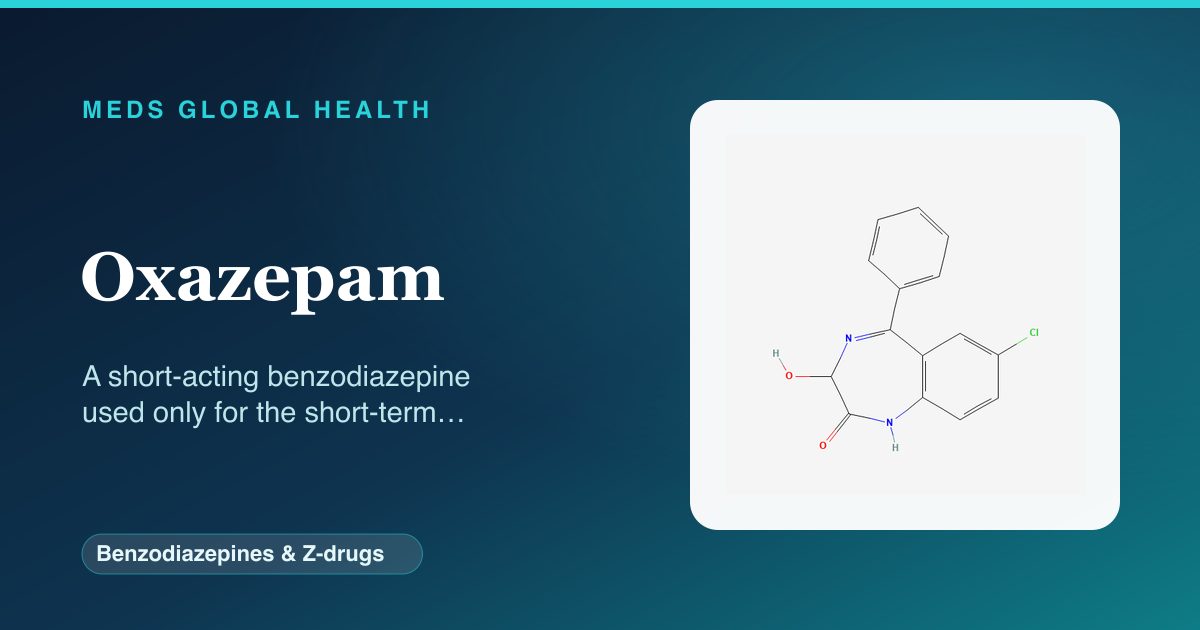
What it is
Oxazepam is a benzodiazepine, a type of medicine that calms the nervous system. It is used for the short-term relief of severe anxiety and is sometimes used to help with alcohol withdrawal. In the UK it is available as a generic medicine.
How it works
Oxazepam boosts the effect of a calming brain chemical called GABA, which quietens overactive nerve signalling. This reduces feelings of anxiety and tension and has a sedative effect. Because it is relatively short-acting and processed simply by the liver, it is sometimes preferred in older people or those with liver problems.
Company & origin
Originated / developed by: Available in the UK as generic oxazepam..
Oxazepam is a benzodiazepine first introduced in the 1960s and used in the UK for the short-term relief of severe anxiety.
What it treats
Conditions Oxazepam is used for
Practical use
How to take Oxazepam
General, dose-free guidance — always follow your prescriber's and the leaflet's specific instructions.
- Use it only for the short period your doctor advises, not as a long-term treatment.
- Take it as prescribed; it can be taken with or without food.
- Avoid alcohol completely while taking it, as the combination is dangerously sedating.
- Do not drive or use machinery if it makes you drowsy or slows your reactions.
- If you miss a dose, skip it and carry on; do not take two together.
- Do not stop suddenly after regular use; the dose is usually reduced gradually to avoid withdrawal.
Weighing it up
Advantages & disadvantages of Oxazepam
Advantages
- Works quickly to relieve severe, disabling anxiety.
- Relatively short-acting, which can mean less hangover-like drowsiness the next day.
- Processed simply by the liver, so it may suit older people or those with liver problems.
- Effective for short-term use and during some alcohol-withdrawal situations.
Disadvantages
- Carries a real risk of dependence and withdrawal, so it is for short-term use only.
- Causes drowsiness and can increase the risk of falls, especially in older people.
- Impairs driving and concentration.
- Dangerous when combined with alcohol or other sedating medicines.
- Tolerance can develop, so it becomes less effective over time.
Practical use
Good to know
Oxazepam is intended only for short-term use, typically a couple of weeks at most, because the body can quickly become used to it and dependent on it. It causes drowsiness, so it can affect driving, and it must not be stopped suddenly after regular use.
Who should not take it / use with caution
- People with severe breathing problems or sleep apnoea.
- Anyone with myasthenia gravis (a muscle-weakening condition).
- People with a history of alcohol or drug dependence, unless closely supervised.
- People with severe liver problems.
- Those who are pregnant or breastfeeding should avoid it unless a doctor advises otherwise.
Monitoring
- Regular review to keep treatment as short as possible.
- Watch for excessive drowsiness, confusion or unsteadiness, especially in older people.
- Signs of tolerance or dependence developing.
- A planned, gradual reduction when stopping after regular use.
Side effects
- Drowsiness, tiredness and reduced alertness.
- Unsteadiness, dizziness and an increased risk of falls.
- Confusion or memory problems, particularly in older people.
- Occasionally the opposite effect, with restlessness or agitation.
- With longer use: tolerance, dependence and withdrawal symptoms such as anxiety, tremor and trouble sleeping if stopped suddenly.
- Stopping suddenly after regular use can cause serious withdrawal — including confusion, hallucinations and seizures (fits) — which is why the dose must be reduced gradually under medical supervision.
Key interactions
- Alcohol, which dangerously increases sedation and breathing risk.
- Strong painkillers (opioids) such as morphine or codeine, which add to drowsiness and breathing risk.
- Other sedating medicines such as some antihistamines, antidepressants and antipsychotics.
- Other medicines for sleep or anxiety, which add to the sedative effect.
- Some medicines that affect how the liver processes drugs, which can change its levels.
Available as: Tablets.
Answers
Oxazepam: frequently asked questions
How long can I take oxazepam for?
It is meant for short-term use only, usually no more than a couple of weeks, because dependence can develop quickly with regular use.
Can I drink alcohol while taking oxazepam?
No. Alcohol greatly increases the sedative effect and can dangerously slow your breathing, so it should be avoided completely.
Can I stop oxazepam suddenly?
No. After regular use, stopping suddenly can cause serious withdrawal — including anxiety, tremor, poor sleep and, in more severe cases, confusion, hallucinations and seizures (fits). Your doctor will reduce the dose gradually under supervision.
Can I drive while taking oxazepam?
It can cause drowsiness and slow your reactions, so you should not drive or use machinery if you feel affected. It can also affect drug-driving limits.
Why is oxazepam sometimes chosen for older people?
It is short-acting and processed simply by the liver, which can make it a more predictable choice in older people or those with liver problems, though caution is still needed because of falls and confusion.
The wider class
About Benzodiazepines & Z-drugs
Oxazepam belongs to the benzodiazepines & z-drugs class. For how the class as a whole works, its shared safety principles and monitoring, see the full guide.
Browse by body system
Authoritative sources
- BNF
- NICE CKS
Building a medicines information resource?
We create evidence-led, dose-free drug and formulary references for teams.