A benzodiazepine (alcohol withdrawal)
Chlordiazepoxide
A benzodiazepine used mainly for the short-term management of alcohol withdrawal.
What is Chlordiazepoxide?
Chlordiazepoxide is a benzodiazepine used in the UK mainly to manage the symptoms of alcohol withdrawal over a short period. It calms the nervous system, easing agitation, tremor and the risk of withdrawal seizures. It can cause dependence, so it is given as a short, reducing course and must not be stopped suddenly.
Education and reference only. This is a plain-language guide to Chlordiazepoxide — it deliberately contains no doses. Doses depend on the person, the brand and the reason for treatment, and belong with your prescriber. Always check the BNF, the product labelling (SmPC) and follow medical advice.
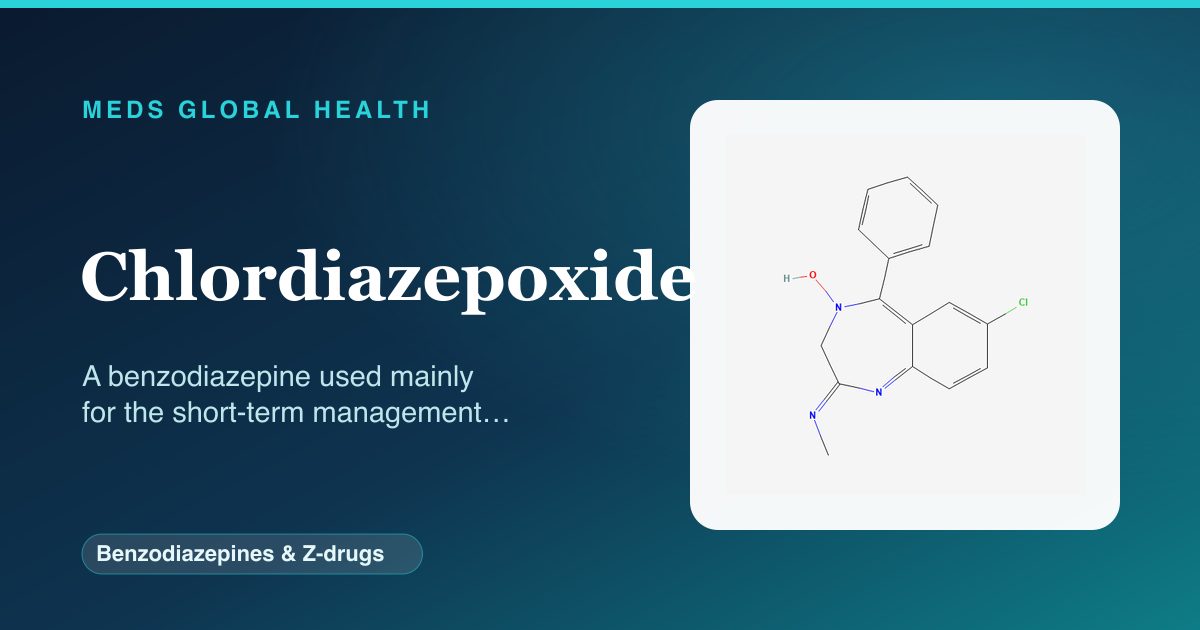
What it is
Chlordiazepoxide is a benzodiazepine, a type of sedative. In the UK it is used mainly to help people through alcohol withdrawal, usually as a short, gradually reducing course. It calms the over-excited nervous system that occurs when someone who is dependent on alcohol stops drinking.
How it works
Chlordiazepoxide boosts the effect of GABA, a natural calming chemical in the brain. During alcohol withdrawal the brain becomes over-excited, which can cause agitation, shaking, sweating and, in severe cases, seizures. By increasing GABA's calming action, chlordiazepoxide steadies this over-activity and reduces these symptoms.
Company & origin
Originated / developed by: Historically branded as Librium; now mainly used as a generic medicine in the UK..
Chlordiazepoxide is one of the original benzodiazepines and is used in the UK mainly to manage alcohol withdrawal.
Practical use
How to take Chlordiazepoxide
General, dose-free guidance — always follow your prescriber's and the leaflet's specific instructions.
- Take it exactly as prescribed, usually as a course that reduces step by step over several days.
- Do not drink any alcohol while taking it, as the combination can be dangerous.
- Do not stop it suddenly; stopping abruptly can cause withdrawal effects, including seizures.
- Do not take it for longer than prescribed, as dependence can develop with continued use.
- It causes drowsiness, so avoid driving or operating machinery while affected.
Weighing it up
Advantages & disadvantages of Chlordiazepoxide
Advantages
- Effective at easing alcohol withdrawal symptoms and reducing the risk of withdrawal seizures.
- Given as a short, reducing course, which limits the risk of long-term dependence.
- Long-established medicine with well-understood use in withdrawal.
Disadvantages
- Can cause dependence, so it must only be used short term and tapered, not stopped suddenly.
- Causes drowsiness and impairs driving and concentration.
- Dangerous if combined with alcohol or other sedatives.
Practical use
Good to know
Chlordiazepoxide is for short-term use only because the body can become dependent on it. It is usually given as a reducing course over several days. Do not stop it suddenly, and never drink alcohol while taking it. It causes drowsiness, so do not drive until you know how it affects you.
Who should not take it / use with caution
- People with a known allergy to chlordiazepoxide or other benzodiazepines.
- People with severe breathing problems or sleep apnoea, or with severe liver impairment.
- Used with great caution in older people and those with a history of dependence on alcohol or medicines.
Monitoring
- Close review of withdrawal symptoms during the reducing course.
- Watch for over-sedation, confusion and breathing problems.
- Support and follow-up to help prevent return to harmful drinking.
Side effects
- Drowsiness, tiredness and reduced concentration.
- Unsteadiness and an increased risk of falls, especially in older people.
- Confusion or memory problems.
- Slowed or shallow breathing, particularly if combined with other sedatives.
- Dependence and withdrawal symptoms with longer use.
Key interactions
- Alcohol greatly increases sedation and breathing risk and must be avoided.
- Strong painkillers (opioids) and other sedating medicines add to drowsiness and slowed breathing.
- Some medicines that affect the liver can change chlordiazepoxide levels.
- Tell your team about all your medicines, including those bought over the counter.
Available as: Capsules and tablets.
Answers
Chlordiazepoxide: frequently asked questions
Why is chlordiazepoxide used for alcohol withdrawal?
When someone dependent on alcohol stops drinking, the brain becomes over-excited, causing tremor, agitation and sometimes seizures. Chlordiazepoxide calms this over-activity, easing symptoms and reducing the risk of seizures, usually over a short reducing course.
Can I drink alcohol while taking it?
No. Combining chlordiazepoxide with alcohol is dangerous and can cause heavy sedation and breathing problems. You should not drink while taking it.
Is it addictive?
Benzodiazepines like chlordiazepoxide can cause dependence, which is why it is used only short term and as a reducing course. Do not stop suddenly or take it for longer than prescribed.
What if I stop it suddenly?
Stopping abruptly can cause withdrawal effects, including anxiety, shaking and, in some cases, seizures. Always follow the reducing plan your team gives you.
Will it make me drowsy?
Yes, drowsiness is common. Do not drive or operate machinery while affected, and take care to avoid falls, especially if you are older.
The wider class
About Benzodiazepines & Z-drugs
Chlordiazepoxide belongs to the benzodiazepines & z-drugs class. For how the class as a whole works, its shared safety principles and monitoring, see the full guide.
Browse by body system
Authoritative sources
- BNF: Chlordiazepoxide hydrochloride.
- NICE CKS: Benzodiazepines.
Building a medicines information resource?
We create evidence-led, dose-free drug and formulary references for teams.