An antifungal nail lacquer
Amorolfine
An antifungal nail lacquer painted onto infected nails to treat fungal nail infections over many months.
What is Amorolfine?
Amorolfine is an antifungal medicine in the form of a nail lacquer (a special nail paint) used to treat fungal nail infections. It is applied to clean, filed nails and works slowly as the healthy nail grows out, so treatment can take many months. It suits mild infections that have not reached the base of the nail.
Education and reference only. This is a plain-language guide to Amorolfine — it deliberately contains no doses. Doses depend on the person, the brand and the reason for treatment, and belong with your prescriber. Always check the BNF, the product labelling (SmPC) and follow medical advice.
What it is
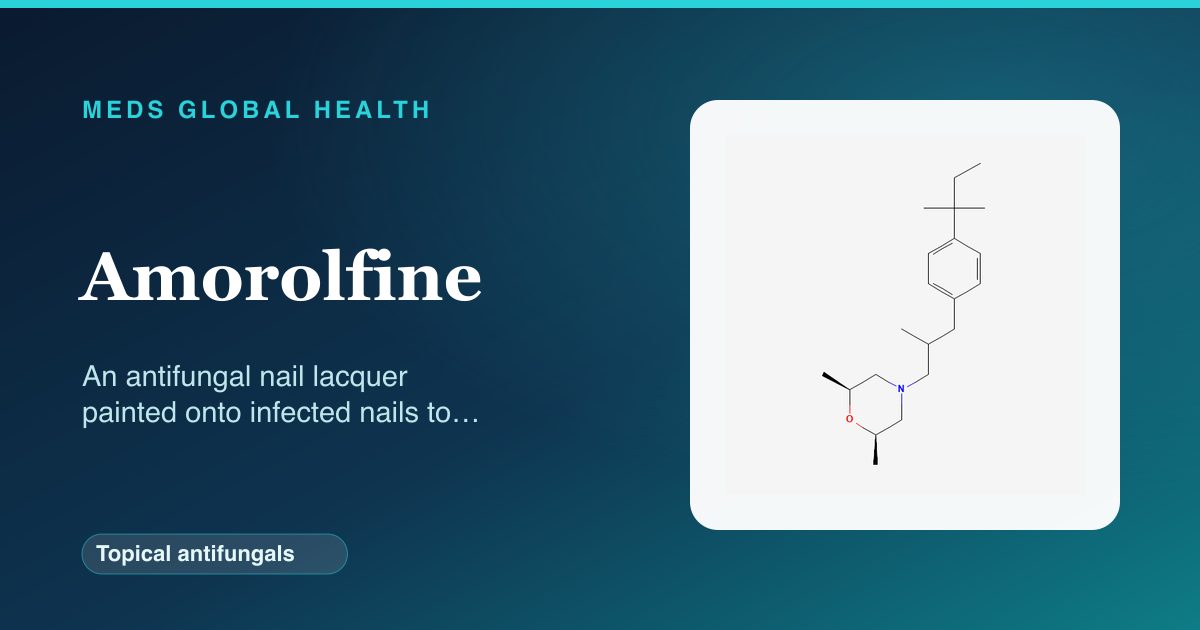
Amorolfine is a topical antifungal supplied as a lacquer that is painted onto the nail, sold under brands such as Loceryl and Curanail. It is used for fungal infections of the fingernails and toenails (onychomycosis), where the nail becomes thickened, discoloured or crumbly. It is most suitable for milder infections affecting the end of the nail rather than severe infections reaching the root, and is applied over a long period because nails grow slowly.
How it works
Amorolfine interferes with the fungus's ability to build its cell membrane, which stops the fungus growing and helps clear it from the nail. Painted on as a lacquer, it forms a film that holds the medicine against and into the nail plate. Because the infected nail itself cannot be 'cured' instantly, the visible improvement comes as new, healthy nail grows out from the base — a slow process that is why treatment continues for many months.
Company & origin
Originated / developed by: Sold in the UK as brands including Loceryl and Curanail, plus generics..
Practical use
How to take Amorolfine
General, dose-free guidance — always follow your prescriber's and the leaflet's specific instructions.
- File the surface of the affected nail, then clean and dry it before applying.
- Paint the lacquer over the whole nail surface and allow it to dry fully.
- Use a separate nail file for infected nails and avoid sharing files to prevent spreading the infection.
- Before each reapplication, remove the old layer with the cleaning swab and file again as directed.
- Keep going for the full course — usually until healthy nail has grown out, often many months.
Weighing it up
Advantages & disadvantages of Amorolfine
Advantages
- Treats fungal nail infection without needing antifungal tablets and their wider side effects.
- Convenient lacquer that is applied infrequently rather than every day.
- Available over the counter from pharmacies for suitable mild infections.
Disadvantages
- Works slowly — treatment often takes many months as the nail grows out.
- Less effective for severe infections or when the base (matrix) of the nail is involved.
- Requires regular filing and careful, consistent application to work well.
Practical use
Good to know
Before applying, file down the affected nail surface (using a separate file for infected nails so you don't spread it), then clean and dry the nail. Apply the lacquer over the whole nail and let it dry. Each time you reapply, file off the old layer first and clean the nail again. Treatment usually continues until healthy nail has fully grown out, which often means many months for toenails. See a clinician if the nail base is involved or it does not improve.
Who should not take it / use with caution
- Anyone allergic to amorolfine or other ingredients in the lacquer.
- People with severe or widespread nail infection, or involvement of the nail base, who usually need a clinician's assessment and possibly tablets.
- Generally avoided in pregnancy and breastfeeding and in young children unless advised, and caution with diabetes or poor circulation — seek advice first.
Monitoring
- Watch for healthy new nail growing from the base as a sign of response
- Review if there is no improvement after a reasonable period
- Seek advice if the infection spreads or the nail base becomes involved
Side effects
- Mild, brief burning, redness or itching around the nail when applied.
- Occasionally changes in the nail's appearance, such as discolouration or brittleness.
- Rarely, an allergic skin reaction around the nail — stop and seek advice if this happens.
Key interactions
- Very few, as little is absorbed into the body from the nail.
- Avoid cosmetic nail varnish or artificial nails on treated nails unless advised, as they can interfere.
- Tell a pharmacist about other nail or skin treatments you use on the same nails.
Available as: Nail lacquer, supplied with applicators, files and cleaning swabs.
Answers
Amorolfine: frequently asked questions
How long does amorolfine take to work?
Fungal nail treatment is slow because the medicine works as new, healthy nail grows out. Fingernails may take several months and toenails often longer. You should see fresh, clear nail appearing from the base over time, which is the sign it is working.
Do I need to file my nail first?
Yes. Filing the surface of the infected nail helps the lacquer reach the fungus and improves results. Use a file kept only for infected nails, and file off the old layer of lacquer before each reapplication, cleaning the nail as directed.
Can I wear nail varnish over it?
It is best to avoid cosmetic nail varnish and false nails on treated nails unless your pharmacist says otherwise, as they can interfere with the lacquer. Keeping the nail clean and free of cosmetics gives the treatment the best chance.
When should I see a doctor instead?
See a clinician if several nails are affected, the infection is severe, the base of the nail is involved, you have diabetes or poor circulation, or it does not improve. These situations may need a confirmed diagnosis and sometimes antifungal tablets.
What is the difference between Loceryl and Curanail?
Both contain the same active ingredient, amorolfine, and work the same way — they are different brand names for the same type of nail lacquer. Generic amorolfine lacquers are also available.
The wider class
About Topical antifungals
Amorolfine belongs to the topical antifungals class. For how the class as a whole works, its shared safety principles and monitoring, see the full guide.
Browse by body system
Authoritative sources
- BNF: Amorolfine.
- NICE CKS: Fungal nail infection.
Building a medicines information resource?
We create evidence-led, dose-free drug and formulary references for teams.