A topical antifungal cream for skin fungal infections
Sulconazole
An antifungal cream applied to the skin to treat fungal infections such as ringworm and athlete's foot.
What is Sulconazole?
Sulconazole is an antifungal cream used to treat fungal infections of the skin, such as ringworm, athlete's foot and similar rashes, and some infections that respond to antifungal and antibacterial treatment. It is applied directly to the affected skin over a course of treatment. It is generally well tolerated, with the most common effect being mild irritation, itching or redness where it is applied. It is for use on the skin only and is usually continued for a short while after the rash clears to stop it coming back.
Education and reference only. This is a plain-language guide to Sulconazole — it deliberately contains no doses. Doses depend on the person, the brand and the reason for treatment, and belong with your prescriber. Always check the BNF, the product labelling (SmPC) and follow medical advice.
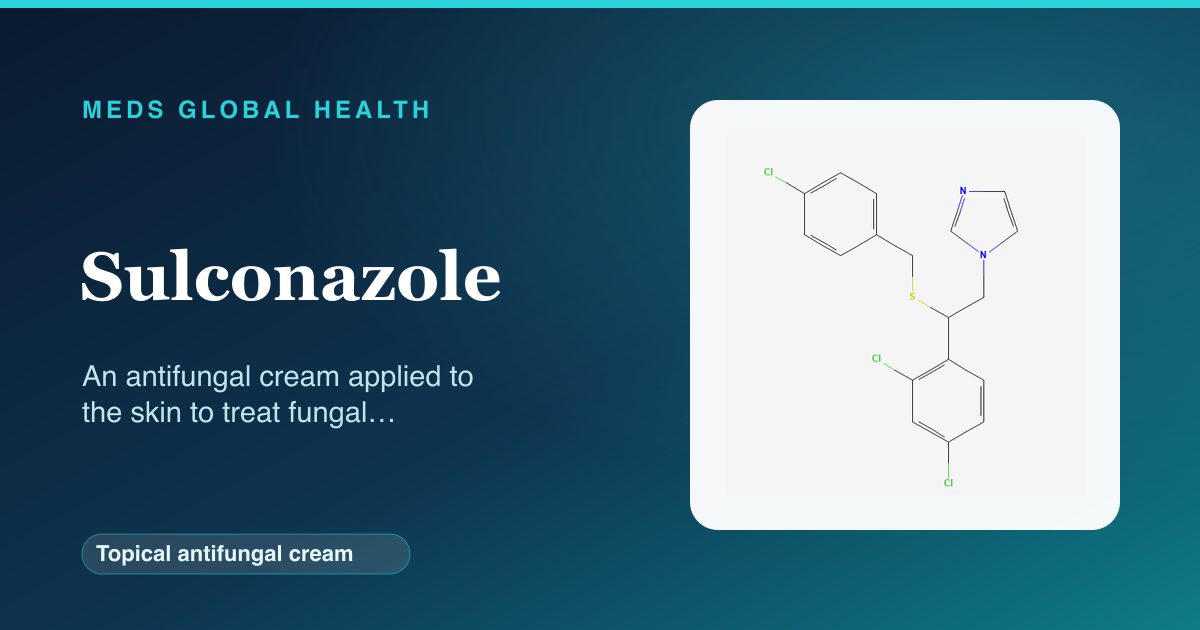
What it is
Sulconazole is a topical antifungal medicine that comes as a cream applied to the skin. It is used to treat fungal skin infections such as ringworm of the body, athlete's foot, jock itch and similar rashes, as well as some skin conditions that respond to its antifungal and mild antibacterial action. It belongs to a family of antifungals known as the azoles. It is applied to the affected area and the skin around it over a course of treatment, and is for external use on the skin rather than being taken by mouth.
How it works
Sulconazole works by damaging the cell membrane of the fungi that cause skin infections, which stops them growing and helps clear the infection. Because it is applied directly to the affected skin, it acts where it is needed with little being absorbed into the rest of the body. It is generally well tolerated. Treatment is usually continued for a little while after the rash has cleared to make sure the fungus is fully dealt with and to reduce the chance of the infection returning, which is why finishing the course matters.
Company & origin
A topical antifungal medicine used in the UK to treat fungal infections of the skin, applied as a cream.
Practical use
How to take Sulconazole
General, dose-free guidance — always follow your prescriber's and the leaflet's specific instructions.
- Apply the cream thinly to the affected skin and a little of the surrounding skin, as directed.
- Keep using it for the full course, usually continuing for a short while after the skin looks clear, to stop the infection returning.
- Wash your hands after applying it, unless your hands are the area being treated.
- Keep it away from the eyes, and use it on the skin only.
- Get the rash checked if it does not improve in the expected time or gets worse.
Weighing it up
Advantages & disadvantages of Sulconazole
Advantages
- An effective treatment for common fungal skin infections such as ringworm and athlete's foot.
- Generally well tolerated, with little absorbed into the rest of the body.
- Applied directly to the affected skin as a cream.
Disadvantages
- Can cause mild local irritation, itching, redness or burning where it is applied.
- Needs to be used for the full course, often beyond when the skin looks clear.
- Treats the skin where applied, so a missed or spreading area may not clear.
Practical use
Good to know
Sulconazole is usually well tolerated, with the most common effect being mild irritation, itching, redness or a burning feeling where it is applied, which often settles. A key practical point is to keep using it for the full course, often continuing for a short time after the skin looks clear, because stopping too soon can let the infection come back. Apply it to the affected area and the skin just around it, and wash your hands afterwards unless your hands are the area being treated. It is for use on the skin only and should be kept away from the eyes. If the rash does not improve after the expected time, or gets worse, it is worth getting it checked, as the diagnosis may need reviewing.
Who should not take it / use with caution
- People who have had a serious allergic reaction to sulconazole or the cream's ingredients should not use it.
- It is used with care in pregnancy and breastfeeding, on the advice of a doctor or pharmacist.
- It is for external use on the skin only and should be kept away from the eyes.
Monitoring
- Checking whether the fungal infection clears after the course.
- Watching for local irritation or allergic skin reactions.
- Reviewing the diagnosis if the rash does not improve or gets worse.
Side effects
- Mild irritation, itching, redness or a burning feeling where it is applied.
- Dryness or peeling of the treated skin in some people.
- Rarely, a more troublesome allergic skin reaction, which should be reviewed.
Key interactions
- There are few well-established medicine interactions, as little is absorbed into the body.
- Other creams or ointments on the same area should only be combined on advice.
- Tell your prescriber or pharmacist about anything else you apply to the affected skin.
Available as: A cream applied to the skin.
Answers
Sulconazole: frequently asked questions
What is sulconazole used for?
It is an antifungal cream used to treat fungal skin infections such as ringworm, athlete's foot and jock itch, applied directly to the affected skin.
Is it well tolerated?
Yes, it is generally well tolerated; the most common effect is mild irritation, itching or redness where it is applied, which often settles.
How long should I use it?
Use it for the full course, usually continuing for a short while after the skin looks clear, to make sure the infection does not come back.
Can I use it near my eyes?
No. It is for use on the skin only and should be kept away from the eyes.
What if it does not work?
If the rash does not improve in the expected time or gets worse, get it checked, as the diagnosis may need reviewing.
The wider class
About Topical antifungal cream
Sulconazole belongs to the topical antifungal cream class. For how the class as a whole works, its shared safety principles and monitoring, see the full guide.
Browse by body system
Authoritative sources
- BNF
- NICE CKS
Building a medicines information resource?
We create evidence-led, dose-free drug and formulary references for teams.