An antifungal cream for athlete's foot and ringworm
Butenafine
An antifungal cream applied to the skin to treat fungal infections such as athlete's foot, ringworm and jock itch.
What is Butenafine?
Butenafine is an antifungal cream that is rubbed onto the skin to treat common fungal skin infections such as athlete's foot, ringworm and jock itch. It works by stopping the fungus from growing so the infection clears and the skin heals. It is applied to the affected area for the recommended length of time, even after the rash looks better, to stop it coming back. It is generally well tolerated, and the most common problem is mild irritation, redness or itching where it is put on. It is for use on the skin only and should not be swallowed or used in the eyes.
Education and reference only. This is a plain-language guide to Butenafine — it deliberately contains no doses. Doses depend on the person, the brand and the reason for treatment, and belong with your prescriber. Always check the BNF, the product labelling (SmPC) and follow medical advice.
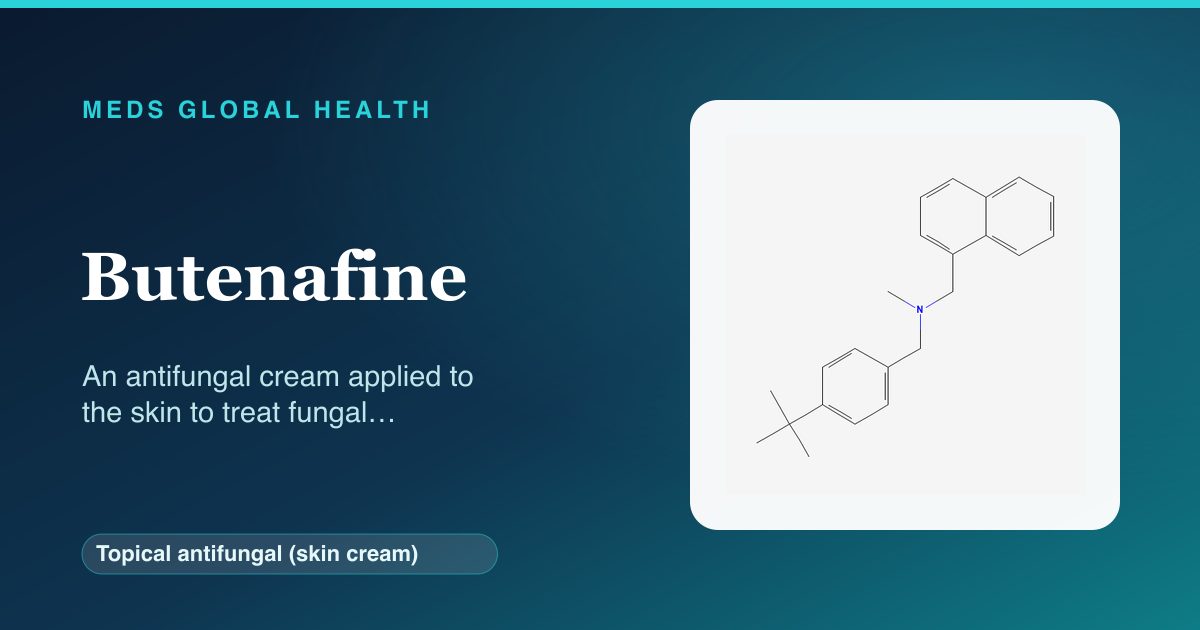
What it is
Butenafine is an antifungal medicine that comes as a cream for use on the skin. It is used to treat fungal infections of the skin, the most common being athlete's foot (between and around the toes), ringworm (a ring-shaped rash on the body) and jock itch (a rash in the groin area). It is applied directly to the affected skin rather than taken by mouth, so it works mainly where it is put. It is widely used because it is convenient, generally well tolerated and effective for these everyday skin infections.
How it works
Butenafine works by interfering with the way the fungus builds its outer wall, which damages the fungal cells so they cannot grow and survive. As the fungus is brought under control, the body can heal the affected skin, and the redness, scaling and itching settle. Because it is applied to the skin, it concentrates where the infection is and stays in the skin for a while, which helps it keep working between applications. Finishing the full course matters, because the fungus can still be present even after the rash looks like it has cleared.
Company & origin
A skin antifungal applied to the affected area, used for fungal skin infections such as athlete's foot and ringworm.
Practical use
How to take Butenafine
General, dose-free guidance — always follow your prescriber's and the leaflet's specific instructions.
- Wash and dry the affected skin, especially between the toes, before applying it.
- Apply a thin layer to the affected area and the skin just around it, as directed.
- Keep using it for the full course you are given, even after the rash looks better, to stop it coming back.
- Use it on the skin only; do not swallow it or use it in or near the eyes.
- Wash your hands after applying it, unless you are treating your hands.
Weighing it up
Advantages & disadvantages of Butenafine
Advantages
- An effective, convenient cream for common fungal skin infections such as athlete's foot and ringworm.
- Generally very well tolerated, with side effects usually limited to mild skin irritation.
- Acts where it is applied, so very little is absorbed into the rest of the body.
Disadvantages
- Can cause mild irritation, redness, stinging or itching where it is applied.
- Needs to be used for the full course, or the infection can come back.
- Treats fungal skin infections only, not other causes of a rash.
Practical use
Good to know
The most important thing with butenafine is to keep using it for the full course you are told, even once the rash looks better, because stopping too soon is a common reason the infection comes back. It is for use on the skin only and must not be swallowed or used in or near the eyes; if it gets in the eyes, rinse with plenty of water. Washing and drying the affected area, especially between the toes, before applying it helps it work and stops the fungus thriving in damp skin. It is generally very well tolerated, with mild irritation, redness, stinging or itching where it is applied being the most common effects, and these usually settle. If the skin reaction is severe, spreads, or the infection does not improve, it is worth getting it checked, as the diagnosis may need reviewing.
Who should not take it / use with caution
- People who have had a serious allergic reaction to butenafine should not use it.
- It should not be swallowed or used in or near the eyes.
- Broken, weeping or severely inflamed skin should be checked before using it.
Monitoring
- Checking that the rash improves over the expected time.
- Watching for skin irritation or signs of an allergic reaction.
- Reviewing the diagnosis if the infection does not clear, as it may not be fungal.
Side effects
- Mild irritation, redness, stinging or itching where the cream is applied.
- Dryness or peeling of the treated skin in some people.
- Rarely, a more troublesome skin reaction such as blistering, which should be checked.
Key interactions
- Because very little is absorbed, interactions with other medicines are unlikely.
- Avoid using other creams on the same area at the same time unless advised.
- Tell your pharmacist about other skin treatments you are using.
Available as: A cream applied to the skin.
Answers
Butenafine: frequently asked questions
What is butenafine used for?
It is an antifungal cream used to treat fungal skin infections such as athlete's foot, ringworm and jock itch by stopping the fungus from growing.
How long do I need to use it?
Use it for the full course you are told, even after the rash looks better, because stopping too soon is a common reason the infection comes back.
Can I use it on my face or near my eyes?
It is for use on the skin only and must not be used in or near the eyes; if it gets in your eyes, rinse with plenty of water.
Why is my skin a bit red where I put it?
Mild irritation, redness, stinging or itching where the cream is applied is the most common effect and usually settles; tell your pharmacist if it is troublesome.
What if it does not work?
If the infection does not improve, the rash may not be fungal, so it is worth getting it checked so the right treatment can be given.
The wider class
About Topical antifungal (skin cream)
Butenafine belongs to the topical antifungal (skin cream) class. For how the class as a whole works, its shared safety principles and monitoring, see the full guide.
Browse by body system
Authoritative sources
- BNF
- NICE CKS
Building a medicines information resource?
We create evidence-led, dose-free drug and formulary references for teams.