A potent, long-acting corticosteroid
Dexamethasone
A potent, long-acting steroid used for croup, some cancers, severe inflammation and (during the pandemic) serious COVID — powerful, and never stopped abruptly after prolonged use.
What is Dexamethasone?
Dexamethasone is a corticosteroid, or 'steroid', like prednisolone but more potent and longer-acting. It is used where a strong anti-inflammatory or immune-calming effect is needed, including some serious illnesses and to prevent sickness.
Education and reference only. This is a plain-language guide to Dexamethasone — it deliberately contains no doses. Doses depend on the person, the brand and the reason for treatment, and belong with your prescriber. Always check the BNF, the product labelling (SmPC) and follow medical advice.
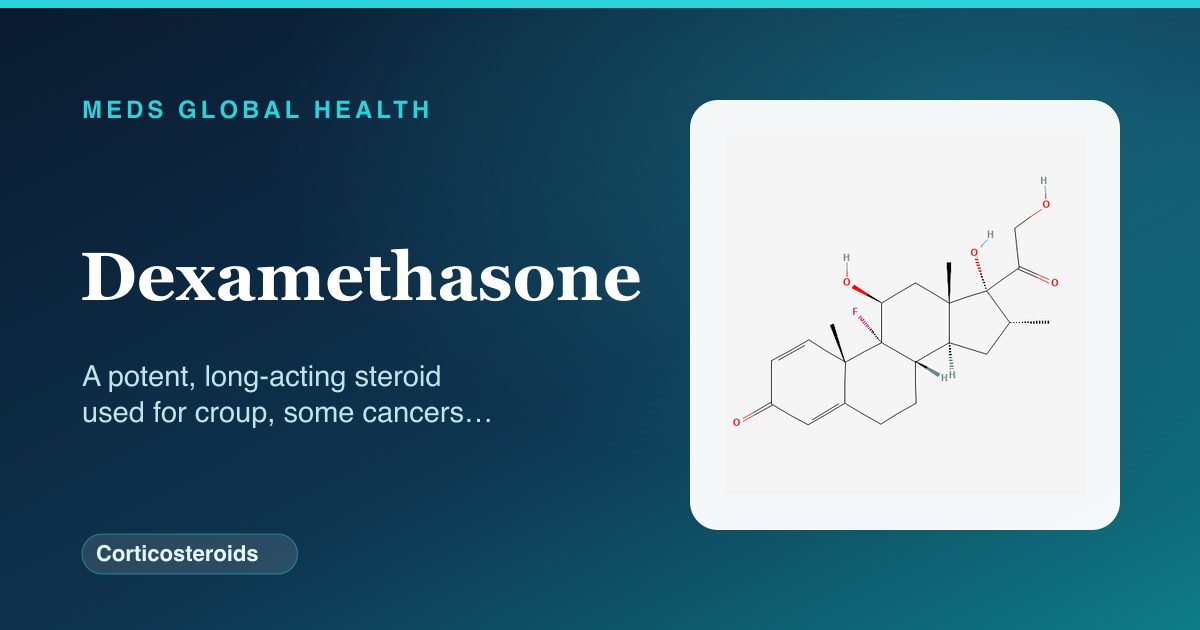
What it is
Dexamethasone is a corticosteroid ("steroid") like prednisolone, but it is more potent and longer-acting. It is used where a strong anti-inflammatory or immune-calming effect is needed: croup in children, reducing swelling around brain tumours or in some cancers, easing sickness from chemotherapy, severe allergic and inflammatory conditions, and — as became widely known — treating people seriously ill with COVID-19 who need oxygen. It works by the same principle as other steroids but, being stronger and lasting longer, a little goes a long way, and the usual steroid cautions apply with particular care.
How it works
Like all corticosteroids, dexamethasone mimics the body's natural hormone cortisol, switching off many of the genes and chemical messengers that drive inflammation and dampening the immune response. This reduces swelling, redness and immune over-activity. Dexamethasone binds strongly to the steroid receptor and stays active in the body longer than prednisolone, which is why it is described as potent and long-acting — and why its suppression of the body's own cortisol production can be pronounced.
Company & origin
Originated / developed by: Merck & Co. / Schering.
Dexamethasone, a potent synthetic corticosteroid, was developed in the late 1950s (synthesized by Merck chemists, with Schering also involved) and introduced clinically around 1958-1961; it is now generic.
Practical use
How to take Dexamethasone
General, dose-free guidance — always follow your prescriber's and the leaflet's specific instructions.
- Usually taken in the morning with food to reduce stomach upset and fit the body's natural rhythm.
- Take it exactly as prescribed and follow any plan to reduce the dose gradually.
- Never stop suddenly after more than a short course, as the body needs time to readjust.
- Carry a steroid card and tell any health professional you are taking steroids, especially if you become unwell.
- Watch for and report signs of infection, mood changes and raised blood sugar.
- Avoid contact with chickenpox or measles if you are not immune, and seek advice if exposed.
Weighing it up
Advantages & disadvantages of Dexamethasone
Advantages
- Very potent and effective at controlling inflammation and immune responses.
- Long-acting, so it may be taken less frequently than some other steroids.
- Useful across many serious conditions, including some where it improves outcomes.
Disadvantages
- Long-term use can cause raised blood sugar, weight gain, thinning bones, high blood pressure and increased infection risk.
- Can affect mood, sleep and behaviour.
- Must never be stopped abruptly after prolonged use because of the risk of a serious withdrawal reaction.
- Requires monitoring and a steroid card during longer courses.
Practical use
Good to know
Because it is long-acting and strong, even short courses can have noticeable effects, and longer use carries the full range of steroid considerations. As with all steroids, it must not be stopped abruptly after more than a short course — the body's cortisol production is suppressed and a sudden stop can cause a dangerous adrenal crisis, so it is tapered. People on it longer term are given a Steroid Emergency Card and "sick-day rules" for times of serious illness or surgery. It is often taken in the morning with food, and it can disturb sleep and lift mood or cause restlessness, especially at first.
Who should not take it / use with caution
- As with other steroids, the issue is extra care rather than an absolute ban — a serious untreated infection (particularly chickenpox or shingles in someone non-immune) is a key caution.
- Used with particular care in people with diabetes (it raises blood sugar markedly), high blood pressure, heart failure, stomach ulcers, osteoporosis, glaucoma, or certain mental-health conditions.
- Caution in children beyond specific uses such as croup, in older people, in pregnancy and breastfeeding, and it is never stopped suddenly after prolonged use.
Monitoring
- Blood sugar (it can rise sharply), blood pressure and weight
- Bone health and eyes on longer-term use
- Signs of infection, mood or sleep changes, and a clear tapering and sick-day plan
Side effects
- Short term: raised blood sugar, increased appetite, difficulty sleeping, mood changes or restlessness, indigestion, and a higher chance of infection.
- Longer term: thinning of the bones and skin, muscle weakness, weight gain with a changed body shape, cataracts or glaucoma, and easy bruising.
- Suppression of the body's own cortisol, so stopping suddenly — or facing serious illness or surgery — can cause a dangerous adrenal crisis; report severe illness, collapse, or being unable to keep medicine down.
Key interactions
- NSAID painkillers and aspirin add to the risk of stomach irritation and ulcers.
- It raises blood sugar, so diabetes treatment may need adjusting, and it can lower blood potassium, which matters with certain heart medicines.
- Some medicines alter its levels (such as certain epilepsy medicines, rifampicin and some antifungals), and live vaccines are generally avoided while the immune system is suppressed.
Available as: Tablets, soluble tablets and an oral liquid, plus an injection used in hospital. Neofordex is a higher-strength branded tablet used in a specific cancer setting.
Answers
Dexamethasone: frequently asked questions
Why is dexamethasone considered "stronger" than prednisolone?
Dexamethasone binds more tightly to the steroid receptor and stays active in the body longer, so it has a more potent and longer-lasting effect for a given amount. This is why it is chosen where a strong, sustained anti-inflammatory action is needed — but it also means its effect on the body's own cortisol production and its side effects can be pronounced.
I heard it was used for COVID — is it a COVID treatment?
Dexamethasone was found to help people who were seriously ill with COVID-19 and needed extra oxygen or ventilation, by calming the harmful inflammation, and it became a standard hospital treatment in those cases. It is not a treatment for mild COVID at home and is only one of its many uses — it long predates the pandemic.
Can I stop it as soon as I feel better?
Only a genuinely short course can usually be stopped straightforwardly. After more than a short course, dexamethasone (like all steroids) suppresses your own cortisol, and stopping abruptly can cause a dangerous adrenal crisis. The dose is tapered gradually under guidance — never stop a longer course on your own.
Why does it keep me awake and change my mood?
Steroids, and dexamethasone in particular, can disturb sleep and cause restlessness, a lift in mood or sometimes low mood, especially when starting or at higher amounts. Taking it in the morning can help with sleep. If mood changes are marked or distressing, tell your team, as the plan can be reviewed.
Is generic dexamethasone the same as the branded version?
Yes — the active ingredient is identical and works the same way. Most dexamethasone is prescribed generically; Neofordex is a particular higher-strength branded tablet used in a specific cancer setting. The important things are taking the right form and following the dosing, tapering and sick-day advice.
The wider class
About Corticosteroids
Dexamethasone belongs to the corticosteroids class. For how the class as a whole works, its shared safety principles and monitoring, see the full guide.
Browse by body system
Authoritative sources
- BNF: Dexamethasone.
- electronic Medicines Compendium (SmPC): Dexamethasone.
- NICE CKS: Dexamethasone tablets and liquid.
Building a medicines information resource?
We create evidence-led, dose-free drug and formulary references for teams.