A corticosteroid eye drop for eye inflammation
Difluprednate
A steroid eye drop used to calm inflammation in the eye, including after surgery.
What is Difluprednate?
Difluprednate is a corticosteroid (steroid) eye drop used to reduce inflammation, swelling and pain in the eye, including after eye surgery such as a cataract operation. It works by calming the immune-driven inflammation inside the eye. It is used for a defined course and tapered down as advised, because using a steroid in the eye for too long can raise the pressure inside the eye and, over time, encourage cataract formation. Steroids can also mask or worsen an eye infection, so it must not be used in an untreated eye infection. Regular eye checks, including eye pressure, are part of treatment.
Education and reference only. This is a plain-language guide to Difluprednate — it deliberately contains no doses. Doses depend on the person, the brand and the reason for treatment, and belong with your prescriber. Always check the BNF, the product labelling (SmPC) and follow medical advice.
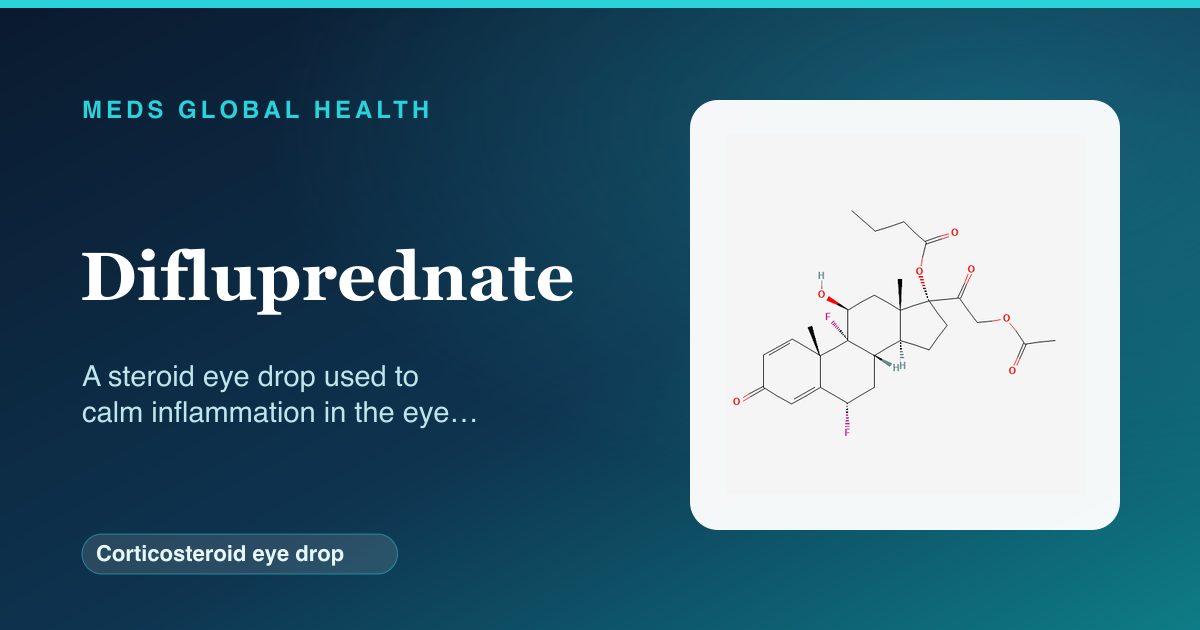
What it is
Difluprednate is a corticosteroid, or steroid, made into an eye drop. Steroids are strong anti-inflammatory medicines, and putting one directly into the eye lets it calm inflammation right where it is needed. It is used to treat inflammation and pain in the eye, particularly after eye surgery such as a cataract operation, and for certain inflammatory eye conditions. It is prescribed and supervised by an eye specialist or doctor, who decides how often to use it and for how long, because steroid eye drops need careful use.
How it works
Difluprednate dampens down the inflammation inside the eye by switching off the immune signals that cause redness, swelling and pain. After surgery, this helps the eye settle and heal more comfortably, and in inflammatory eye conditions it reduces the activity driving the problem. Because it is a steroid acting locally, it works well but is usually used for a set period and then reduced gradually, since prolonged use can have unwanted effects on the eye such as raised pressure and cataract.
Company & origin
A corticosteroid eye drop used to reduce inflammation and pain in the eye, including after eye surgery.
Practical use
How to take Difluprednate
General, dose-free guidance — always follow your prescriber's and the leaflet's specific instructions.
- Use the drops in the affected eye exactly as your eye specialist tells you, following the schedule for tapering down.
- Wash your hands first, tilt your head back, and avoid touching the dropper tip to your eye to keep it clean.
- If you use more than one eye drop, leave a few minutes between them so each has time to work.
- Do not stop suddenly or use it for longer than advised, and attend your eye-pressure and review checks.
- Tell your specialist promptly about new pain, increasing redness or any change in your vision.
Weighing it up
Advantages & disadvantages of Difluprednate
Advantages
- A strong anti-inflammatory that calms eye inflammation and pain right where it is needed.
- Helps the eye settle and heal comfortably after surgery such as a cataract operation.
- Acts locally in the eye, with a defined course and tapering to reduce unwanted effects.
Disadvantages
- Prolonged use can raise the pressure inside the eye and, over time, encourage glaucoma.
- Long-term use can encourage cataract formation.
- Can hide or worsen an eye infection, so it must not be used in an untreated eye infection.
Practical use
Good to know
The most important things to understand about difluprednate are about using a steroid in the eye safely. Using it for longer than needed can raise the pressure inside the eye, which over time can damage the optic nerve and lead to glaucoma, so eye pressure is checked during treatment. Prolonged use can also encourage cataract formation. Because steroids quieten the immune response, they can hide or worsen an eye infection, so the drop must not be used if there is an untreated infection of the eye, and any new pain, redness or worsening vision should be reported. It is usually used for a defined course and then tapered rather than stopped suddenly. Shake the bottle if told to, and follow the schedule and review appointments your eye specialist gives you.
Who should not take it / use with caution
- People with an untreated infection of the eye, such as many viral, fungal or bacterial eye infections, should not use it.
- People who have had a serious allergic reaction to difluprednate or similar steroids should not use it.
- It is used with extra care, and with eye-pressure monitoring, in people with glaucoma or raised eye pressure.
Monitoring
- Checking the pressure inside the eye during treatment, especially with longer courses.
- Reviewing the eye for signs of infection and for response to treatment.
- Watching for cataract formation with prolonged use.
Side effects
- Temporary blurred vision, stinging or discomfort just after putting in the drops.
- Raised pressure inside the eye, which is why eye pressure is monitored.
- With longer use, cataract formation or an increased risk of eye infection that may be masked.
Key interactions
- Tell your specialist about other eye drops you use, including any for glaucoma, so timing and pressure can be managed.
- Used directly in the eye, it has few interactions with tablets, but always give a full medicines list.
- It should not be combined with using contact lenses unless your specialist advises it is safe.
Available as: Eye drops (a drop instilled into the eye).
Answers
Difluprednate: frequently asked questions
What is difluprednate used for?
It is a steroid eye drop used to reduce inflammation, swelling and pain in the eye, including after eye surgery such as a cataract operation.
Why does my eye pressure need checking?
Steroid eye drops can raise the pressure inside the eye, which over time can damage the optic nerve and lead to glaucoma, so the pressure is monitored.
Can I use it if my eye looks infected?
No. Steroids can hide or worsen an eye infection, so it must not be used in an untreated eye infection; report any new pain, redness or worsening vision.
Why must I taper it rather than stop suddenly?
It is usually used for a set course and reduced gradually so the inflammation does not flare back; follow the schedule your specialist gives you.
Will it blur my vision?
Vision can blur briefly just after the drop goes in; wait until it clears before driving or doing anything needing sharp sight.
The wider class
About Corticosteroid eye drop
Difluprednate belongs to the corticosteroid eye drop class. For how the class as a whole works, its shared safety principles and monitoring, see the full guide.
Browse by body system
Authoritative sources
- BNF
- NICE CKS
Building a medicines information resource?
We create evidence-led, dose-free drug and formulary references for teams.