A corticosteroid for inflammation and immune conditions
Methylprednisolone
A steroid medicine used to reduce inflammation and calm the immune system, given as tablets, injections or joint injections.
What is Methylprednisolone?
Methylprednisolone is a corticosteroid, or steroid medicine, used to reduce inflammation and calm an overactive immune system in a wide range of conditions. It can be given as tablets, as an injection into a muscle or vein, or as an injection into a joint or soft tissue. The usual steroid cautions apply: it can increase the risk of infection, raise blood sugar, affect mood and sleep, and, with longer use, weaken bones and affect the body's own steroid production. For this reason it should not be stopped suddenly after more than a short course, but reduced gradually under guidance.
Education and reference only. This is a plain-language guide to Methylprednisolone — it deliberately contains no doses. Doses depend on the person, the brand and the reason for treatment, and belong with your prescriber. Always check the BNF, the product labelling (SmPC) and follow medical advice.
What it is
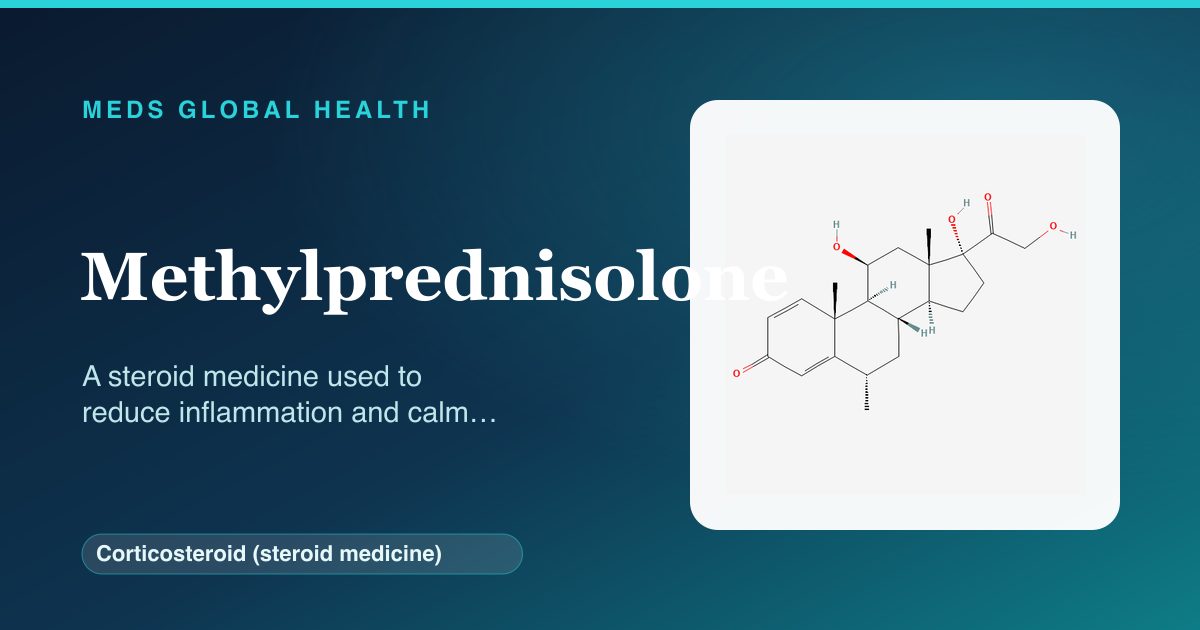
Methylprednisolone is a corticosteroid, a man-made version of a steroid hormone the body makes naturally. It is a powerful anti-inflammatory and immune-calming medicine used in many conditions, from severe allergies and asthma flares to inflammatory and autoimmune diseases affecting the joints, skin, gut and other organs. It is flexible in how it can be given: as tablets for treatment by mouth, as an injection into a muscle or vein for stronger or faster effect, or as an injection directly into an inflamed joint or area. It may be used for short courses or, in some conditions, over longer periods under specialist care.
How it works
Methylprednisolone works like the body's own steroid hormones but more strongly. It damps down inflammation by reducing the release of the chemical messengers that cause swelling, redness and pain, and it calms the immune system so it is less likely to attack the body's own tissues in autoimmune conditions. This broad action is why it helps so many different problems. The same powerful effects, however, explain its side effects: turning down the immune system raises infection risk, and the medicine also affects blood sugar, mood, bones and the body's own steroid production, particularly when used for longer.
Company & origin
A corticosteroid (steroid) used in the UK to reduce inflammation and calm an overactive immune system, available as tablets, injections and joint injections.
What it treats
Conditions Methylprednisolone is used for
Practical use
How to take Methylprednisolone
General, dose-free guidance — always follow your prescriber's and the leaflet's specific instructions.
- Take tablets exactly as prescribed, usually with or after food to reduce stomach upset.
- Do not stop the steroid suddenly after more than a short course; reduce it gradually as advised.
- Carry a steroid card or alert if you are on a longer course, so others know you are taking it.
- Tell your prescriber promptly if you develop signs of infection, such as a fever or feeling unwell.
- For joint or muscle injections, follow the after-care advice given by the person who gives the injection.
Weighing it up
Advantages & disadvantages of Methylprednisolone
Advantages
- A powerful, fast-acting way to reduce inflammation and calm an overactive immune system.
- Flexible to give as tablets, injections, or injections directly into a joint or inflamed area.
- Useful across a very wide range of inflammatory and immune conditions.
Disadvantages
- Increases the risk of infections, which may also show fewer obvious warning signs.
- Can raise blood sugar, affect mood and sleep, and increase appetite.
- With longer use can weaken bones, affect the body's own steroid production, and must not be stopped suddenly.
Practical use
Good to know
The most important practical point with methylprednisolone, as with all steroids, is that you should not stop it suddenly after more than a short course, because the body's own steroid production can be suppressed and stopping abruptly can make you very unwell; it is reduced gradually under guidance instead. Because it calms the immune system, it raises the risk of infections, and some infections may show fewer obvious signs, so report fevers or feeling unwell. It can raise blood sugar (important in diabetes), affect mood, energy and sleep, and increase appetite. With longer use it can thin the bones, raise blood pressure and cause other effects, so longer courses are monitored. Many people carry a steroid card or alert so that other healthcare professionals know they are taking it. Taking tablets with food helps reduce stomach upset.
Who should not take it / use with caution
- People with a serious untreated infection should not usually be given it, except in special circumstances.
- People who have had a serious allergic reaction to methylprednisolone should not take it.
- It is used with extra caution in people with diabetes, high blood pressure, stomach ulcers, or mental-health conditions.
- Live vaccines are generally avoided while taking higher doses, as the immune system is suppressed.
Monitoring
- Checking blood pressure, blood sugar and weight, particularly with longer courses.
- Watching for signs of infection and reviewing bone health with long-term use.
- Planning a gradual reduction rather than a sudden stop when treatment is coming to an end.
Side effects
- A higher risk of infections, sometimes with fewer obvious warning signs.
- Raised blood sugar, increased appetite, weight gain and fluid retention.
- Mood changes, difficulty sleeping, and stomach upset or indigestion.
- With longer use, thinning of the bones, raised blood pressure and suppression of the body's own steroids.
Key interactions
- It can raise blood sugar, so doses of diabetes medicines may need adjusting.
- Taken with anti-inflammatory painkillers (NSAIDs) it increases the risk of stomach ulcers.
- Some medicines can raise or lower its level, and live vaccines are generally avoided during treatment.
Available as: Tablets, injections into a muscle or vein, and injections into a joint or soft tissue.
Answers
Methylprednisolone: frequently asked questions
What is methylprednisolone used for?
It is a steroid medicine used to reduce inflammation and calm an overactive immune system in many conditions, from severe allergies and asthma flares to inflammatory and autoimmune diseases.
Why can't I just stop it suddenly?
After more than a short course your body's own steroid production can be suppressed, so stopping suddenly can make you very unwell; it is reduced gradually under guidance instead.
Does it increase my risk of infection?
Yes. Because it calms the immune system, it raises the risk of infections, and some may show fewer obvious signs, so report any fever or feeling unwell promptly.
Will it affect my blood sugar?
It can raise blood sugar, which is especially important if you have diabetes, so your blood sugar and diabetes treatment may need closer attention while taking it.
Why do I need a steroid card?
A steroid card or alert lets other healthcare professionals know you are taking a steroid, which is important in emergencies and to avoid stopping it too suddenly.
The wider class
About Corticosteroid (steroid medicine)
Methylprednisolone belongs to the corticosteroid (steroid medicine) class. For how the class as a whole works, its shared safety principles and monitoring, see the full guide.
Browse by body system
Authoritative sources
- BNF
- NICE CKS
Building a medicines information resource?
We create evidence-led, dose-free drug and formulary references for teams.