A steroid eye drop for eye inflammation
Loteprednol
A steroid eye drop used to calm inflammation of the eye, such as after eye surgery or in certain eye conditions.
What is Loteprednol?
Loteprednol is a corticosteroid eye drop used to calm inflammation in the eye, for example after eye surgery or in certain inflammatory eye conditions. It works by damping down the inflammation that causes redness, swelling and discomfort. It is put into the affected eye as directed, usually for a limited course. The main concerns with steroid eye drops are a rise in eye pressure (which can lead to glaucoma) and cataract with prolonged use, a higher risk of eye infection, and the need for monitoring, especially the eye pressure.
Education and reference only. This is a plain-language guide to Loteprednol — it deliberately contains no doses. Doses depend on the person, the brand and the reason for treatment, and belong with your prescriber. Always check the BNF, the product labelling (SmPC) and follow medical advice.
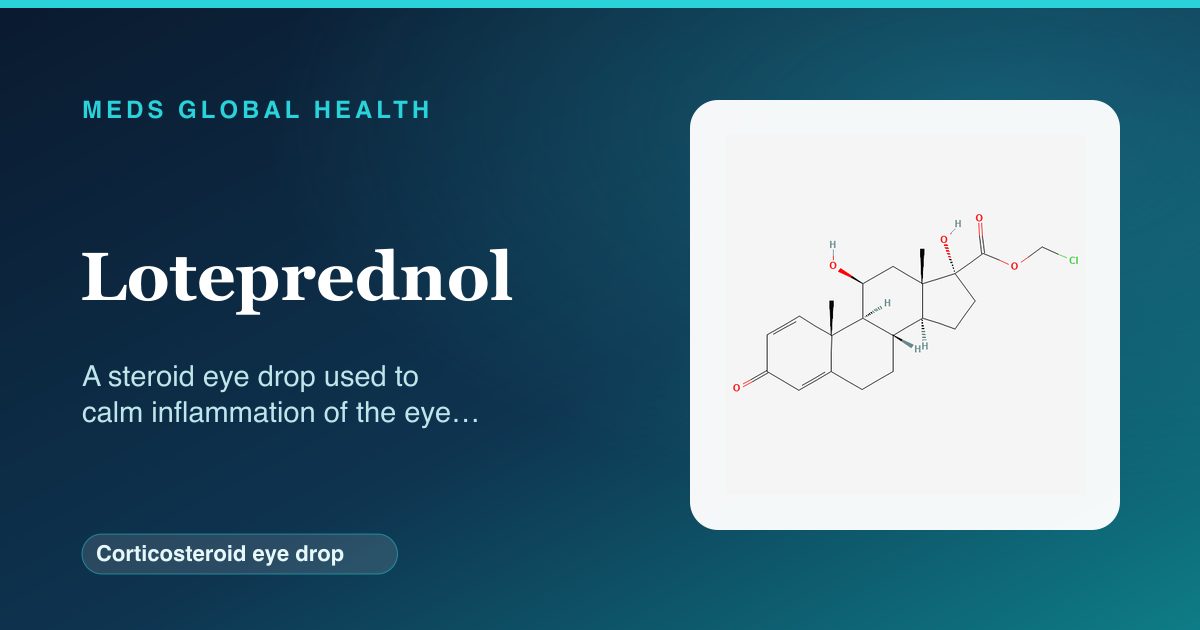
What it is
Loteprednol is a corticosteroid given as an eye drop to treat inflammation of the eye. It is used in situations such as after eye surgery, or in certain inflammatory eye conditions, where calming inflammation eases redness, swelling, soreness and watering. Steroid eye drops are powerful and effective but need careful use, so loteprednol is generally prescribed and supervised by an eye specialist or other prescriber, used in the affected eye for a defined period and then reviewed rather than continued indefinitely.
How it works
Inflammation in the eye causes redness, swelling, discomfort and sometimes blurred vision. Loteprednol, as a steroid, damps down this inflammatory response in the surface and front of the eye, allowing the irritation to settle. By controlling inflammation it protects comfort and, in some conditions, helps prevent inflammation from causing damage. Because steroids applied to the eye can also raise the pressure inside the eye and increase the risk of infection and cataract over time, the drops are used at the lowest effective amount for the shortest needed time, with the eye checked during treatment.
Company & origin
A steroid eye drop used in the UK to treat inflammation of the eye, usually under the care of an eye specialist.
Practical use
How to take Loteprednol
General, dose-free guidance — always follow your prescriber's and the leaflet's specific instructions.
- Put the drops into the affected eye as directed, shaking first if instructed and avoiding touching the eye with the tip.
- Use it for the defined course you are given rather than continuing indefinitely, and attend reviews.
- Attend appointments to have your eye pressure checked, as steroid drops can raise it.
- Report any increasing eye pain, redness or worsening vision promptly.
- If you use other eye drops, leave a gap between them as advised, and remove contact lenses unless told otherwise.
Weighing it up
Advantages & disadvantages of Loteprednol
Advantages
- An effective way to calm inflammation of the eye and ease redness, swelling and discomfort.
- Applied directly to the eye, targeting the inflammation where it is.
- Useful after eye surgery and in certain inflammatory eye conditions.
Disadvantages
- Can raise the pressure inside the eye, which over time can lead to glaucoma.
- Can increase the risk of eye infection and, with prolonged use, cataract.
- Needs eye monitoring, particularly of the eye pressure, and a limited course.
Practical use
Good to know
Loteprednol is an effective way to settle eye inflammation, but the key points all come from it being a steroid in the eye. The most important is that steroid eye drops can raise the pressure inside the eye, which over time can lead to glaucoma and damage to sight, so the eye pressure needs checking during treatment, particularly with longer courses or in people prone to glaucoma. Because steroids quieten the eye's defences, they can also let infections take hold or worsen, so they are not used when certain eye infections are present, and any increasing pain, redness or worsening vision should be reported. Prolonged use can also contribute to cataract. For these reasons the drops are used for a defined course, at the lowest amount that works, and stopped or stepped down as advised rather than carried on indefinitely.
Who should not take it / use with caution
- It should not be used when certain untreated eye infections are present.
- People who have had a reaction to it or to ingredients in the drops should not use it.
- It is used with particular care in people with glaucoma or raised eye pressure.
- It is used with care during pregnancy and breastfeeding, under advice.
Monitoring
- Regular checks of the pressure inside the eye, especially with longer courses.
- Watching for signs of eye infection or worsening symptoms.
- Reviewing how the inflammation responds and whether the drops can be stepped down or stopped.
Side effects
- A rise in the pressure inside the eye, which can lead to glaucoma if unchecked.
- Stinging, blurred vision or discomfort when the drop is put in.
- A higher risk of eye infection, as the eye's defences are quietened.
- With prolonged use, cataract, and rarely thinning of the eye surface.
Key interactions
- If you use other eye drops, space them apart as advised so each works properly.
- Tell your prescriber about other steroid treatments you use, as effects can add up.
- Tell your eye team about glaucoma or any history of raised eye pressure.
Available as: Eye drops put into the affected eye.
Answers
Loteprednol: frequently asked questions
What is loteprednol used for?
It is a steroid eye drop used to calm inflammation of the eye, for example after eye surgery or in certain inflammatory eye conditions, easing redness, swelling and discomfort.
Why does my eye pressure need checking?
Steroid eye drops can raise the pressure inside the eye, which over time can lead to glaucoma and harm sight, so the eye pressure is monitored during treatment.
Can it cause an eye infection?
Because steroids quieten the eye's defences, they can let infections take hold or worsen, so report any increasing pain, redness or worsening vision and do not use it with certain untreated infections.
How long can I use it?
It is used for a defined course at the lowest amount that works, then stepped down or stopped as advised, because prolonged use can raise eye pressure and contribute to cataract.
Can I wear my contact lenses?
You may be asked to remove contact lenses while using the drops unless your prescriber says otherwise, so follow the advice you are given.
The wider class
About Corticosteroid eye drop
Loteprednol belongs to the corticosteroid eye drop class. For how the class as a whole works, its shared safety principles and monitoring, see the full guide.
Browse by body system
Authoritative sources
- BNF
- NICE CKS
Building a medicines information resource?
We create evidence-led, dose-free drug and formulary references for teams.