A prostaglandin glaucoma eye drop
Bimatoprost
A once-daily prostaglandin eye drop that lowers the pressure inside the eye in glaucoma; used in the evening, it can redden the eye and gradually darken the iris, eyelids and eyelashes.
What is Bimatoprost?
Bimatoprost is a prostaglandin eye drop used in the UK to lower raised pressure inside the eye in glaucoma and ocular hypertension. It helps fluid drain out of the eye, which protects the optic nerve from pressure damage over time. It is used once a day in the evening, and can cause eye redness and gradually darken the coloured part of the eye, the eyelid skin and the eyelashes.
Education and reference only. This is a plain-language guide to Bimatoprost — it deliberately contains no doses. Doses depend on the person, the brand and the reason for treatment, and belong with your prescriber. Always check the BNF, the product labelling (SmPC) and follow medical advice.
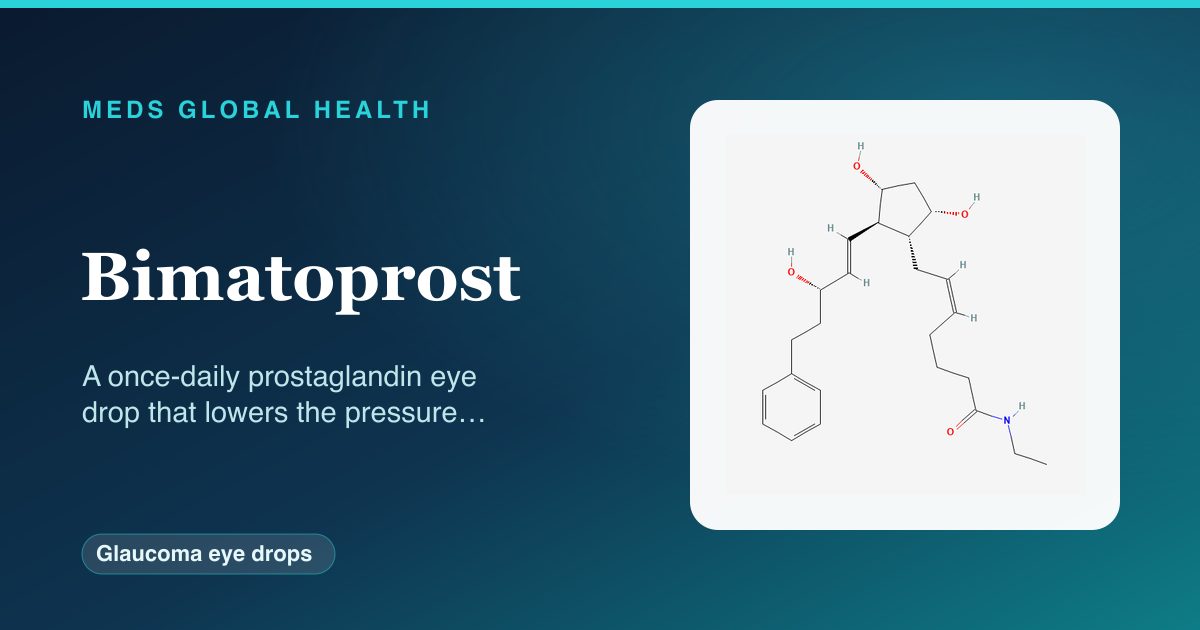
What it is
Bimatoprost is a prostaglandin-type eye drop used to treat glaucoma and ocular hypertension — conditions where the pressure inside the eye is raised, which can slowly damage the optic nerve and harm sight if untreated. Bimatoprost lowers that pressure and is one of the most effective first-choice eye drops for the job. It is used once a day, usually in the evening, and works steadily in the background; like other glaucoma drops, the goal is to protect long-term vision rather than to make the eye feel different day to day.
How it works
The eye constantly makes a fluid (aqueous humour) that drains away to keep pressure stable. In glaucoma this balance is disturbed and the pressure rises. Bimatoprost increases the outflow of this fluid from the eye, mainly through an alternative drainage route, so the pressure inside the eye falls. Lower pressure reduces the strain on the optic nerve, which is how it protects sight over the long term.
Company & origin
Originated / developed by: Developed by Allergan..
Bimatoprost is a prostaglandin-type eye drop developed by Allergan and used in the UK to lower raised pressure inside the eye in glaucoma and ocular hypertension.
What it treats
Conditions Bimatoprost is used for
Practical use
How to take Bimatoprost
General, dose-free guidance — always follow your prescriber's and the leaflet's specific instructions.
- Use it once a day in the evening, as more frequent use does not improve the effect.
- Wash your hands, tilt your head back and put a single drop into the pocket of the lower eyelid without touching the eye or lashes with the bottle.
- After the drop, close the eye gently and press on the inner corner near the nose for a short while to reduce body absorption.
- If you wear soft contact lenses, remove them first and wait a while before putting them back in.
- If you use more than one type of eye drop, leave a gap between them so the first is not washed out.
- Keep using it as prescribed to protect your sight, and do not stop without advice even though your eyes may feel fine.
Weighing it up
Advantages & disadvantages of Bimatoprost
Advantages
- It is one of the most effective eye drops at lowering pressure inside the eye.
- Once-daily evening use makes it simple to remember.
- It works steadily to protect long-term vision in glaucoma and ocular hypertension.
Disadvantages
- It can gradually and often permanently darken the coloured part of the eye (the iris).
- It commonly reddens the eye and can darken the eyelid skin and lengthen, thicken and darken the eyelashes.
- It must be used long-term and consistently, and soft contact lenses need to be removed first.
Practical use
Good to know
Bimatoprost is used once a day, in the evening, as using it more often does not work better and may work less well. After putting a drop in, gently closing the eye and pressing the inner corner near the nose for a short while reduces how much is absorbed into the body. It can gradually and permanently darken the coloured part of the eye (the iris), particularly in mixed-colour eyes, and can darken the eyelid skin and make eyelashes longer, thicker and darker; eyelid changes often fade after stopping. If you wear soft contact lenses, take them out before using the drop and wait before putting them back in. Even though it is just an eye drop, it is used long-term to protect your sight, so it should not be stopped without advice.
Who should not take it / use with caution
- People allergic to bimatoprost or to the ingredients in the drops.
- Used with caution in people with certain types of eye inflammation, a history of eye herpes, or who have had cataract surgery with a lens-capsule problem.
- Care in pregnancy and breastfeeding — it is used only if clearly needed and on specialist advice.
Monitoring
- Regular checks of the pressure inside the eye
- Eye examinations including the optic nerve and field of vision
- Watching for iris, eyelid and eyelash colour changes
Side effects
- Red, itchy or irritated eyes and a feeling of something in the eye.
- Longer, thicker, darker eyelashes and darkening of the eyelid skin.
- Gradual, often permanent darkening of the iris, particularly in mixed-colour eyes.
Key interactions
- Other eye drops that work in a similar prostaglandin way are not usually combined with it.
- If you use other eye drops, leave a gap between them so they are not washed out.
- Tell your optometrist or eye specialist about all the eye drops and medicines you use.
Available as: Eye drops (including preservative-free single-dose units).
Answers
Bimatoprost: frequently asked questions
Why do I use bimatoprost in the evening?
It is designed for once-daily use, and the evening is the recommended time. Using it more than once a day does not lower the pressure better and may actually work less well.
Can bimatoprost really change my eye colour?
Yes. Over months it can gradually and often permanently darken the coloured part of the eye (the iris), most noticeably in people with mixed-colour eyes. It can also darken the eyelid skin and make eyelashes longer and darker; the lash and eyelid changes often fade after stopping.
Why does my eye go red after using it?
Eye redness is a common effect of bimatoprost because it slightly widens blood vessels on the surface of the eye. It is usually mild; tell your eye specialist if it is severe or comes with pain or vision changes.
I wear contact lenses — can I still use bimatoprost?
Take soft contact lenses out before putting the drop in and wait a while before putting them back. The preservative in some versions can be absorbed by soft lenses.
What is the difference between bimatoprost and Lumigan?
They are the same medicine — bimatoprost is the active-ingredient name and Lumigan is a brand name. Generic bimatoprost contains the identical active ingredient.
The wider class
About Glaucoma eye drops
Bimatoprost belongs to the glaucoma eye drops class. For how the class as a whole works, its shared safety principles and monitoring, see the full guide.
Browse by body system
Authoritative sources
- BNF: Bimatoprost.
- NICE CKS: Glaucoma.
- electronic Medicines Compendium (SmPC): Lumigan.
Building a medicines information resource?
We create evidence-led, dose-free drug and formulary references for teams.