An alpha-agonist glaucoma eye drop
Brimonidine
An alpha-agonist eye drop used to lower raised pressure in the eye in glaucoma; it can cause red, itchy eyes and sometimes drowsiness or a dry mouth.
What is Brimonidine?
Brimonidine is an eye drop used to lower raised pressure inside the eye in glaucoma and ocular hypertension. It works both by reducing how much fluid the eye makes and by helping fluid drain away. It can cause red or itchy eyes, and because a little can be absorbed into the body it may sometimes cause drowsiness or a dry mouth.
Education and reference only. This is a plain-language guide to Brimonidine — it deliberately contains no doses. Doses depend on the person, the brand and the reason for treatment, and belong with your prescriber. Always check the BNF, the product labelling (SmPC) and follow medical advice.
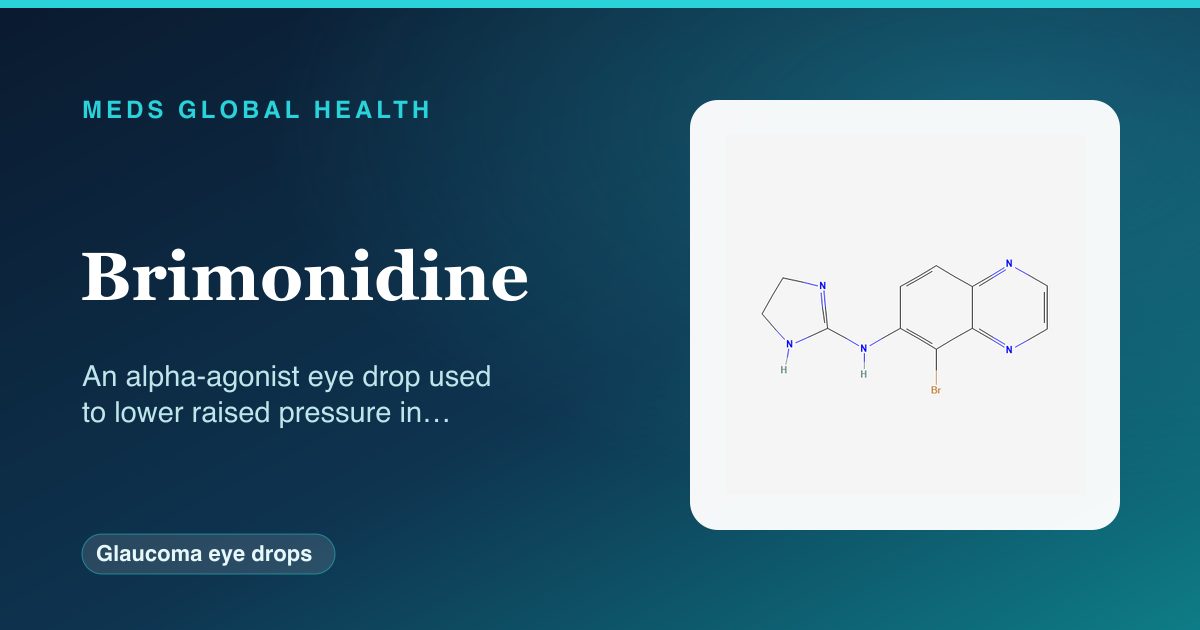
What it is
Brimonidine is an alpha-agonist eye drop used in the UK to lower raised pressure inside the eye in glaucoma and ocular hypertension, conditions where high pressure can gradually damage the optic nerve and harm sight. It may be used on its own or alongside other glaucoma drops when one medicine is not enough. It does not restore sight already lost; instead it protects vision by keeping eye pressure down, which is why it is usually used long term.
How it works
The eye constantly makes and drains a fluid called aqueous humour, and the balance between the two sets the pressure inside the eye. Brimonidine acts on alpha receptors in the eye to reduce how much of this fluid is produced and to improve its drainage. By both making less fluid and helping more flow away, it lowers the pressure inside the eye, which protects the optic nerve over time. A small amount can pass into the bloodstream, which explains effects such as drowsiness and dry mouth.
Company & origin
Originated / developed by: Developed by Allergan..
Brimonidine is an alpha-agonist eye drop developed by Allergan and introduced in the 1990s to lower pressure in the eye.
What it treats
Conditions Brimonidine is used for
Practical use
How to take Brimonidine
General, dose-free guidance — always follow your prescriber's and the leaflet's specific instructions.
- Wash your hands, tilt your head back and put the drop into the pocket made by gently pulling down the lower lid.
- After the drop, close your eye and press gently on the inner corner near your nose for a short while to reduce how much is absorbed.
- Leave a gap of several minutes between brimonidine and any other eye drops so each has time to work.
- If you wear contact lenses, follow your team's advice about removing them before the drop and waiting before putting them back.
- Take care with driving or machinery if you feel drowsy, and use the drops regularly even though you may not feel any difference.
- Do not use it in babies or young children, and keep it well out of their reach.
Weighing it up
Advantages & disadvantages of Brimonidine
Advantages
- It effectively lowers eye pressure to help protect sight in glaucoma.
- It works in two ways, reducing fluid production and improving drainage.
- It can be combined with other glaucoma drops when one medicine is not enough.
Disadvantages
- Red, itchy or uncomfortable eyes are common and can lead to an allergic-type reaction over time.
- It can be absorbed enough to cause drowsiness or a dry mouth.
- It is unsuitable for young children because of the risk of serious drowsiness and breathing problems.
Practical use
Good to know
Red, itchy or uncomfortable eyes are common with this drop. Because a little medicine can be absorbed into the body, it can sometimes cause drowsiness, tiredness or a dry mouth, so take care with driving or machinery if you feel affected. Pressing gently on the inner corner of the eye (near the nose) for a short time after putting the drop in reduces how much is absorbed and can lessen these effects. It is not suitable for young children, in whom it can cause significant drowsiness and breathing problems. If you wear contact lenses, ask your team about removing them before drops and when to put them back in.
Who should not take it / use with caution
- Babies and young children, in whom it can cause serious drowsiness and breathing problems.
- People taking certain antidepressants called MAOIs.
- Anyone who has had an allergic reaction to brimonidine.
Monitoring
- Regular checks of eye pressure to confirm the drops are working.
- Reviews of the optic nerve and visual fields to protect sight over time.
- Watching for eye redness or allergy and for drowsiness, especially when starting.
Side effects
- Red, itchy, watery or uncomfortable eyes.
- Drowsiness, tiredness and a dry mouth.
- Blurred vision or a gritty feeling shortly after using the drop.
- An allergic-type reaction of the eye with longer use.
Key interactions
- Sedating medicines, alcohol and other drops or medicines that cause drowsiness can add to the tired feeling.
- Certain antidepressants (MAOIs) should not be combined with brimonidine.
- Blood-pressure and heart medicines may interact, so tell your prescriber about all your medicines.
Available as: Eye drops.
Answers
Brimonidine: frequently asked questions
How do brimonidine drops protect my sight?
They lower the raised pressure inside the eye that can gradually damage the optic nerve in glaucoma. By keeping the pressure down, they help protect the vision you still have; they do not bring back sight that has already been lost.
Why might eye drops make me feel drowsy?
A small amount of the medicine can pass from the eye into the bloodstream and affect the rest of the body, which can cause drowsiness or a dry mouth. Pressing on the inner corner of the eye after the drop helps reduce how much is absorbed.
Why should I press on the corner of my eye?
Gently pressing the inner corner near the nose for a short time after the drop helps stop the medicine draining into the tear duct and being absorbed into the body. This can reduce side effects such as drowsiness and dry mouth.
Can children use brimonidine?
It is not suitable for babies and young children, in whom it can cause serious drowsiness and breathing problems. Keep it well out of their reach and seek urgent help if a child accidentally uses or swallows it.
Can I use it with my other glaucoma drops?
Yes, it is often used alongside other glaucoma drops when one medicine alone is not enough. Leave a gap of several minutes between different drops so each has time to be absorbed and work properly.
The wider class
About Glaucoma eye drops
Brimonidine belongs to the glaucoma eye drops class. For how the class as a whole works, its shared safety principles and monitoring, see the full guide.
Browse by body system
Authoritative sources
- BNF
- NICE CKS
Building a medicines information resource?
We create evidence-led, dose-free drug and formulary references for teams.