A glaucoma eye drop (beta-blocker)
Levobunolol
A beta-blocker eye drop that lowers pressure inside the eye in glaucoma, used once or twice daily.
What is Levobunolol?
Levobunolol is a beta-blocker eye drop used to lower raised pressure inside the eye in glaucoma and ocular hypertension, helping protect the optic nerve and sight. It is usually used once or twice a day. Although it is a drop, some is absorbed into the body, so it can affect the heart and lungs; it is avoided in asthma, COPD and certain heart conditions, and it can mask the warning signs of low blood sugar in people with diabetes.
Education and reference only. This is a plain-language guide to Levobunolol — it deliberately contains no doses. Doses depend on the person, the brand and the reason for treatment, and belong with your prescriber. Always check the BNF, the product labelling (SmPC) and follow medical advice.
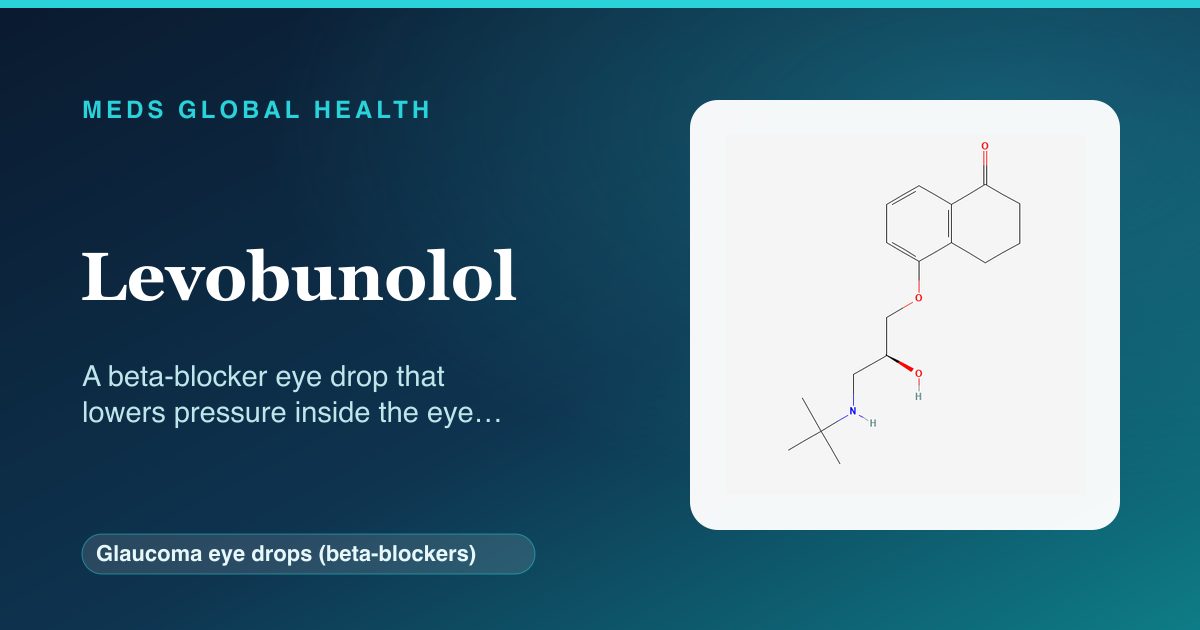
What it is
Levobunolol is an eye drop of a type called a beta-blocker, used to treat glaucoma and ocular hypertension by lowering the pressure inside the eye. Lowering this pressure helps protect the optic nerve and preserve vision. Beta-blocker drops have been used for many years and may be used alone or alongside other glaucoma treatments. It is usually used once or twice a day.
How it works
Levobunolol reduces the amount of fluid the eye produces. The eye makes a fluid called aqueous humour, and beta-blocker drops cut down its production, so less fluid builds up and the pressure inside the eye falls. Lowering this pressure slows damage to the optic nerve, which is what threatens sight in glaucoma.
Company & origin
Originated / developed by: Allergan (originator).
A beta-blocker eye drop used in the UK to lower eye pressure in glaucoma and ocular hypertension.
What it treats
Conditions Levobunolol is used for
Practical use
How to take Levobunolol
General, dose-free guidance — always follow your prescriber's and the leaflet's specific instructions.
- Use the drop in the affected eye(s) once or twice a day as prescribed.
- After instilling the drop, gently close the eye and press on the inner corner for a short time to reduce how much is absorbed into the body.
- If you use other eye drops, leave several minutes between them so each has time to work.
- Tell any doctor or dentist treating you that you use a beta-blocker eye drop, and report breathlessness, wheeze or a very slow pulse.
- If you miss a dose, use it when you remember unless it is nearly time for the next, then skip it; do not use extra drops to catch up.
Weighing it up
Advantages & disadvantages of Levobunolol
Advantages
- Effective at lowering eye pressure, with a long track record of use.
- Usually only needs to be used once or twice a day.
- Can be used alone or combined with other glaucoma treatments.
Disadvantages
- Some is absorbed into the body and can affect the heart and lungs.
- Must be avoided in asthma, COPD and certain heart conditions.
- Can mask the warning signs of low blood sugar in people with diabetes.
Practical use
Good to know
Even though levobunolol is a drop, enough can be absorbed into the bloodstream to act like a beta-blocker taken by mouth, so it can slow the heart and affect breathing. It is therefore avoided in people with asthma or COPD and in certain heart conditions such as a very slow heart rate or some types of heart failure. In people with diabetes it can mask the usual warning signs of low blood sugar, such as a fast heartbeat, so extra care is needed. To reduce how much is absorbed, gently press on the inner corner of the eye for a short time after instilling the drop, and separate different eye drops in time. Tell any doctor treating you that you use this drop.
Who should not take it / use with caution
- People with asthma or COPD, or a history of significant breathing problems, should not use it.
- People with a very slow heart rate, certain heart-rhythm problems or some types of heart failure should avoid it.
- Anyone who has had an allergic reaction to the drop or its ingredients should not use it.
Monitoring
- Regular checks of eye pressure to confirm it is well controlled.
- Eye examinations to monitor the optic nerve and field of vision over time.
- Watching for breathlessness, a slow pulse or tiredness that may mean whole-body effects.
Side effects
- Eye stinging, irritation, dryness or blurred vision after instilling.
- A slower heartbeat, breathlessness or wheeze if enough is absorbed.
- Tiredness, dizziness or, in people with diabetes, masking of low-blood-sugar warning signs.
Key interactions
- Other beta-blockers or heart-rate-slowing medicines can add to effects on the heart.
- Some heart and blood-pressure medicines, such as certain calcium-channel blockers, need care.
- Tell your prescriber about diabetes medicines, as it can mask low-blood-sugar warning signs.
Available as: Eye drops, including a longer-acting (gel-forming) preparation.
Answers
Levobunolol: frequently asked questions
It is only an eye drop — why does it affect my heart and lungs?
Some of the drop is absorbed into the bloodstream and acts like a beta-blocker, so it can slow the heart and affect breathing; pressing on the inner corner of the eye reduces this.
Can I use it if I have asthma?
No. Beta-blocker eye drops are avoided in asthma and COPD because they can tighten the airways and cause breathing problems.
Does it affect diabetes?
It can mask the usual warning signs of low blood sugar, such as a fast heartbeat, so extra care with blood-sugar monitoring is advised.
How do I reduce side effects?
Gently press on the inner corner of the eye for a short time after the drop, and separate different eye drops in time, to lessen how much is absorbed.
Should I tell other doctors I use it?
Yes. Tell any doctor or dentist treating you, as it can interact with heart and blood-pressure treatments and affect anaesthesia.
The wider class
About Glaucoma eye drops (beta-blockers)
Levobunolol belongs to the glaucoma eye drops (beta-blockers) class. For how the class as a whole works, its shared safety principles and monitoring, see the full guide.
Browse by body system
Authoritative sources
- BNF
- NICE CKS
Building a medicines information resource?
We create evidence-led, dose-free drug and formulary references for teams.