A carbonic anhydrase inhibitor eye drop
Brinzolamide
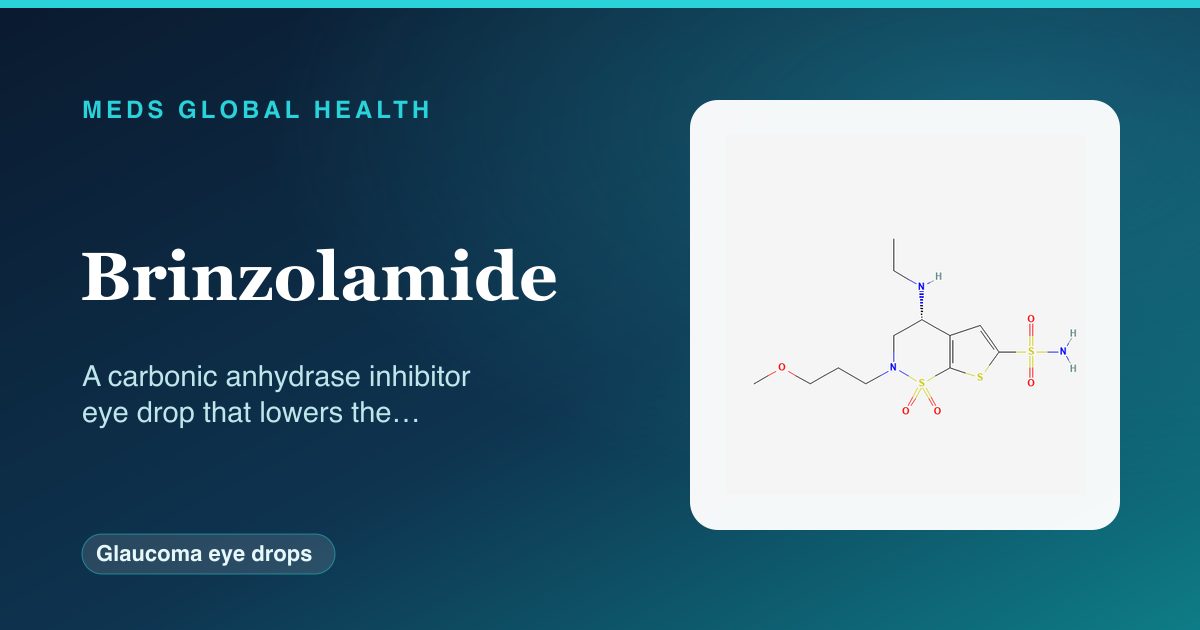
A carbonic anhydrase inhibitor eye drop that lowers the pressure inside the eye by reducing how much fluid the eye makes; it often briefly blurs vision and can leave a bitter taste.
What is Brinzolamide?
Brinzolamide is a carbonic anhydrase inhibitor eye drop used in the UK to lower raised pressure inside the eye in glaucoma and ocular hypertension. It works by reducing how much fluid the eye produces, which lowers the pressure and protects the optic nerve. It commonly causes brief blurred vision and a bitter taste after each drop, and the bottle should be shaken before use.
Education and reference only. This is a plain-language guide to Brinzolamide — it deliberately contains no doses. Doses depend on the person, the brand and the reason for treatment, and belong with your prescriber. Always check the BNF, the product labelling (SmPC) and follow medical advice.
What it is
Brinzolamide is a carbonic anhydrase inhibitor eye drop used to treat glaucoma and ocular hypertension, where the pressure inside the eye is raised and can slowly damage the optic nerve. Instead of improving drainage like prostaglandin drops, brinzolamide works by reducing how much fluid the eye makes. It is often used on its own or, more commonly, added to another eye drop (such as a beta-blocker or prostaglandin) when a single drop is not enough. It is used regularly, long-term, to protect sight rather than to relieve symptoms.
How it works
The eye makes a fluid called aqueous humour, a process that depends on an enzyme called carbonic anhydrase. Brinzolamide blocks this enzyme in the eye, so less fluid is produced. With less fluid being made, the pressure inside the eye falls, which reduces strain on the optic nerve and helps protect sight over the long term.
Company & origin
Originated / developed by: Developed by Alcon..
Brinzolamide is a carbonic anhydrase inhibitor eye drop developed by Alcon and used in the UK to lower raised pressure inside the eye in glaucoma and ocular hypertension.
What it treats
Conditions Brinzolamide is used for
Practical use
How to take Brinzolamide
General, dose-free guidance — always follow your prescriber's and the leaflet's specific instructions.
- Shake the bottle well before each use, as the drop is a suspension.
- Wash your hands, tilt your head back and put a drop into the pocket of the lower eyelid without touching the eye with the bottle.
- Close the eye gently afterwards and press the inner corner near the nose for a short while to reduce the bitter taste and body absorption.
- Wait for any blurred vision to clear before driving or doing close work.
- If you use more than one eye drop, leave a gap between them and remove soft contact lenses before use.
- Keep using it regularly to protect your sight, and do not stop without advice.
Weighing it up
Advantages & disadvantages of Brinzolamide
Advantages
- It lowers eye pressure by reducing fluid production, a different action that complements other drops well.
- It can be a useful add-on when one drop alone is not enough, or an option when other classes are unsuitable.
- It does not change eye, eyelid or eyelash colour the way prostaglandin drops can.
Disadvantages
- It very commonly causes brief blurred vision after each drop.
- A bitter or unusual taste afterwards is common.
- It needs shaking before use, and is avoided or used cautiously in people with a sulfonamide allergy.
Practical use
Good to know
Brinzolamide is a milky suspension, so the bottle needs a good shake before each use. It very commonly causes a few moments of blurred vision after a drop, so it is worth waiting until your sight clears before driving or doing close work. A bitter or unusual taste afterwards is common and harmless; pressing the inner corner of the eye near the nose after the drop reduces this. Because it is chemically related to sulfonamide ('sulfa') medicines, tell your eye specialist if you have ever had a sulfonamide allergy. If you use other eye drops as well, leave a gap between them, and remove soft contact lenses before use.
Who should not take it / use with caution
- People with a known sulfonamide ('sulfa') allergy, as brinzolamide is chemically related.
- People with severe kidney problems.
- Used with caution in pregnancy and breastfeeding, and alongside oral carbonic anhydrase inhibitors.
Monitoring
- Regular checks of the pressure inside the eye
- Eye examinations including the optic nerve and field of vision
- Watching for any allergic-type or eye-surface reactions
Side effects
- Brief blurred vision and a bitter or unusual taste after each drop.
- Eye irritation, redness or a feeling of something in the eye.
- Headache; rarely, an allergic-type reaction in people sensitive to sulfonamides.
Key interactions
- It should not usually be combined with a carbonic anhydrase inhibitor taken by mouth.
- If you use other eye drops, leave a gap between them so they are not washed out.
- Tell your eye specialist about all your medicines, including any sulfonamide allergy.
Available as: Eye drops (a suspension that must be shaken before use).
Answers
Brinzolamide: frequently asked questions
Why do I need to shake brinzolamide before using it?
Brinzolamide is a milky suspension rather than a clear solution, so shaking the bottle well before each use makes sure the medicine is evenly mixed and you get the right effect from every drop.
Why does my vision blur after putting the drop in?
Brief blurred vision is a very common effect of brinzolamide. It usually settles within a few moments; wait until your sight clears before driving or doing close work.
I had a reaction to a sulfa antibiotic — is brinzolamide safe?
Brinzolamide is chemically related to sulfonamide ('sulfa') medicines, so tell your eye specialist if you have ever had a sulfonamide allergy. They will decide whether it is suitable for you.
Why does it leave a bitter taste in my mouth?
A small amount of the drop can drain through the tear duct to the back of the throat, giving a bitter taste. Pressing the inner corner of the eye near the nose after the drop reduces this; it is harmless.
What is the difference between brinzolamide and Azopt?
They are the same medicine — brinzolamide is the active-ingredient name and Azopt is a brand name. Generic brinzolamide contains the identical active ingredient.
The wider class
About Glaucoma eye drops
Brinzolamide belongs to the glaucoma eye drops class. For how the class as a whole works, its shared safety principles and monitoring, see the full guide.
Browse by body system
Authoritative sources
- BNF: Brinzolamide.
- NICE CKS: Glaucoma.
- electronic Medicines Compendium (SmPC): Azopt.
Building a medicines information resource?
We create evidence-led, dose-free drug and formulary references for teams.