A beta-blocker glaucoma eye drop
Carteolol
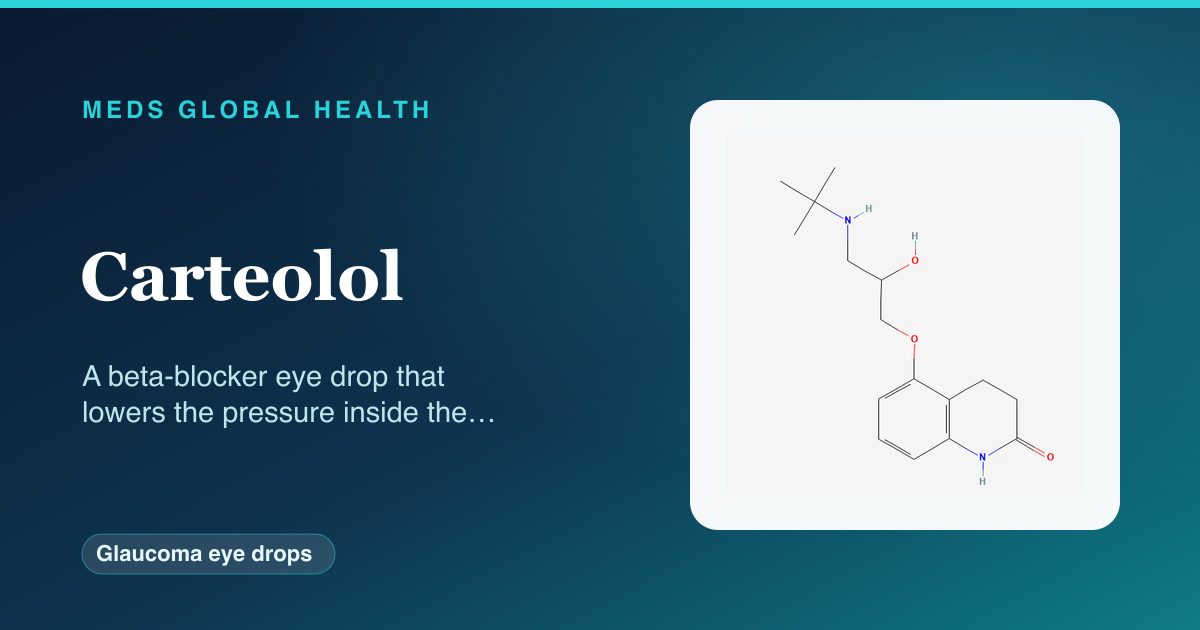
A beta-blocker eye drop that lowers the pressure inside the eye in glaucoma and raised eye pressure.
What is Carteolol?
Carteolol is a beta-blocker eye drop used to lower the pressure inside the eye in glaucoma and ocular hypertension. It reduces the amount of fluid the eye produces, easing the pressure that can damage the optic nerve. Even as a drop, some can be absorbed into the body, so the usual beta-blocker cautions apply, particularly in asthma and slow heart rhythms.
Education and reference only. This is a plain-language guide to Carteolol — it deliberately contains no doses. Doses depend on the person, the brand and the reason for treatment, and belong with your prescriber. Always check the BNF, the product labelling (SmPC) and follow medical advice.
What it is
Carteolol is a beta-blocker given as eye drops to treat glaucoma and raised pressure inside the eye (ocular hypertension). High pressure in the eye can, over time, damage the optic nerve and harm vision, so lowering it protects sight. Although it is applied to the eye, a small amount can reach the bloodstream and produce beta-blocker effects elsewhere in the body.
How it works
The eye constantly makes a fluid (aqueous humour) that maintains its pressure. Carteolol, as a beta-blocker, reduces how much of this fluid the eye produces, so the pressure inside the eye falls. Lower pressure reduces the risk of optic-nerve damage that drives sight loss in glaucoma.
What it treats
Conditions Carteolol is used for
Practical use
How to take Carteolol
General, dose-free guidance — always follow your prescriber's and the leaflet's specific instructions.
- Wash your hands, tilt your head back and apply the drop into the pocket of the lower lid without touching the eye with the dropper.
- After the drop, gently press the inner corner of the eye and keep the eye closed for a short while to limit absorption into the body.
- Leave a short gap if you use more than one type of eye drop.
- Remove soft contact lenses before using drops that contain a preservative and wait a short while before replacing them.
- Keep using it regularly, as glaucoma usually has no symptoms but the pressure still needs controlling.
- Do not stop suddenly without advice — your eye pressure will rise again if treatment stops.
Weighing it up
Advantages & disadvantages of Carteolol
Advantages
- Effectively lowers eye pressure to protect the optic nerve and preserve sight.
- A well-established treatment, used once or twice a day as directed.
- Acts mainly in the eye, with proper technique limiting whole-body effects.
Disadvantages
- As a beta-blocker, it can cause systemic effects even as a drop, including slowing the heart or worsening breathing.
- Unsuitable for people with asthma or certain heart rhythm and lung conditions.
- Needs regular, lifelong use and good drop technique, and can sting or blur vision briefly.
Practical use
Good to know
After putting in the drop, gently press on the inner corner of the eye (near the nose) and keep the eye closed for a short while — this reduces how much medicine drains into the body and lessens whole-body side effects. Because it is a beta-blocker, it must be used cautiously in asthma, certain breathing problems, a slow heart rate or some heart conditions, even though it is only a drop. If you use other eye drops too, leave a short gap between them.
Who should not take it / use with caution
- People with asthma or a history of significant breathing problems, or chronic obstructive lung disease.
- People with a slow heart rate, certain heart-block or uncontrolled heart failure.
- Used with caution alongside other beta-blockers or heart-rhythm medicines, and in pregnancy or breastfeeding only on advice.
Monitoring
- Eye pressure and the health of the optic nerve over time.
- Heart rate and breathing, especially when starting.
- Any new or worsening shortness of breath, which should be reported.
Side effects
- Brief stinging, burning or blurred vision after the drop; dry or irritated eyes.
- Less commonly, a slow heartbeat, tiredness, or worsening of breathing in susceptible people.
- Occasionally headache or, rarely, mood or sleep changes.
Key interactions
- Other beta-blockers (including tablets) add to effects on the heart and blood pressure.
- Heart-rate-slowing medicines such as verapamil, diltiazem or digoxin increase the risk of a slow heart rate.
- Care with other glaucoma drops and with medicines for diabetes, as beta-blockers can mask warning signs of low blood sugar.
Available as: Eye drops.
Answers
Carteolol: frequently asked questions
Why press on the corner of my eye after the drop?
Pressing gently on the inner corner of the eye and keeping it closed for a short while reduces how much of the medicine drains down into the body, which lessens whole-body beta-blocker side effects.
I have asthma — can I use it?
Beta-blocker eye drops can worsen asthma even though they go in the eye, so carteolol is generally avoided if you have asthma or certain breathing problems. Tell your eye specialist about any lung conditions.
Will it affect my heart?
It can, because some is absorbed into the body. It may slow the heart, so it is used cautiously or avoided in people with a slow heart rate or certain heart conditions.
Do I need to keep using it if my eyes feel fine?
Yes — glaucoma usually causes no symptoms until vision is already affected. The drops control the pressure that protects your sight, so keep using them regularly unless advised to stop.
Can I use it with my other eye drops?
Usually yes, but leave a short gap between different drops so they are not washed out, and apply them in the order your eye specialist advises.
The wider class
About Glaucoma eye drops
Carteolol belongs to the glaucoma eye drops class. For how the class as a whole works, its shared safety principles and monitoring, see the full guide.
Browse by body system
Authoritative sources
- BNF
- NICE CKS
Building a medicines information resource?
We create evidence-led, dose-free drug and formulary references for teams.