An opioid painkiller (a hydrocodone prodrug) combined with paracetamol
Benzhydrocodone
An opioid painkiller, combined with paracetamol, used for short-term moderate to severe pain (mainly a US product).
What is Benzhydrocodone?
Benzhydrocodone is an opioid painkiller used, in combination with paracetamol, for short-term moderate to severe pain. It is a prodrug of hydrocodone, meaning the body converts it into the active opioid after it is taken. Like all opioids, its most serious risk is slowed or stopped breathing (respiratory depression), and it can cause sedation and lead to dependence and addiction, so it is a controlled drug used only for as long as needed. It is largely a United States product and is not a routine medicine in the UK. It should never be combined with alcohol or other sedating medicines without medical advice.
Education and reference only. This is a plain-language guide to Benzhydrocodone — it deliberately contains no doses. Doses depend on the person, the brand and the reason for treatment, and belong with your prescriber. Always check the BNF, the product labelling (SmPC) and follow medical advice.
What it is
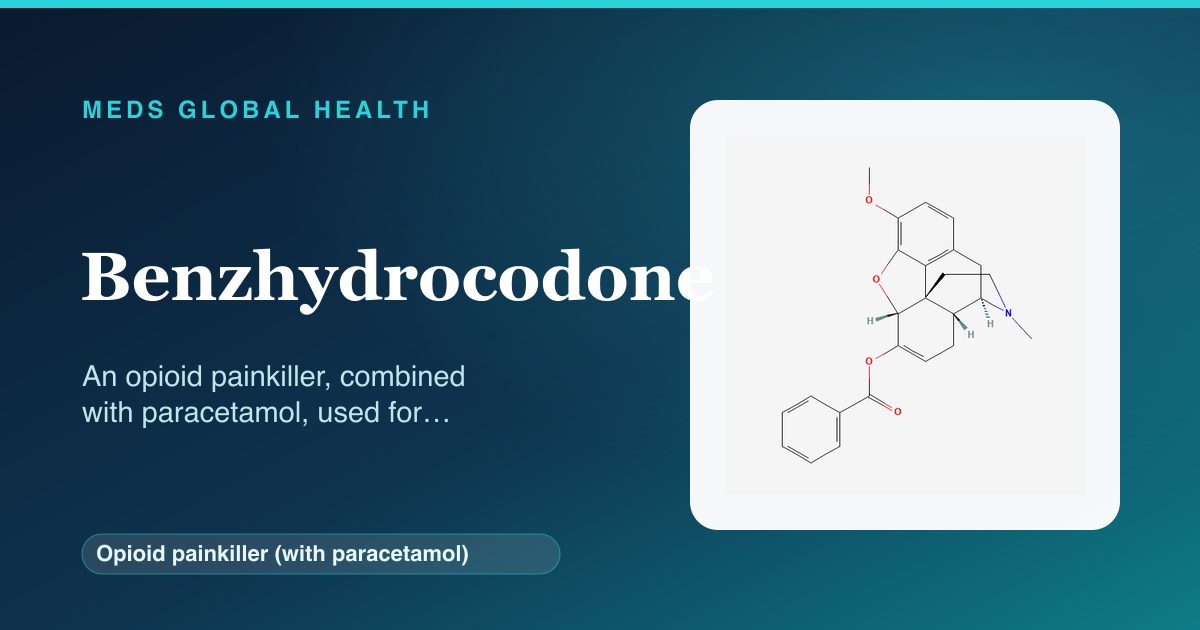
Benzhydrocodone is an opioid painkiller given in a combined tablet with paracetamol, used for the short-term relief of moderate to severe pain when milder painkillers are not enough. It is a prodrug, meaning it is inactive until the body converts it into hydrocodone, the active opioid. Like other strong opioids, it is a controlled medicine because of the risk of misuse and dependence. It is largely used in the United States and is not a routinely used medicine in the UK, where other opioids are more usual; this page is for general understanding rather than UK prescribing.
How it works
After it is taken, benzhydrocodone is converted by the body into hydrocodone, which acts on opioid receptors in the brain and spinal cord to reduce the sensation of pain. The paracetamol it is combined with works in a different way and adds to the pain relief. Because it acts on the same brain areas that control breathing and alertness, opioids can also slow breathing and cause drowsiness, which is why dosing is kept to the lowest effective amount for the shortest time. The prodrug design does not remove the opioid risks, as it still becomes a full opioid in the body.
Company & origin
An opioid painkiller largely used in the United States, combined with paracetamol; not a routine UK product.
Practical use
How to take Benzhydrocodone
General, dose-free guidance — always follow your prescriber's and the leaflet's specific instructions.
- Take it exactly as prescribed, at the lowest dose that controls your pain and for the shortest time needed.
- Do not drink alcohol or take other sedating medicines with it, as this can dangerously slow your breathing.
- Do not take other paracetamol-containing products at the same time, as it already contains paracetamol.
- Keep it locked safely away from children and others, as accidental use can be fatal.
- Do not stop a longer course suddenly without advice, as opioids may need to be reduced gradually.
Weighing it up
Advantages & disadvantages of Benzhydrocodone
Advantages
- Provides relief for short-term moderate to severe pain when milder painkillers are not enough.
- Combines an opioid with paracetamol, which work in different ways to relieve pain.
- Can be useful for short courses under careful medical supervision.
Disadvantages
- Can cause slowed or stopped breathing (respiratory depression), which can be life-threatening.
- Carries a risk of dependence and addiction, and commonly causes sedation and constipation.
- Is a controlled drug, largely a US product, and dangerous if combined with alcohol or other sedatives.
Practical use
Good to know
The most important things to understand about benzhydrocodone are the opioid risks. The most serious is slowed or stopped breathing (respiratory depression), which can be life-threatening and is much more likely if it is combined with alcohol, sleeping tablets, anxiety medicines or other sedatives. It can also cause marked drowsiness, and with continued use it can lead to physical dependence and to addiction, which is why it is a controlled drug used only for as long as truly needed and then stopped carefully. Constipation is very common. It must be kept safely away from children and others, as accidental use can be fatal. Because it contains paracetamol, it is important not to take other paracetamol-containing products at the same time. It is largely a US product rather than a routine UK medicine.
Who should not take it / use with caution
- People who have had a serious allergic reaction to it, hydrocodone or paracetamol should not take it.
- It should not be used by people with significant breathing problems or a blocked bowel.
- It should be avoided or used with great caution alongside alcohol, sedatives or other opioids.
- It is used with great care in pregnancy and breastfeeding, with medical advice, as opioids can affect the baby.
Monitoring
- Reviewing whether the pain is controlled and whether the opioid is still needed.
- Watching for excessive drowsiness or breathing problems, especially early on.
- Watching for signs of dependence with longer use and planning a careful reduction when stopping.
Side effects
- Drowsiness and, most seriously, slowed or stopped breathing (respiratory depression).
- Constipation, nausea, vomiting and dizziness.
- With continued use, physical dependence and the risk of addiction.
Key interactions
- Alcohol and other sedatives, such as sleeping tablets and anxiety medicines, dangerously add to its breathing and drowsiness effects.
- Other paracetamol-containing products must be avoided to prevent paracetamol overdose.
- Some medicines that change how the body handles it can alter its effect, so a full medicines list is important.
Available as: Tablets taken by mouth, combined with paracetamol.
Answers
Benzhydrocodone: frequently asked questions
What is benzhydrocodone used for?
It is an opioid painkiller, combined with paracetamol, used for the short-term relief of moderate to severe pain when milder painkillers are not enough.
What does prodrug mean here?
It means benzhydrocodone is inactive until the body converts it into hydrocodone, the active opioid, so it still carries full opioid risks.
What is its most serious risk?
The most serious risk is slowed or stopped breathing (respiratory depression), which can be life-threatening, especially if combined with alcohol or other sedatives.
Can it cause addiction?
Yes. Like other opioids it can lead to dependence and addiction, which is why it is a controlled drug used only for as long as truly needed.
Is it used in the UK?
It is largely a United States product and is not a routine UK medicine, where other opioids are more usual.
The wider class
About Opioid painkiller (with paracetamol)
Benzhydrocodone belongs to the opioid painkiller (with paracetamol) class. For how the class as a whole works, its shared safety principles and monitoring, see the full guide.
Browse by body system
Authoritative sources
- BNF
- NICE CKS
Building a medicines information resource?
We create evidence-led, dose-free drug and formulary references for teams.