A strong opioid painkiller for severe pain
Oxymorphone
A strong opioid painkiller used for severe pain, with a high risk of dependence and breathing problems.
What is Oxymorphone?
Oxymorphone is a strong opioid painkiller used for severe pain when weaker painkillers are not enough. Like other strong opioids, its most important dangers are that it can slow or stop breathing (respiratory depression), especially if too much is taken or it is combined with other sedating medicines or alcohol, and that it can cause dependence and addiction. It also commonly causes drowsiness and constipation. It is a controlled drug and is usually taken on an empty stomach, as food can change how much is absorbed. It is largely a US product and is not a routine painkiller in the UK.
Education and reference only. This is a plain-language guide to Oxymorphone — it deliberately contains no doses. Doses depend on the person, the brand and the reason for treatment, and belong with your prescriber. Always check the BNF, the product labelling (SmPC) and follow medical advice.
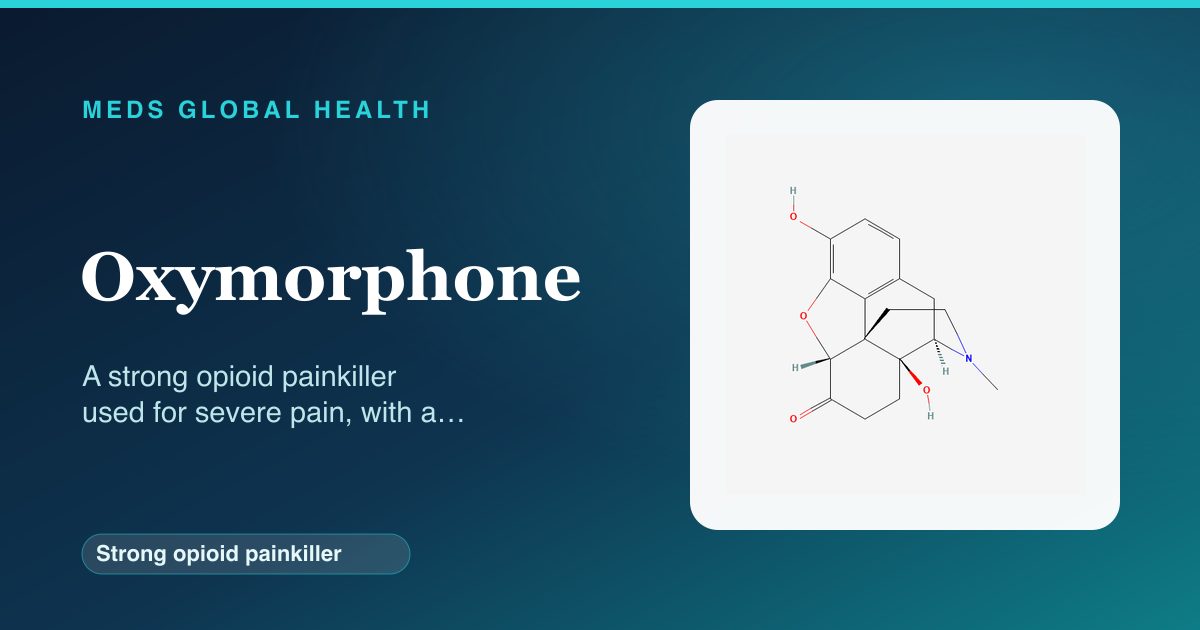
What it is
Oxymorphone is a strong opioid painkiller, in the same broad family as morphine, used to treat severe pain that has not responded to milder painkillers. It comes as tablets, including a longer-acting form for continuous pain. It is a controlled drug because of its potential for misuse and dependence. It is largely a US medicine and is not commonly used in the UK, where other strong opioids are generally preferred. It should only be used under careful medical supervision and exactly as prescribed.
How it works
Oxymorphone acts on opioid receptors in the brain and spinal cord, changing the way pain signals are felt and dampening the sense of pain. This makes it effective for severe pain, but the same action on the brain also slows the drive to breathe, which is why too much can cause dangerously slow or shallow breathing. Acting on the brain's reward pathways is also why opioids can cause a sense of wellbeing and, over time, dependence and addiction. Because food affects how much is absorbed, the longer-acting form in particular is usually taken on an empty stomach.
Company & origin
A strong opioid painkiller for severe pain; largely a US product rather than a routine UK medicine.
Practical use
How to take Oxymorphone
General, dose-free guidance — always follow your prescriber's and the leaflet's specific instructions.
- Take it exactly as prescribed and never take more, or more often, than you are told, because of the risk to breathing.
- Take it on an empty stomach as directed, since food can change how much is absorbed.
- Do not drink alcohol or take other sedating medicines with it unless your doctor has agreed, as together they can dangerously slow breathing.
- Do not drive or use machinery until you know how it affects you, as it commonly causes drowsiness.
- Do not stop it suddenly after taking it regularly; your prescriber will reduce it gradually to avoid withdrawal.
Weighing it up
Advantages & disadvantages of Oxymorphone
Advantages
- An effective option for severe pain when weaker painkillers are not enough.
- Available in a longer-acting form for continuous, ongoing pain.
- Taken by mouth as tablets under medical supervision.
Disadvantages
- Can dangerously slow or stop breathing, especially with too much or with other sedatives or alcohol.
- Carries a real risk of dependence and addiction, and is a controlled drug.
- Commonly causes drowsiness and constipation, and must be taken on an empty stomach.
Practical use
Good to know
The most important thing to understand about oxymorphone is that, as a strong opioid, it can dangerously slow or stop breathing, particularly if more is taken than prescribed, if it is combined with other sedating medicines such as benzodiazepines, sleeping tablets or alcohol, or in people who are not used to opioids. Signs of trouble include very slow or shallow breathing, extreme drowsiness and being hard to wake, which need emergency help. It is a controlled drug with a real risk of dependence and addiction, so it is used at the lowest effective amount for the shortest time, and it should never be shared. It commonly causes drowsiness, so do not drive until you know how it affects you, and almost always causes constipation, which is usually managed with a laxative. It is usually taken on an empty stomach because food changes how much is absorbed, and it should never be stopped suddenly after regular use, as this can cause withdrawal.
Who should not take it / use with caution
- People with severe breathing problems or conditions that already slow breathing should not take it.
- People who have had a serious allergic reaction to it or to other opioids should not take it.
- It is used with great caution in older or frail people and those taking other sedating medicines, under medical guidance.
Monitoring
- Reviewing how well pain is controlled and how much is being used.
- Watching for excessive drowsiness, slow breathing and signs of dependence.
- Managing constipation and other side effects over time.
Side effects
- Drowsiness, dizziness and a feeling of being light-headed.
- Constipation, which is very common and usually needs a laxative.
- Nausea, vomiting or a dry mouth.
- Most seriously, slow or shallow breathing, which can be life-threatening and needs emergency help.
Key interactions
- Combining it with other sedating medicines such as benzodiazepines, sleeping tablets or some antidepressants can dangerously slow breathing.
- Alcohol adds to its sedating effect and increases the risk to breathing.
- Tell your prescriber about all your medicines, as several can add to its effects or interact with it.
Available as: Tablets taken by mouth, including a longer-acting form.
Answers
Oxymorphone: frequently asked questions
What is oxymorphone used for?
It is a strong opioid painkiller used for severe pain when weaker painkillers are not enough; it is largely a US product and not a routine UK medicine.
What is the main danger?
Like other strong opioids, it can dangerously slow or stop breathing, especially if too much is taken or it is combined with other sedating medicines or alcohol.
Can I become dependent on it?
Yes. It carries a real risk of dependence and addiction, which is why it is a controlled drug used at the lowest effective amount for the shortest time.
Why take it on an empty stomach?
Food can change how much of the medicine is absorbed, so it is usually taken on an empty stomach, particularly the longer-acting form, as directed.
Can I stop it suddenly?
No. Stopping suddenly after regular use can cause withdrawal, so your prescriber will reduce it gradually when it is no longer needed.
The wider class
About Strong opioid painkiller
Oxymorphone belongs to the strong opioid painkiller class. For how the class as a whole works, its shared safety principles and monitoring, see the full guide.
Browse by body system
Authoritative sources
- BNF
- NICE CKS
Building a medicines information resource?
We create evidence-led, dose-free drug and formulary references for teams.