A mixed agonist-antagonist opioid painkiller
Nalbuphine
An opioid painkiller, given by injection, used to relieve moderate to severe pain.
What is Nalbuphine?
Nalbuphine is an opioid painkiller of the mixed agonist-antagonist type, given by injection to relieve moderate to severe pain, often around operations or procedures. The most important safety point is that, like other opioids, it can slow or weaken breathing, especially with other sedating medicines. It can also bring on withdrawal symptoms in people who are dependent on other opioids. It commonly causes drowsiness, and it is a controlled drug given under medical supervision.
Education and reference only. This is a plain-language guide to Nalbuphine — it deliberately contains no doses. Doses depend on the person, the brand and the reason for treatment, and belong with your prescriber. Always check the BNF, the product labelling (SmPC) and follow medical advice.
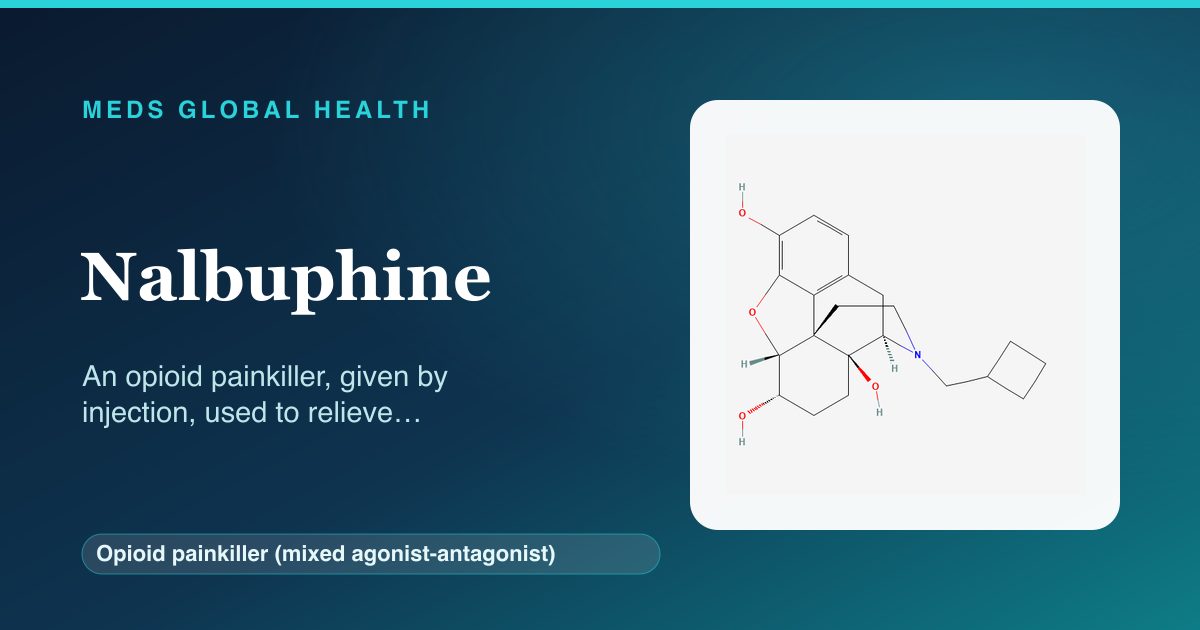
What it is
Nalbuphine is a strong painkiller from the opioid family, used to relieve moderate to severe pain, for example after surgery or during procedures. It is described as a mixed agonist-antagonist, which means it switches some opioid receptors on while blocking others. It is given by injection by healthcare staff rather than taken at home, and it is a controlled drug, meaning its use is closely regulated. It is used under medical supervision so that pain relief and breathing can be watched.
How it works
Nalbuphine acts on the body's opioid receptors, the same system that natural pain-relieving chemicals use. Because it is a mixed agonist-antagonist, it activates some of these receptors to relieve pain while blocking others. This dual action gives effective pain relief, but it also means that in someone whose body is used to other opioids, nalbuphine can knock those opioids off their receptors and trigger withdrawal symptoms. Like all opioids, by acting on the brainstem it can also reduce the drive to breathe, which is the main safety concern.
Company & origin
An opioid painkiller given by injection to relieve moderate to severe pain, used under medical supervision in the UK.
Practical use
How to take Nalbuphine
General, dose-free guidance — always follow your prescriber's and the leaflet's specific instructions.
- It is given by injection by healthcare staff, not taken at home.
- Tell the team about any regular opioid use, as nalbuphine can bring on withdrawal in people dependent on other opioids.
- Avoid alcohol and other sedating medicines around the time it is given, as together they can dangerously slow breathing.
- Do not drive or operate machinery while you feel drowsy from it.
- Tell the team straight away if breathing feels difficult or you feel very drowsy or confused.
Weighing it up
Advantages & disadvantages of Nalbuphine
Advantages
- Provides effective relief of moderate to severe pain, useful around operations and procedures.
- Works quickly when given by injection.
- Its opioid effects can be reversed with naloxone if needed.
Disadvantages
- Like all opioids, it can slow or weaken breathing, especially with other sedating medicines.
- Can bring on withdrawal symptoms in people dependent on other opioids.
- Commonly causes drowsiness, and as a controlled drug it must be given under supervision.
Practical use
Good to know
The most important safety point with nalbuphine, as with any opioid, is that it can slow or weaken breathing, and this danger is much greater if it is combined with other sedating medicines such as benzodiazepines, sleeping tablets or alcohol. A particular feature of this type of opioid is that it can precipitate withdrawal in someone who is dependent on other opioids, bringing on symptoms such as agitation, sweating and cramps, so it is important the team knows about any regular opioid use. Drowsiness is common, so people should not drive or do anything needing full alertness after it is given. It is a controlled drug given by healthcare staff, who watch breathing and how well pain is controlled. Its opioid effects can be reversed with naloxone if needed.
Who should not take it / use with caution
- People who have had a serious allergic reaction to nalbuphine should not be given it.
- It is used with great caution, or avoided, in people with severe breathing problems.
- It is used with care in people dependent on other opioids, as it can trigger withdrawal.
- It is used with caution in people with serious liver or kidney problems, head injury or raised pressure in the head.
Monitoring
- Watching breathing and alertness after it is given.
- Checking how well pain is controlled.
- Watching for withdrawal symptoms in people who use other opioids.
Side effects
- Drowsiness and dizziness.
- Nausea, vomiting or a dry mouth.
- Sweating and headache.
- Rarely but seriously, slowed or weakened breathing, which needs urgent attention and can be reversed with naloxone.
Key interactions
- Other sedating medicines, such as benzodiazepines, sleeping tablets and alcohol, add to the risk of slowed breathing.
- It can interfere with other opioids and bring on withdrawal in people who depend on them.
- Tell the team about all medicines you take, including anything that causes drowsiness.
Available as: A solution for injection, given by healthcare staff.
Answers
Nalbuphine: frequently asked questions
What is nalbuphine used for?
It is an opioid painkiller given by injection to relieve moderate to severe pain, often around operations or procedures.
Why is breathing watched after it is given?
Like all opioids, nalbuphine can slow or weaken breathing, especially with other sedating medicines, so the team watches your breathing closely.
Why does the team ask about other opioids I take?
Because of how it works, nalbuphine can bring on withdrawal symptoms in people who are dependent on other opioids, so the team needs to know.
Can I drive after having it?
No. It commonly causes drowsiness, so you should not drive or operate machinery while you feel its effects.
Is it a controlled drug?
Yes, nalbuphine is a controlled drug given under medical supervision, and its effects can be reversed with naloxone if needed.
The wider class
About Opioid painkiller (mixed agonist-antagonist)
Nalbuphine belongs to the opioid painkiller (mixed agonist-antagonist) class. For how the class as a whole works, its shared safety principles and monitoring, see the full guide.
Browse by body system
Authoritative sources
- BNF
- NICE CKS
Building a medicines information resource?
We create evidence-led, dose-free drug and formulary references for teams.