An opioid painkiller, also used in labour
Pethidine
An opioid painkiller used for moderate to severe pain and sometimes in labour.
What is Pethidine?
Pethidine is an opioid painkiller used for moderate to severe pain and sometimes for pain relief in labour. Like other opioids, it can slow or stop breathing (respiratory depression), cause drowsiness, and lead to dependence, so it is used carefully and is a controlled drug. A particular concern with pethidine is that it breaks down into a substance called norpethidine, which can build up and cause agitation, tremor and even fits, especially with repeated doses or in people with reduced kidney function. It is dangerous when combined with certain antidepressants called MAOIs. It is used under medical supervision.
Education and reference only. This is a plain-language guide to Pethidine — it deliberately contains no doses. Doses depend on the person, the brand and the reason for treatment, and belong with your prescriber. Always check the BNF, the product labelling (SmPC) and follow medical advice.
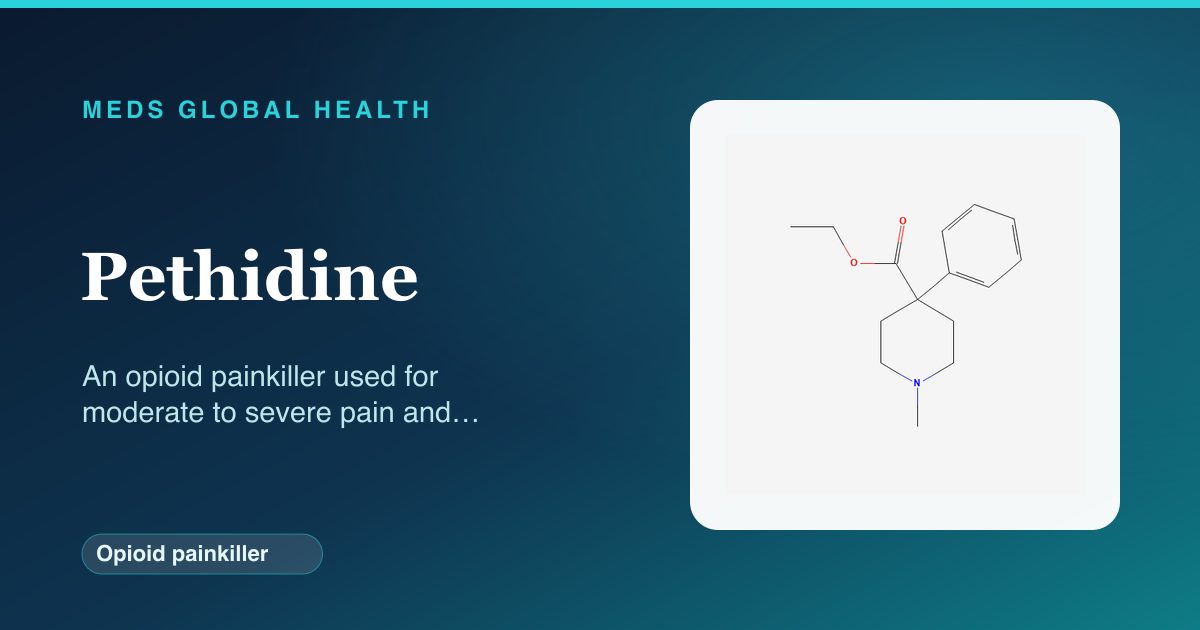
What it is
Pethidine is an opioid, a strong type of painkiller related to morphine, used for moderate to severe pain and at times for pain relief during labour. It is given by injection or by mouth under medical supervision and is a controlled drug because of its effects and potential for misuse and dependence. It is used less than it once was, partly because of concerns about a substance it breaks down into. It is prescribed and given by healthcare professionals, who weigh up the benefits against the risks for each person.
How it works
Pethidine works on opioid receptors in the brain and spinal cord to reduce the sensation of pain. Like other opioids, this same action can slow breathing and cause drowsiness, which is why it is used carefully. A particular feature of pethidine is that the body turns it into a by-product called norpethidine, which does not relieve pain but can build up and irritate the nervous system. This build-up is more likely with repeated doses or when the kidneys do not clear it well, and it can lead to agitation, muscle twitching, tremor and fits.
Company & origin
An opioid painkiller used in the UK for moderate to severe pain and sometimes for pain relief in labour; a controlled drug.
Practical use
How to take Pethidine
General, dose-free guidance — always follow your prescriber's and the leaflet's specific instructions.
- Use it only as prescribed and given by your healthcare team, as it is a controlled opioid medicine.
- Do not drink alcohol or take other sedating medicines with it without advice, as together they can dangerously slow breathing.
- Tell the team about any kidney problems and about repeated dosing, as its by-product can build up and cause agitation or fits.
- Make sure the team knows about all your medicines, especially MAOI antidepressants, which are dangerous with pethidine.
- Report severe drowsiness, very slow or shallow breathing, confusion, twitching or tremor straight away.
Weighing it up
Advantages & disadvantages of Pethidine
Advantages
- An effective opioid for moderate to severe pain and sometimes for pain relief in labour.
- Can be given by injection for relatively quick relief under medical supervision.
- A long-established medicine with which clinicians have extensive experience.
Disadvantages
- Like all opioids, it can slow or stop breathing and cause drowsiness, and can lead to dependence.
- Its by-product norpethidine can build up with repeated doses or in kidney impairment and cause agitation, tremor and fits.
- It is dangerous with MAOI antidepressants and is a controlled drug needing careful handling.
Practical use
Good to know
The dominant safety points with pethidine are about its opioid effects and its by-product. As an opioid, it can slow or even stop breathing, particularly if too much is used or it is combined with other things that cause drowsiness such as alcohol, sleeping tablets or other opioids, and it can lead to tolerance and dependence, which is why it is a controlled drug. Uniquely, it breaks down into norpethidine, which can accumulate with repeated dosing or in people with reduced kidney function and cause agitation, tremor and seizures, so it is generally not chosen for long-term or repeated use. It is dangerous to combine with a group of antidepressants called MAOIs (and within two weeks of stopping them), which can cause a severe reaction. Tell the team about all your medicines and any kidney problems.
Who should not take it / use with caution
- People taking, or who have recently taken, MAOI antidepressants must not be given pethidine because of the risk of a severe reaction.
- People with significant breathing problems or where breathing is depressed should not normally be given it.
- It is used with great caution, or avoided, in people with reduced kidney function because its by-product can build up.
- People who have had a serious allergic reaction to pethidine should not be given it.
Monitoring
- Watching breathing, drowsiness and pain relief, especially after a dose is given.
- Watching for signs of its by-product building up, such as agitation, tremor or twitching, particularly with repeated doses or kidney problems.
- Reviewing the need to continue and being alert to tolerance and dependence.
Side effects
- Drowsiness, dizziness, nausea, vomiting and constipation.
- Slowed breathing, which can be dangerous, especially with too much or with other sedatives.
- With its by-product building up, agitation, tremor, muscle twitching and, in severe cases, fits.
- With repeated use, tolerance and dependence.
Key interactions
- MAOI antidepressants (and within two weeks of stopping them) can cause a severe, dangerous reaction with pethidine.
- Alcohol, sleeping tablets, other opioids and other sedating medicines add to drowsiness and slowed breathing.
- Some medicines that affect serotonin may increase the risk of a serious reaction, so give a full medicines list.
Available as: A solution for injection, and tablets, given under medical supervision; a controlled drug.
Answers
Pethidine: frequently asked questions
What is pethidine used for?
It is an opioid painkiller used for moderate to severe pain and sometimes for pain relief during labour, given under medical supervision.
Why can it cause fits?
The body turns pethidine into a by-product called norpethidine, which can build up with repeated doses or in kidney impairment and irritate the nervous system, causing agitation, tremor and seizures.
Why must it not be used with MAOIs?
Combining pethidine with MAOI antidepressants, or using it within two weeks of stopping them, can cause a severe and dangerous reaction.
Is it addictive?
Like other opioids, it can cause tolerance and dependence with repeated use, which is why it is a controlled drug used carefully under supervision.
Why does it make breathing slow?
Opioids can slow breathing, and this risk increases with higher amounts or when combined with alcohol or other sedating medicines; report very slow or shallow breathing at once.
The wider class
About Opioid painkiller
Pethidine belongs to the opioid painkiller class. For how the class as a whole works, its shared safety principles and monitoring, see the full guide.
Browse by body system
Authoritative sources
- BNF
- NICE CKS
Building a medicines information resource?
We create evidence-led, dose-free drug and formulary references for teams.