A strong opioid painkiller
Fentanyl
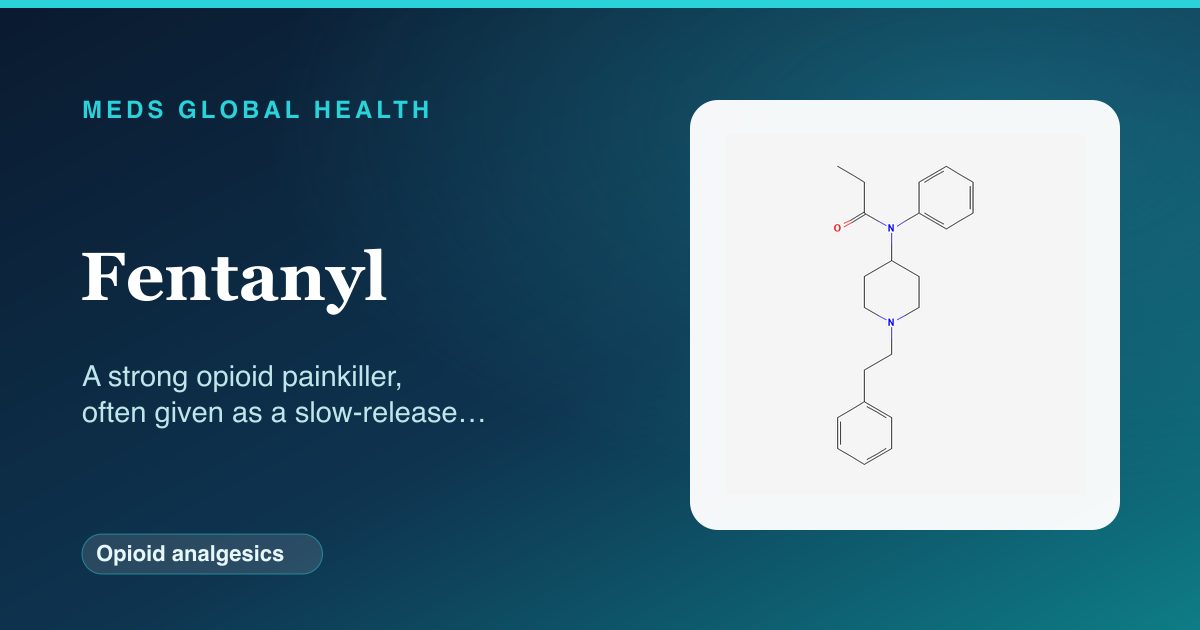
A strong opioid painkiller, often given as a slow-release skin patch for severe ongoing pain; it carries a high risk of slowed breathing, dependence and overdose.
What is Fentanyl?
Fentanyl is a strong opioid painkiller used for severe, persistent pain that is not controlled by weaker opioids, often in cancer or palliative care. It is usually given as a skin patch that releases the medicine slowly, or in specialist forms for sudden breakthrough pain. Because it is very strong, it carries a real risk of slowed breathing and overdose and must be used exactly as prescribed.
Education and reference only. This is a plain-language guide to Fentanyl — it deliberately contains no doses. Doses depend on the person, the brand and the reason for treatment, and belong with your prescriber. Always check the BNF, the product labelling (SmPC) and follow medical advice.
What it is
Fentanyl is a strong opioid analgesic used in the UK for severe, long-lasting pain that has not been controlled by weaker opioids, often in cancer pain and palliative care. For ongoing pain it is most commonly supplied as a skin patch (for example Durogesic) that releases the medicine steadily over several days. There are also specialist short-acting forms — such as lozenges, tablets that dissolve in the mouth and nasal sprays — used only for sudden flares of 'breakthrough' pain in people already on regular opioids. It relieves pain but does not treat the underlying cause, and as a strong opioid it carries a high risk of dependence and dangerous side effects.
How it works
Fentanyl acts powerfully on opioid receptors in the brain and spinal cord, the body's natural pain-control system. By strongly switching on these receptors it blocks pain signals reaching the brain and changes how pain is experienced, so even severe pain can feel less intense. The same potent action on opioid receptors elsewhere in the body explains its serious side effects, especially slowed breathing, as well as constipation and drowsiness.
Company & origin
Originated / developed by: Originally developed by Janssen Pharmaceutica in Belgium..
Fentanyl was first developed by the Belgian company Janssen in the late 1950s and early 1960s and is now a widely used strong opioid in hospital and palliative care.
Practical use
How to take Fentanyl
General, dose-free guidance — always follow your prescriber's and the leaflet's specific instructions.
- Use it exactly as prescribed; if you have a patch, apply it to clean, dry, hairless skin and press it firmly, choosing a different site each time.
- Keep the patch away from heat sources such as hot baths, saunas, heat pads, electric blankets and strong sun, and tell your team if you develop a high fever, as heat raises absorption and the risk of overdose.
- Expect possible constipation and drowsiness; ask your pharmacist about a laxative, and do not drive or operate machinery if you feel affected.
- Do not drink alcohol or take other sedating medicines alongside it, as the combined slowed breathing can be life-threatening.
- Do not stop suddenly after regular use — your prescriber will reduce it gradually to avoid withdrawal.
- Fold used patches in half with the sticky sides together and dispose of them safely away from children and pets, as they still contain a strong opioid.
Weighing it up
Advantages & disadvantages of Fentanyl
Advantages
- It provides effective relief for severe pain that weaker opioids cannot control, which is valuable in cancer and palliative care.
- Patch delivery gives steady, long-lasting cover without frequent dosing and suits people who cannot swallow well.
- Specialist fast-acting forms can quickly tackle sudden breakthrough pain in people already on regular opioids.
Disadvantages
- As a very strong opioid it carries a high risk of slowed breathing and overdose if used incorrectly.
- Dependence and withdrawal are real risks, so it must never be stopped abruptly.
- Heat and fever can dangerously increase absorption from a patch, and used patches remain hazardous to others.
Practical use
Good to know
Fentanyl is a very strong opioid, so it is reserved for severe pain and used with great care. When given as a patch, heat raises how much medicine is absorbed, so avoid hot baths, saunas, heat pads, electric blankets, strong direct sun and a high fever over the patch, as this can cause a dangerous overdose. Even used patches still contain a lot of medicine, so they must be folded in half with the sticky sides together and disposed of safely, well away from children and pets. It commonly causes constipation and drowsiness and can slow breathing, especially if combined with alcohol or other sedatives. It should not be stopped suddenly after regular use. Under UK drug-driving law it is an offence to drive while impaired, though you may drive if taking it as prescribed and not impaired.
Who should not take it / use with caution
- People who are not already used to regular opioids (opioid-naive), for whom a strong opioid can be dangerous.
- People with severe breathing problems or an acute asthma attack.
- Anyone who has had a serious allergic reaction to fentanyl.
Monitoring
- Close review of pain control, breathing and drowsiness, especially when starting or changing treatment.
- Watching for signs of overdose such as very slow breathing, pinpoint pupils and unresponsiveness.
- Checking patch sites and confirming patches are applied, changed and disposed of safely.
Side effects
- Slowed or shallow breathing, which can be life-threatening (seek urgent help).
- Constipation, which often persists and may need a laxative.
- Drowsiness, dizziness, nausea and confusion.
- Skin redness or itching where a patch is applied.
Key interactions
- Other sedating medicines such as benzodiazepines, sleeping tablets, gabapentinoids and other opioids greatly increase the risk of slowed breathing.
- Alcohol adds to sedation and breathing risk and should be avoided.
- Medicines that affect liver enzymes can raise or lower fentanyl levels, so all medicines should be reviewed by your prescriber.
Available as: Skin patches for ongoing pain; specialist fast-acting forms (such as lozenges, mouth tablets and nasal sprays) for breakthrough pain; injections used in hospital.
Answers
Fentanyl: frequently asked questions
Why is fentanyl considered such a strong painkiller?
Fentanyl acts very powerfully on opioid receptors, so it can relieve severe pain that weaker opioids cannot. This strength also means it carries a higher risk of slowed breathing and overdose, which is why it is reserved for severe pain and used with close supervision.
Why does heat matter so much with a fentanyl patch?
Heat increases how much medicine passes through the skin from the patch. Hot baths, saunas, heat pads, electric blankets, strong sun and even a high fever can raise absorption enough to cause a dangerous overdose, so heat over the patch must be avoided.
Are used fentanyl patches safe to throw in the bin?
No. Used patches still contain a strong opioid and can seriously harm or kill a child or pet who touches or swallows them. Fold each patch in half with the sticky sides together and dispose of it safely, well out of reach of children and pets.
Can fentanyl stop my breathing?
As a strong opioid it can slow breathing, which is the most serious risk. The danger is much higher if it is combined with alcohol or other sedatives, or if too much is absorbed. Seek urgent medical help for very slow breathing, extreme drowsiness or unresponsiveness.
Can I drive while using fentanyl?
Under UK drug-driving law it is an offence to drive if your driving is impaired. You may drive if you are taking it as prescribed and feel unaffected, but do not drive if you feel drowsy, dizzy or slowed in any way.
The wider class
About Opioid analgesics
Fentanyl belongs to the opioid analgesics class. For how the class as a whole works, its shared safety principles and monitoring, see the full guide.
Browse by body system
Authoritative sources
- BNF
- NICE CKS
Building a medicines information resource?
We create evidence-led, dose-free drug and formulary references for teams.