An anti-inflammatory eye drop used after eye surgery
Bromfenac
An anti-inflammatory eye drop used to reduce swelling and discomfort after eye surgery.
What is Bromfenac?
Bromfenac is a non-steroidal anti-inflammatory (NSAID) eye drop used to reduce inflammation, swelling and discomfort after eye surgery, such as cataract surgery. It works by lowering the production of inflammatory chemicals in the eye. The most important risk is that prolonged use can cause corneal problems, such as thinning or, rarely, a corneal melt, so it is used for a limited time and any worsening eye symptoms should be reported. Stinging or mild irritation when the drop goes in is common. It should be avoided by people who have had asthma, hives or other allergic reactions to aspirin or other NSAIDs.
Education and reference only. This is a plain-language guide to Bromfenac — it deliberately contains no doses. Doses depend on the person, the brand and the reason for treatment, and belong with your prescriber. Always check the BNF, the product labelling (SmPC) and follow medical advice.
What it is
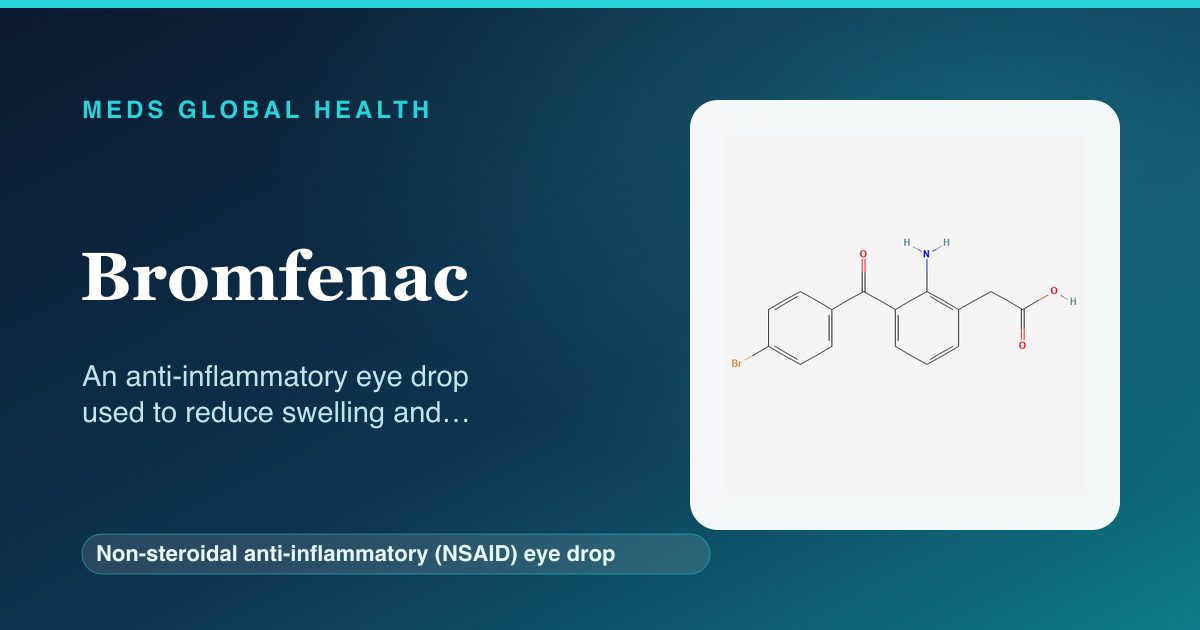
Bromfenac is an eye drop from the non-steroidal anti-inflammatory (NSAID) group of medicines. It is used after eye surgery, particularly cataract surgery, to reduce inflammation and ease the swelling, redness and discomfort that can follow the operation. By calming inflammation it helps the eye settle and recover. It is applied directly to the eye and is used for a defined period after surgery rather than long term, under the guidance of the eye-care team.
How it works
Inflammation in the eye after surgery is driven partly by chemicals called prostaglandins. Bromfenac, as an NSAID, blocks the enzyme that makes these chemicals, reducing inflammation, swelling and discomfort in the treated eye. This helps the eye heal more comfortably after surgery. Because it acts on the surface of the eye, the same anti-inflammatory effect, if used for too long, can interfere with the normal healing of the cornea (the clear front of the eye), which is why it is used for a limited time and the eye is monitored.
Company & origin
An anti-inflammatory eye drop used to reduce swelling and discomfort after eye surgery, such as cataract surgery.
Practical use
How to take Bromfenac
General, dose-free guidance — always follow your prescriber's and the leaflet's specific instructions.
- Put the drop into the affected eye as directed, and use it only for the period your eye-care team advises.
- Do not use it for longer than recommended, as prolonged use can cause problems with the cornea.
- Report any worsening eye pain, redness, light sensitivity or change in vision rather than carrying on.
- Tell your team if you have had asthma, hives or allergic reactions to aspirin or other NSAIDs before using it.
- If you wear contact lenses, follow the advice you are given, as lenses and drops usually need to be kept apart.
Weighing it up
Advantages & disadvantages of Bromfenac
Advantages
- Effectively reduces inflammation, swelling and discomfort after eye surgery.
- Applied directly to the eye, with little effect on the rest of the body.
- Helps the eye settle and recover comfortably after an operation.
Disadvantages
- Prolonged use can cause corneal problems, including thinning or, rarely, a corneal melt.
- Commonly causes stinging or mild irritation when the drop goes in.
- Should be avoided by people allergic to aspirin or other NSAIDs.
Practical use
Good to know
The most important thing to know about bromfenac is that, although it is very useful for settling the eye after surgery, using it for longer than advised can cause problems with the cornea, the clear front surface of the eye. These range from thinning to, rarely, a corneal melt, where the cornea becomes dangerously thin; the risk is higher in people with certain existing eye-surface problems, such as severe dry eye or some other conditions. For this reason it is used for a defined period and you should report any worsening pain, redness, light sensitivity or change in vision rather than simply carrying on. Stinging or mild irritation as the drop goes in is common and usually brief. People who have had asthma, hives or other allergic reactions to aspirin or other NSAIDs should avoid it. If you wear contact lenses, follow the team's advice, as drops and lenses often need to be kept apart.
Who should not take it / use with caution
- People who have had asthma, hives or other allergic reactions to aspirin or other NSAIDs should not use it.
- People who have had a serious allergic reaction to bromfenac should not use it.
- It is used with caution in people with eye-surface problems such as severe dry eye, where the risk of corneal problems is higher, under eye-care supervision.
Monitoring
- Reviewing how the eye is healing after surgery.
- Watching for any signs of corneal problems, especially with longer use or in higher-risk eyes.
- Stopping the drops at the end of the advised course rather than continuing them.
Side effects
- Stinging, mild irritation or a feeling of something in the eye when the drop goes in.
- Redness or itching of the eye.
- Rarely but seriously, corneal problems such as thinning or a corneal melt with prolonged use, which need urgent attention.
Key interactions
- Using it with other NSAID eye drops can add to the risk of corneal problems.
- Tell your team about other eye drops you use, as the timing may need spacing out.
- Mention all your medicines, including any aspirin or NSAID allergy, before using it.
Available as: Eye drops applied to the eye.
Answers
Bromfenac: frequently asked questions
What is bromfenac used for?
It is an anti-inflammatory eye drop used to reduce inflammation, swelling and discomfort after eye surgery, such as cataract surgery.
Why can't I use it for a long time?
Using it for longer than advised can cause problems with the cornea, the clear front of the eye, including thinning or rarely a corneal melt, so it is used for a limited period.
Why does it sting when I put it in?
Stinging or mild irritation as the drop goes in is common and usually brief, but report any worsening pain, redness or change in vision.
Can I use it if I am allergic to aspirin?
No. People who have had asthma, hives or other allergic reactions to aspirin or other NSAIDs should avoid bromfenac.
What about my contact lenses?
Follow your eye-care team's advice, as eye drops and contact lenses usually need to be kept apart.
The wider class
About Non-steroidal anti-inflammatory (NSAID) eye drop
Bromfenac belongs to the non-steroidal anti-inflammatory (nsaid) eye drop class. For how the class as a whole works, its shared safety principles and monitoring, see the full guide.
Browse by body system
Authoritative sources
- BNF
- NICE CKS
Building a medicines information resource?
We create evidence-led, dose-free drug and formulary references for teams.