An NSAID that can cause sun sensitivity
Ketoprofen
An NSAID used to relieve pain and inflammation, available as capsules and as a gel, and known for making the skin more sensitive to sunlight.
What is Ketoprofen?
Ketoprofen is a non-steroidal anti-inflammatory drug (NSAID) used to relieve pain, swelling and stiffness, for example in arthritis and muscle or joint injuries. It comes as capsules and as a gel for the skin. A notable feature is that it can make the skin more sensitive to sunlight, so sun exposure of treated or covered areas needs care.
Education and reference only. This is a plain-language guide to Ketoprofen — it deliberately contains no doses. Doses depend on the person, the brand and the reason for treatment, and belong with your prescriber. Always check the BNF, the product labelling (SmPC) and follow medical advice.
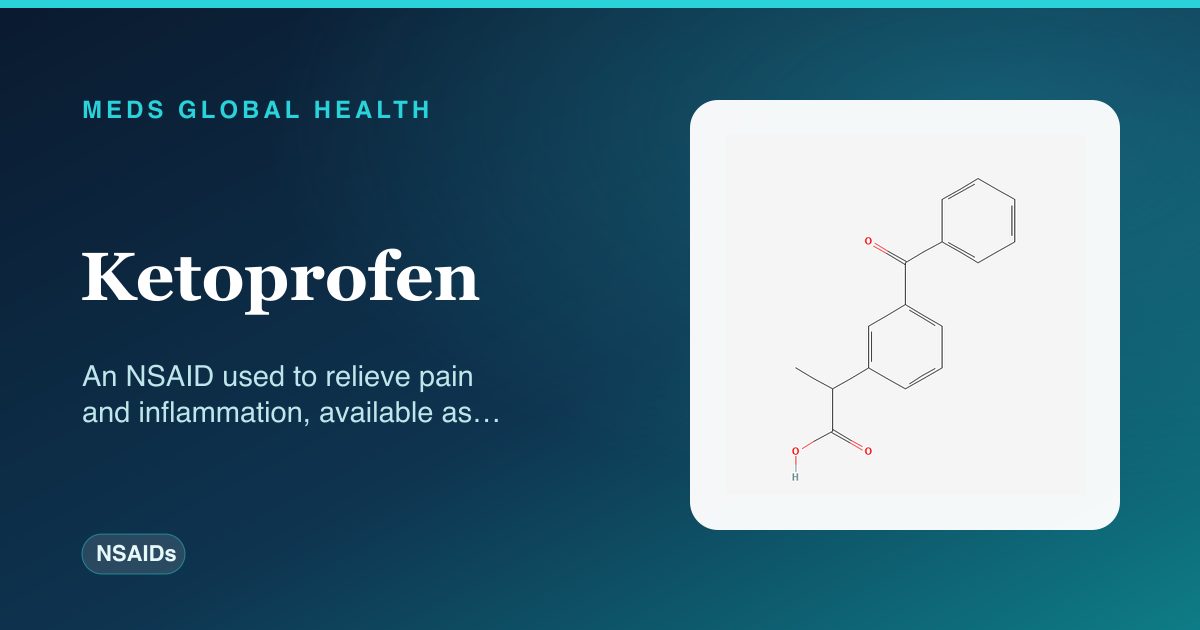
What it is
Ketoprofen is a non-steroidal anti-inflammatory drug (NSAID) from the same family as ibuprofen, used to relieve pain, swelling and stiffness. It is used in arthritis, gout, period pain and musculoskeletal injuries, and is available both as capsules (including slow-release forms) and as a gel applied to the skin. It is well known for causing photosensitivity — making the skin more likely to react to sunlight — particularly with the gel.
How it works
Ketoprofen blocks the cyclo-oxygenase (COX-1 and COX-2) enzymes, which the body uses to make prostaglandins. Prostaglandins are messengers that produce pain, swelling and fever where there is injury or inflammation, so reducing them eases symptoms. Because the same enzymes help protect the stomach lining and support the kidneys and blood clotting, blocking them also accounts for the typical NSAID side effects on the stomach, kidneys and bleeding.
Company & origin
Originated / developed by: Rhône-Poulenc (now Sanofi), developed in the 1960s-1970s.
Ketoprofen is a non-steroidal anti-inflammatory drug (NSAID) from the same chemical family as ibuprofen. It was developed in the 1960s and 1970s and has long been used both as tablets and capsules and as a gel applied to the skin.
Practical use
How to take Ketoprofen
General, dose-free guidance — always follow your prescriber's and the leaflet's specific instructions.
- Take capsules with or just after food or milk to reduce the chance of stomach upset.
- Swallow slow-release capsules whole — do not open, crush or chew them.
- When using the gel, wash your hands after applying it and keep the treated area covered and out of direct sunlight or sunbeds during use and for some time after stopping, because the skin can become sensitive to sun.
- Use the lowest amount that controls your symptoms for the shortest time needed.
- Do not use other anti-inflammatory painkillers at the same time, including over-the-counter ibuprofen or aspirin taken for pain.
- Report black or tarry stools, vomiting blood, severe stomach pain, or any skin rash or blistering on sun-exposed skin straight away.
Weighing it up
Advantages & disadvantages of Ketoprofen
Advantages
- Effective for a range of painful and inflammatory conditions, from arthritis to soft-tissue injuries.
- Available both as capsules and as a gel, so it can be targeted to a specific painful area when appropriate.
- Well-established NSAID with long clinical experience and slow-release options for once-daily use.
Disadvantages
- Notably causes photosensitivity, so sun exposure of treated and covered skin must be avoided — a real inconvenience, especially with the gel.
- Shares the usual NSAID risks of stomach irritation, ulcers and bleeding.
- Can affect the kidneys and slightly raise the risk of heart attack and stroke.
- Not suitable for everyone, including people with ulcers, severe heart, kidney or liver problems, or NSAID allergy.
Practical use
Good to know
Ketoprofen can make the skin more sensitive to sunlight, so areas treated with the gel — and the skin around them — should be kept covered and out of direct sun during treatment and for a while afterwards. Capsules should be taken with or after food to protect the stomach, and it is not taken alongside other NSAIDs. As with all NSAIDs it can affect the stomach, kidneys and heart, so the lowest effective amount is used for the shortest time, especially in older people and those with heart, kidney or stomach problems.
Who should not take it / use with caution
- People with a current or past stomach or duodenal ulcer, or previous bleeding or perforation linked to NSAIDs.
- People with severe heart failure, severe kidney or liver impairment, or a history of asthma, hives or swelling triggered by aspirin or other NSAIDs.
- Women from around the middle of pregnancy (about 20 weeks) onwards, and especially in the last three months (MHRA advice — NSAIDs can affect the baby's circulation/kidneys and fluid around the baby); the gel should not be used on broken, infected or sun-exposed skin.
Monitoring
- Blood pressure and signs of fluid retention
- Kidney function, particularly in older people or those on blood-pressure medicines
- Any skin reaction on sun-exposed areas, and signs of stomach bleeding
Side effects
- Indigestion, stomach pain, nausea and, more seriously, stomach ulcers or bleeding.
- Skin reactions to sunlight (photosensitivity), especially where gel has been applied — rashes, redness or blistering on sun-exposed skin.
- Fluid retention, raised blood pressure, effects on the kidneys, and a small increase in the risk of heart attack and stroke.
Key interactions
- Other NSAIDs and aspirin (for pain) — combining them increases the risk of stomach bleeding.
- Anticoagulants such as warfarin or DOACs, antiplatelets, SSRIs and steroids all add to the risk of bleeding.
- Reduces the effect of, and adds kidney strain to, blood-pressure medicines and diuretics (especially ACE inhibitors and ARBs); also raises levels of lithium and methotrexate.
Available as: Capsules taken by mouth, including slow-release (modified-release) forms, and a gel applied to the skin.
Answers
Ketoprofen: frequently asked questions
Why does ketoprofen make my skin react to the sun?
Ketoprofen can cause photosensitivity, meaning sunlight is more likely to trigger a skin reaction, particularly where the gel has been applied. Keep treated and surrounding skin covered and out of direct sun and sunbeds during treatment and for a while after stopping, and report any rash, redness or blistering on sun-exposed skin.
Can I use ketoprofen gel and capsules together?
They are both NSAIDs, so using them together would add to the risk of side effects without clear benefit. Use only what your prescriber recommends, and do not combine ketoprofen with other anti-inflammatory painkillers, including over-the-counter ibuprofen or aspirin taken for pain.
Do I need to take ketoprofen capsules with food?
Yes — taking capsules with or just after food or milk helps protect the stomach lining and reduces indigestion. Like all NSAIDs, ketoprofen can cause ulcers or bleeding, so report black stools, vomiting blood or severe stomach pain straight away.
Is ketoprofen safe for my heart and kidneys?
Like other NSAIDs, it can cause fluid retention, raise blood pressure, slightly increase the risk of heart attack and stroke, and reduce kidney function. It is used at the lowest effective amount for the shortest time, with caution in older people and those with heart, circulation or kidney problems.
Can I take ketoprofen if I am asthmatic?
Some people with asthma find that NSAIDs trigger wheezing or worsen their breathing. If aspirin or other NSAIDs have ever caused asthma, hives or facial swelling, ketoprofen should be avoided. Tell your prescriber about your asthma so they can judge whether it is suitable for you.
The wider class
About NSAIDs
Ketoprofen belongs to the nsaids class. For how the class as a whole works, its shared safety principles and monitoring, see the full guide.
Browse by body system
Authoritative sources
- BNF: Ketoprofen.
- NICE CKS: Anti-inflammatory painkillers (NSAIDs).
Building a medicines information resource?
We create evidence-led, dose-free drug and formulary references for teams.