A strong anti-inflammatory painkiller (NSAID)
Indomethacin
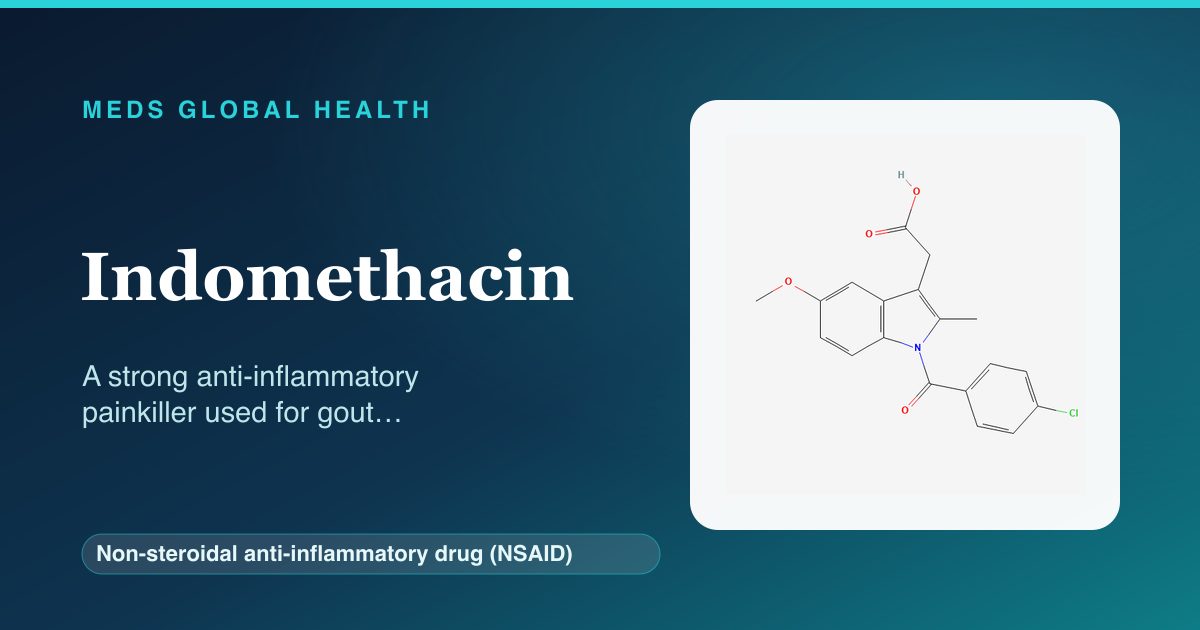
A strong anti-inflammatory painkiller used for gout, arthritis and other inflammatory pain, and in newborn babies to close a patent ductus arteriosus.
What is Indomethacin?
Indomethacin is a strong non-steroidal anti-inflammatory drug (NSAID) used to relieve pain and inflammation in conditions such as acute gout, arthritis and other painful inflammatory problems. In newborn babies it has a specialist use to help close a heart-related blood vessel called a patent ductus arteriosus. Because it is a powerful NSAID, it carries a meaningful risk of stomach ulcers and bleeding, can affect the kidneys and heart, and often causes headache or dizziness. It is usually taken with food and used at the lowest helpful amount for the shortest time, and it is avoided in later pregnancy.
Education and reference only. This is a plain-language guide to Indomethacin — it deliberately contains no doses. Doses depend on the person, the brand and the reason for treatment, and belong with your prescriber. Always check the BNF, the product labelling (SmPC) and follow medical advice.
What it is
Indomethacin is a non-steroidal anti-inflammatory drug, or NSAID, on the stronger end of this group of medicines. In adults it is used to ease pain, swelling and stiffness in inflammatory conditions, particularly acute attacks of gout and several forms of arthritis. It also has a quite different, specialist use in newborn babies, where it can help close a blood vessel near the heart called the ductus arteriosus that should normally close on its own after birth. It is taken by mouth as capsules, and is also available as suppositories; the baby use is handled entirely by hospital specialists.
How it works
Indomethacin works by blocking enzymes called cyclo-oxygenases, which the body uses to make prostaglandins, the chemical messengers that drive pain, swelling and inflammation. By lowering these messengers, it reduces pain and inflammation in conditions such as gout and arthritis. The same effect on prostaglandins explains its newborn use: prostaglandins help keep the ductus arteriosus open, so blocking them encourages that vessel to close. Reducing prostaglandins is also why it can irritate the stomach lining and affect the kidneys, since those messengers normally help protect the gut and support kidney blood flow.
Company & origin
A long-established NSAID used in the UK for gout, arthritis and other painful inflammatory conditions, and in newborn babies to help close a heart-related blood vessel called the ductus arteriosus.
What it treats
Conditions Indomethacin is used for
Practical use
How to take Indomethacin
General, dose-free guidance — always follow your prescriber's and the leaflet's specific instructions.
- Take the capsules with or just after food or a drink of milk to lower the chance of stomach upset.
- Use the lowest amount that controls your symptoms, for the shortest time needed.
- Swallow the capsules whole with water rather than chewing them.
- Stop and seek urgent advice if you notice black or bloody stools, vomit blood, or get severe stomach pain.
- Do not take it together with other anti-inflammatory painkillers such as ibuprofen unless your prescriber says so.
Weighing it up
Advantages & disadvantages of Indomethacin
Advantages
- A strong, effective anti-inflammatory painkiller for conditions such as acute gout and arthritis.
- Available as capsules and suppositories, giving more than one way to take it.
- Has a valuable specialist use in newborn babies to help close a patent ductus arteriosus.
Disadvantages
- Carries a notable risk of stomach ulcers and bleeding, especially with longer use or in older people.
- Can affect the kidneys and put extra strain on the heart and blood pressure.
- Commonly causes headache and dizziness, and must be avoided in later pregnancy.
Practical use
Good to know
The most important thing to understand about indomethacin is that it is a strong NSAID, so it is used carefully and usually for short periods at the lowest amount that helps. Its biggest risk is to the stomach and gut: it can cause ulcers and bleeding, sometimes without much warning, so it is taken with food and stopped if you notice black stools, vomiting blood or severe tummy pain. It can also affect the kidneys and put extra strain on the heart and circulation, so it is used cautiously in older people and those with kidney, heart or blood-pressure problems. Headache and dizziness are common with this particular NSAID. It should be avoided in the later part of pregnancy because it can harm the baby. The newborn use to close a patent ductus arteriosus is a completely separate, specialist hospital treatment.
Who should not take it / use with caution
- People who have had a serious allergic or asthma-type reaction to aspirin or other NSAIDs should not take it.
- People with a current or past stomach ulcer or gut bleeding should usually avoid it.
- It should not be used in the later part of pregnancy, as it can harm the unborn baby.
- It is used with great caution, or avoided, in people with serious kidney, heart or liver problems.
Monitoring
- Checking kidney function and blood pressure, especially in older people or with longer use.
- Watching for any signs of stomach upset, ulcers or gut bleeding.
- Reviewing whether it is still needed and using it for as short a time as possible.
Side effects
- Stomach upset, indigestion and, more seriously, ulcers or bleeding in the gut.
- Headache and dizziness, which are particularly common with this NSAID.
- Fluid retention, raised blood pressure and reduced kidney function in some people.
- Rarely but seriously, gut bleeding, severe allergic reactions or heart problems, which need urgent care.
Key interactions
- Taking it with other NSAIDs, aspirin or steroids raises the risk of stomach ulcers and bleeding.
- It can increase bleeding risk when used with blood thinners such as warfarin or anticoagulants.
- It can reduce the effect of some blood-pressure medicines and water tablets, and may strain the kidneys when combined with them.
Available as: Capsules and suppositories.
Answers
Indomethacin: frequently asked questions
What is indomethacin used for?
It is a strong anti-inflammatory painkiller used for conditions such as acute gout and arthritis, and it has a specialist use in newborn babies to help close a heart-related blood vessel called a patent ductus arteriosus.
Why do I need to take it with food?
Indomethacin can irritate the stomach lining and cause ulcers or bleeding, so taking it with or just after food helps reduce stomach upset.
Why does it give me a headache?
Headache and dizziness are particularly common with indomethacin compared with some other anti-inflammatory painkillers; tell your prescriber if they are troublesome.
Can I take it in pregnancy?
It should be avoided in the later part of pregnancy because it can harm the unborn baby; always check with your prescriber before using it in pregnancy.
What warning signs should I watch for?
Seek urgent help if you get black or bloody stools, vomit blood, have severe stomach pain, or notice swelling and much-reduced urine, as these can signal serious gut or kidney problems.
The wider class
About Non-steroidal anti-inflammatory drug (NSAID)
Indomethacin belongs to the non-steroidal anti-inflammatory drug (nsaid) class. For how the class as a whole works, its shared safety principles and monitoring, see the full guide.
Browse by body system
Authoritative sources
- BNF
- NICE CKS
Building a medicines information resource?
We create evidence-led, dose-free drug and formulary references for teams.