A non-steroidal anti-inflammatory medicine for arthritis
Tolmetin
An anti-inflammatory painkiller used to ease the pain, swelling and stiffness of arthritis.
What is Tolmetin?
Tolmetin is a non-steroidal anti-inflammatory medicine (an NSAID) used to relieve the pain, swelling and stiffness of arthritis, including rheumatoid arthritis and some forms of arthritis affecting children. It works by reducing the body's production of the chemicals that cause inflammation and pain. Like other NSAIDs, its most important risks are stomach ulcers and bleeding, effects on the kidneys, and a small increase in the risk of heart and circulation problems. It can occasionally cause sudden, severe allergic-type reactions, so it is taken with care and usually with food.
Education and reference only. This is a plain-language guide to Tolmetin — it deliberately contains no doses. Doses depend on the person, the brand and the reason for treatment, and belong with your prescriber. Always check the BNF, the product labelling (SmPC) and follow medical advice.
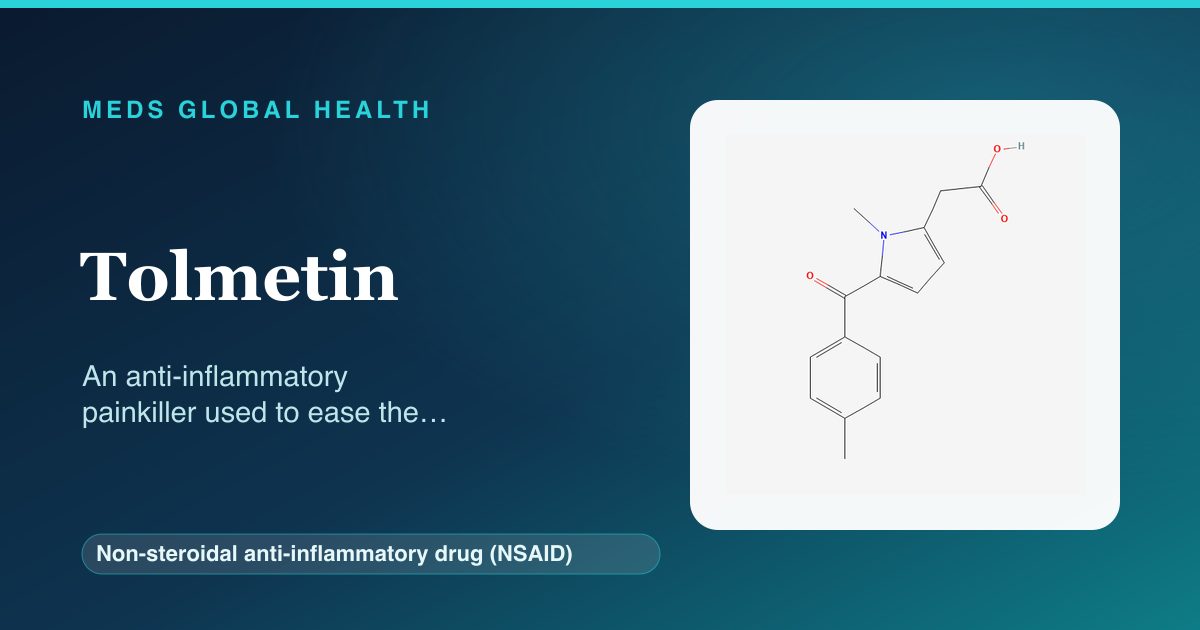
What it is
Tolmetin is a non-steroidal anti-inflammatory drug, usually shortened to NSAID, the same broad family as ibuprofen and naproxen. It is used to ease the pain, swelling and stiffness caused by inflammatory joint conditions, including rheumatoid arthritis and some types of arthritis that affect children (juvenile arthritis). It is taken by mouth and works by calming inflammation rather than curing the underlying condition. It is an older member of the group and is used less often today, but it works in the same way as other NSAIDs.
How it works
Tolmetin blocks enzymes called cyclo-oxygenase (COX) that the body uses to make chemicals called prostaglandins. Prostaglandins drive much of the pain, swelling and heat of inflammation, so reducing them eases the symptoms of arthritis. The same prostaglandins, however, also help protect the stomach lining and support blood flow to the kidneys, which is why blocking them can lead to stomach and kidney side effects. Because it treats symptoms rather than the disease itself, it is used for relief and is often combined with other treatments that act on the underlying condition.
Company & origin
An older anti-inflammatory painkiller of the NSAID family, used for the pain and swelling of arthritis, including some forms affecting children.
What it treats
Conditions Tolmetin is used for
Practical use
How to take Tolmetin
General, dose-free guidance — always follow your prescriber's and the leaflet's specific instructions.
- Take it with or after food, or with a glass of milk, to help protect the stomach.
- Use the lowest amount that controls your symptoms, for the shortest time needed.
- Swallow it with a full glass of water and avoid lying down straight afterwards.
- Do not take it together with other anti-inflammatory painkillers, including aspirin, unless told to.
- Stop and seek urgent help if you have black or bloody stools, vomit blood, or have sudden swelling or breathing problems.
Weighing it up
Advantages & disadvantages of Tolmetin
Advantages
- Effectively eases the pain, swelling and stiffness of arthritis, including some forms affecting children.
- Taken by mouth and works in the same well-understood way as other NSAIDs.
- Can improve mobility and comfort when inflammation is the main problem.
Disadvantages
- Can cause stomach irritation, ulcers and bleeding, sometimes without warning.
- Can affect the kidneys and carries a small increased risk of heart attack and stroke.
- Can occasionally trigger sudden, severe allergic-type reactions.
Practical use
Good to know
The most important things to know about tolmetin are the risks shared by all NSAIDs. It can irritate the stomach and cause ulcers or bleeding, sometimes without warning, so it is usually taken with or after food and at the lowest dose that helps for the shortest time needed. It can also affect the kidneys, particularly in older people, those who are dehydrated, or those with existing kidney or heart problems, and like other NSAIDs it carries a small increased risk of heart attack and stroke. A less common but serious point is that it can occasionally trigger sudden, severe allergic-type (anaphylactoid) reactions, with swelling, breathing difficulty or collapse, which need emergency help. People with stomach ulcers, severe heart, kidney or liver problems, or aspirin-sensitive asthma may not be able to take it. Tell your prescriber about all your other medicines, as combinations matter.
Who should not take it / use with caution
- People who have had a serious allergic reaction to tolmetin, aspirin or other NSAIDs should not take it.
- People with an active stomach ulcer, or a history of stomach bleeding linked to NSAIDs, should avoid it.
- People with severe heart failure, severe kidney problems or severe liver problems should not take it.
- It is generally avoided in the later stages of pregnancy and used with caution in those with asthma or high blood pressure.
Monitoring
- Reviewing for stomach symptoms and any signs of bleeding.
- Checking kidney function and blood pressure, especially in older people or with longer use.
- Reviewing whether it is still needed and at the lowest effective dose.
Side effects
- Indigestion, stomach pain, nausea or diarrhoea, which is why it is taken with food.
- Headache, dizziness or fluid retention with mild swelling of the ankles.
- More seriously, stomach ulcers or bleeding, kidney problems, or raised blood pressure.
- Rarely, sudden severe allergic-type reactions or serious skin reactions, which need emergency care.
Key interactions
- Taking it with other NSAIDs or aspirin increases the risk of stomach bleeding.
- It can reduce the effect of some blood-pressure medicines and increase strain on the kidneys when combined with them or with water tablets.
- It increases the bleeding risk of anticoagulants such as warfarin and of some antidepressants.
Available as: Tablets and capsules taken by mouth.
Answers
Tolmetin: frequently asked questions
What is tolmetin used for?
It is an anti-inflammatory painkiller (an NSAID) used to ease the pain, swelling and stiffness of arthritis, including rheumatoid arthritis and some forms affecting children.
Why should I take it with food?
Like other NSAIDs it can irritate the stomach and cause ulcers or bleeding, so taking it with or after food helps protect the stomach lining.
Does it affect the heart or kidneys?
NSAIDs like tolmetin can affect the kidneys and carry a small increased risk of heart attack and stroke, so they are used at the lowest dose for the shortest time.
Can I take it with ibuprofen or aspirin?
No, you should not combine it with other anti-inflammatory painkillers, including aspirin, unless specifically told to, as this raises the risk of stomach bleeding.
When should I seek urgent help?
Seek urgent help for black or bloody stools, vomiting blood, or sudden swelling, rash or breathing difficulty, which can signal bleeding or a severe allergic reaction.
The wider class
About Non-steroidal anti-inflammatory drug (NSAID)
Tolmetin belongs to the non-steroidal anti-inflammatory drug (nsaid) class. For how the class as a whole works, its shared safety principles and monitoring, see the full guide.
Browse by body system
Authoritative sources
- BNF
- NICE CKS
Building a medicines information resource?
We create evidence-led, dose-free drug and formulary references for teams.