An NSAID often used for period pain
Mefenamic acid
An anti-inflammatory painkiller widely used for period pain and heavy periods; it is taken with food, can upset the stomach and cause diarrhoea, and carries the usual NSAID cautions for the gut, kidneys and heart.
What is Mefenamic acid?
Mefenamic acid is a non-steroidal anti-inflammatory drug (NSAID) used in the UK mainly for period pain (and the cramps of heavy periods), as well as other short-term aches, pains and inflammation. It works by reducing the body chemicals (prostaglandins) that cause pain, swelling and womb cramping. It should be taken with or just after food, and the most common side effects are stomach upset and diarrhoea.
Education and reference only. This is a plain-language guide to Mefenamic acid — it deliberately contains no doses. Doses depend on the person, the brand and the reason for treatment, and belong with your prescriber. Always check the BNF, the product labelling (SmPC) and follow medical advice.
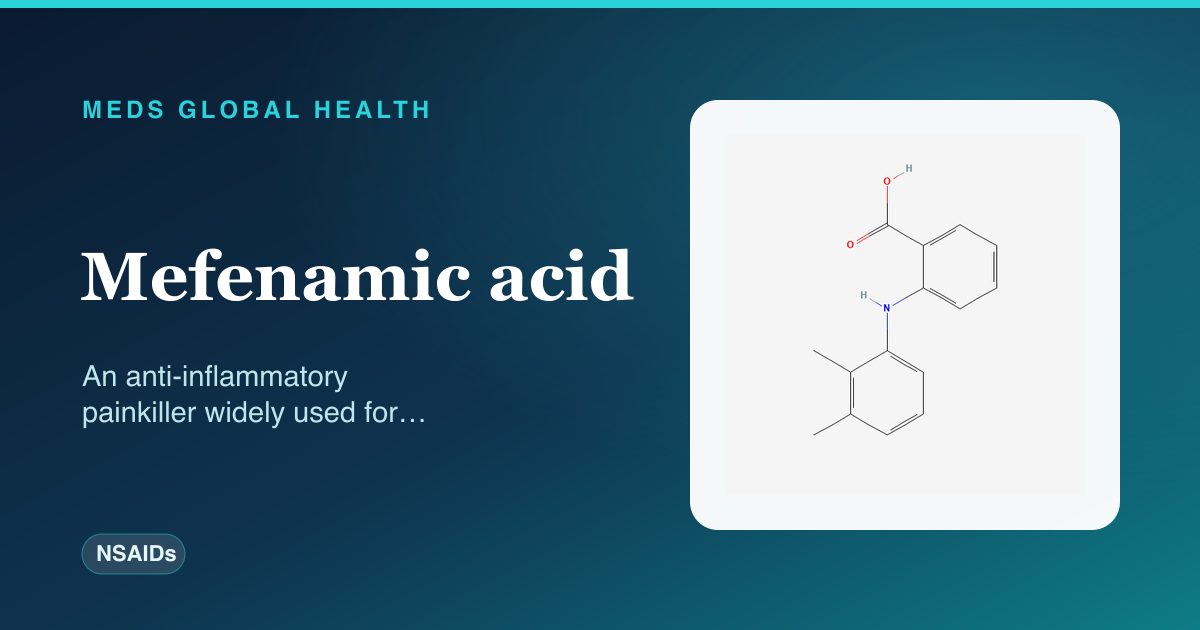
What it is
Mefenamic acid is an NSAID (non-steroidal anti-inflammatory drug). NSAIDs ease pain, lower inflammation and bring down a temperature. Mefenamic acid is used particularly for period pain and the heavy bleeding and cramps of periods, and also for other painful conditions such as muscle and joint pain and headache. It works in a similar way to ibuprofen and naproxen, but it is most often chosen when period symptoms are the main problem.
How it works
The body makes substances called prostaglandins that trigger pain, swelling and the cramping of the womb during a period. Mefenamic acid blocks the enzymes (cyclo-oxygenase, or COX) that produce these prostaglandins. With fewer prostaglandins, the womb cramps less strongly, bleeding can be reduced, and general pain and inflammation settle. Because prostaglandins also protect the stomach lining and help the kidneys, blocking them is what explains the typical NSAID side effects and cautions.
Company & origin
Originated / developed by: Available in the UK as branded Ponstan and as generic mefenamic acid from several manufacturers..
Mefenamic acid is a non-steroidal anti-inflammatory drug (NSAID) of the fenamate group, long used in the UK for period pain and other painful, inflammatory conditions.
Practical use
How to take Mefenamic acid
General, dose-free guidance — always follow your prescriber's and the leaflet's specific instructions.
- Take it with food or just after a meal to help protect your stomach.
- Swallow the tablets or capsules whole with a drink of water.
- It is usually taken for short periods, such as for the days of a painful or heavy period.
- Start taking it as your period pain begins and continue as advised rather than waiting for the pain to become severe.
- Do not take it together with other NSAIDs such as ibuprofen, naproxen or aspirin painkillers unless a doctor tells you to.
- Stop taking it and seek advice if you get diarrhoea or a skin rash.
Weighing it up
Advantages & disadvantages of Mefenamic acid
Advantages
- Effective for period pain and can also reduce heavy menstrual bleeding.
- Works quickly when taken at the onset of period cramps.
- Available in the UK both on prescription and, in some forms, from a pharmacy.
- Suited to short courses rather than needing continuous daily use.
Disadvantages
- Commonly causes stomach upset, indigestion and diarrhoea.
- Carries the usual NSAID risks of stomach bleeding and ulcers, especially in older people.
- Can affect the kidneys and may raise blood pressure or strain the heart.
- Dangerous in overdose because it can trigger seizures, so it must be stored safely.
Practical use
Good to know
Mefenamic acid is usually best for short courses, such as during a painful period, rather than continuous long-term use. Taking it with food helps protect the stomach. Diarrhoea is a fairly common side effect with this particular NSAID, and it should be stopped if a rash or diarrhoea develops. In overdose it can cause fits (seizures), so it must be kept safely and never taken in excess.
Who should not take it / use with caution
- People who have had a stomach or duodenal ulcer, or bleeding in the gut.
- People with severe heart failure, significant kidney disease or severe liver disease.
- People who have had an asthma attack, wheeze, hives or swelling triggered by aspirin or other NSAIDs.
- People with inflammatory bowel disease such as Crohn's disease or ulcerative colitis.
- Women in the later part of pregnancy, unless a doctor advises otherwise.
Monitoring
- Blood pressure and kidney function with longer or repeated use, especially in older people.
- Signs of stomach bleeding such as black stools or vomiting blood, which need urgent attention.
- Review of the need to continue, keeping courses as short as possible.
Side effects
- Indigestion, stomach ache and feeling sick.
- Diarrhoea, which can be troublesome with this medicine.
- Headache, dizziness or drowsiness.
- Skin rash, which should prompt stopping the medicine.
- Less commonly, stomach bleeding, kidney problems or fluid retention.
Key interactions
- Other NSAIDs and aspirin painkillers, which add to the risk of stomach bleeding.
- Blood-thinning medicines such as warfarin or apixaban, raising bleeding risk.
- Steroids and SSRI antidepressants, which also increase the chance of gut bleeding.
- Some blood pressure and heart medicines (ACE inhibitors, ARBs and water tablets), which together can harm the kidneys.
- Lithium and methotrexate, whose levels can rise.
Available as: Tablets and capsules taken by mouth.
Answers
Mefenamic acid: frequently asked questions
Is mefenamic acid good for period pain?
Yes. It is one of the NSAIDs commonly chosen in the UK for period pain because it eases the womb cramps and can also reduce heavy bleeding. It works best if started as the period pain begins.
Should I take mefenamic acid with food?
Yes, take it with or just after food. This helps protect your stomach and reduces the chance of indigestion, which is a common side effect of NSAIDs.
Why does mefenamic acid cause diarrhoea?
Diarrhoea is a recognised and fairly common side effect of mefenamic acid in particular. If you develop diarrhoea you should stop taking it and speak to a pharmacist or doctor.
Can I take mefenamic acid with ibuprofen?
No. You should not combine it with ibuprofen, naproxen, aspirin or other NSAIDs, as this greatly increases the risk of stomach irritation and bleeding without adding benefit.
Is mefenamic acid dangerous in overdose?
It can be. Taking too much mefenamic acid can cause fits (seizures) and is a medical emergency, so it should be stored safely and never taken in larger amounts than advised.
The wider class
About NSAIDs
Mefenamic acid belongs to the nsaids class. For how the class as a whole works, its shared safety principles and monitoring, see the full guide.
Browse by body system
Authoritative sources
- BNF
- NICE CKS
Building a medicines information resource?
We create evidence-led, dose-free drug and formulary references for teams.