A strong NSAID
Indometacin
A powerful non-steroidal anti-inflammatory (NSAID) used mainly for short, sharp flares such as acute gout.
What is Indometacin?
Indometacin is a strong NSAID that relieves the pain, swelling and inflammation of conditions such as acute gout. It works well but tends to cause more stomach and nervous-system side effects than gentler NSAIDs, so it is usually reserved for short courses. It should be taken with food and not combined with other NSAIDs.
Education and reference only. This is a plain-language guide to Indometacin — it deliberately contains no doses. Doses depend on the person, the brand and the reason for treatment, and belong with your prescriber. Always check the BNF, the product labelling (SmPC) and follow medical advice.
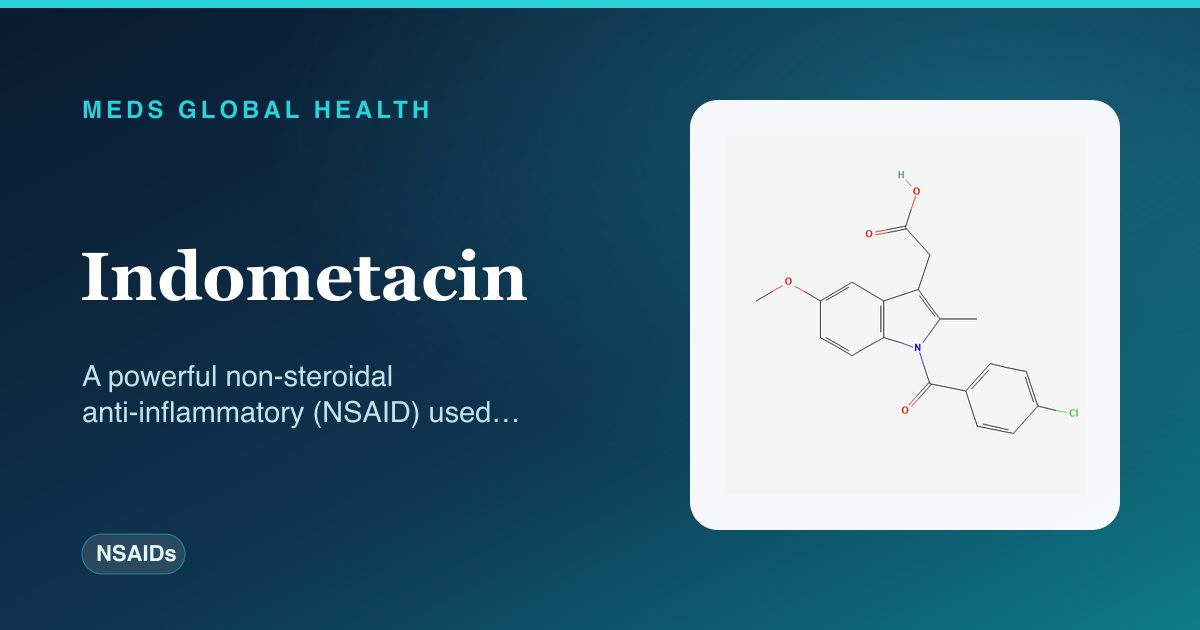
What it is
Indometacin is one of the more potent non-steroidal anti-inflammatory drugs (NSAIDs). In the UK it is used chiefly for conditions where a strong, fast anti-inflammatory effect is wanted over a short period, the classic example being an acute attack of gout. It also has roles in some inflammatory joint and musculoskeletal conditions. Because it is a vigorous NSAID, it carries a higher burden of side effects than milder options such as ibuprofen, which is why it is generally used for short, defined courses rather than long-term.
How it works
Indometacin blocks enzymes called cyclo-oxygenase (COX-1 and COX-2) that the body uses to make prostaglandins. Prostaglandins drive pain, swelling, redness and heat, so reducing them dampens inflammation and eases pain quickly. The same prostaglandins also protect the stomach lining and help regulate blood flow through the kidneys, which is why blocking them can lead to stomach irritation, ulcers and effects on kidney function.
Company & origin
Developed in the 1960s and long used in the UK as a potent anti-inflammatory.
What it treats
Conditions Indometacin is used for
Practical use
How to take Indometacin
General, dose-free guidance — always follow your prescriber's and the leaflet's specific instructions.
- Take it with or straight after food or a drink of milk to protect the stomach.
- Swallow capsules or tablets whole with water; take any modified-release form exactly as directed and do not crush it.
- Use it for the shortest time that controls the flare rather than continuously.
- Do not take other NSAIDs (such as ibuprofen or aspirin for pain) at the same time.
- If a dose is missed, take it when remembered unless the next one is near, then skip it; never double up.
Weighing it up
Advantages & disadvantages of Indometacin
Advantages
- A strong, fast-acting anti-inflammatory that works well for painful flares such as acute gout.
- Long experience of use in the UK, so its effects and risks are well understood.
- Available cheaply as a generic medicine in more than one form.
Disadvantages
- More likely than gentler NSAIDs to cause stomach irritation, ulcers and bleeding.
- Commonly causes headache, dizziness or a 'muzzy' feeling that can affect driving.
- Can strain the kidneys, raise blood pressure and is not suitable for everyone, so it is kept to short courses.
Practical use
Good to know
Indometacin is best taken with or just after food to reduce stomach upset. It is a strong NSAID, so headache, dizziness and stomach problems are more common than with gentler options, and it is usually given as a short course for a flare rather than ongoing. Don't take it alongside other NSAIDs (including over-the-counter ibuprofen or aspirin for pain), and tell your prescriber if you have stomach, kidney, heart or blood-pressure problems.
Who should not take it / use with caution
- People with a current or past stomach ulcer, or bleeding in the gut.
- People who have had asthma, wheeze, hives or swelling triggered by aspirin or another NSAID.
- People with severe heart failure, poorly controlled high blood pressure or significant kidney disease, and in late pregnancy.
Monitoring
- Blood pressure and signs of fluid retention on longer use
- Kidney function, especially in older people or those on heart or blood-pressure medicines
- Any stomach symptoms, with prompt review of black stools or blood
Side effects
- Indigestion, stomach pain, nausea; less often stomach ulcers or bleeding (report black stools or vomiting blood urgently).
- Headache, dizziness and a feeling of being light-headed or 'fuzzy', which are more common than with milder NSAIDs.
- Fluid retention, raised blood pressure and, rarely, effects on the kidneys or, with NSAIDs generally, a small increase in heart-attack and stroke risk.
Key interactions
- Other NSAIDs and aspirin — combining them sharply raises the risk of stomach bleeding.
- Blood thinners such as warfarin or apixaban, and some antidepressants (SSRIs), which add to bleeding risk.
- Blood-pressure and heart medicines including ACE inhibitors, ARBs and water tablets (diuretics), where the combination can affect the kidneys.
Available as: Capsules and tablets, including modified-release forms; also available as suppositories.
Answers
Indometacin: frequently asked questions
Why is indometacin used for gout?
An acute gout attack is intensely inflammatory, and indometacin is a strong, fast NSAID that brings down the pain and swelling quickly. It is usually given as a short course at the start of a flare, then stopped once the attack settles.
Can I take indometacin with ibuprofen or aspirin?
No. Taking two NSAIDs together greatly increases the risk of stomach irritation and bleeding without adding benefit. If you take low-dose aspirin for your heart, tell your prescriber, as it needs to be considered separately.
Why does it make me feel dizzy or give me a headache?
Indometacin affects the nervous system more than gentler NSAIDs, so headache, dizziness and a 'muzzy' feeling are well-recognised. If these affect you, take care driving and let your prescriber know, as another NSAID may suit you better.
Should I take it with food?
Yes. Taking it with or just after food, or a milky drink, helps protect the stomach lining and reduces indigestion. Report any stomach pain, and seek urgent help for black, tarry stools or vomiting that looks like coffee grounds.
How long should I take it for?
It is usually used for the shortest course that controls your symptoms rather than long-term, because the side-effect risks grow with continued use. Follow the plan your prescriber gives you and don't extend it on your own.
The wider class
About NSAIDs
Indometacin belongs to the nsaids class. For how the class as a whole works, its shared safety principles and monitoring, see the full guide.
Browse by body system
Authoritative sources
- BNF: Indometacin.
- NICE CKS: Anti-inflammatory painkillers (NSAIDs).
Building a medicines information resource?
We create evidence-led, dose-free drug and formulary references for teams.