An NSAID for arthritis
Etodolac
A non-steroidal anti-inflammatory (NSAID) used to ease the pain and stiffness of arthritis.
What is Etodolac?
Etodolac is a non-steroidal anti-inflammatory drug (NSAID) used mainly for the pain and stiffness of osteoarthritis and rheumatoid arthritis. It reduces inflammation and is somewhat gentler on the stomach than some older NSAIDs, but it still carries the usual NSAID risks. It is taken with food and should not be combined with other NSAIDs.
Education and reference only. This is a plain-language guide to Etodolac — it deliberately contains no doses. Doses depend on the person, the brand and the reason for treatment, and belong with your prescriber. Always check the BNF, the product labelling (SmPC) and follow medical advice.
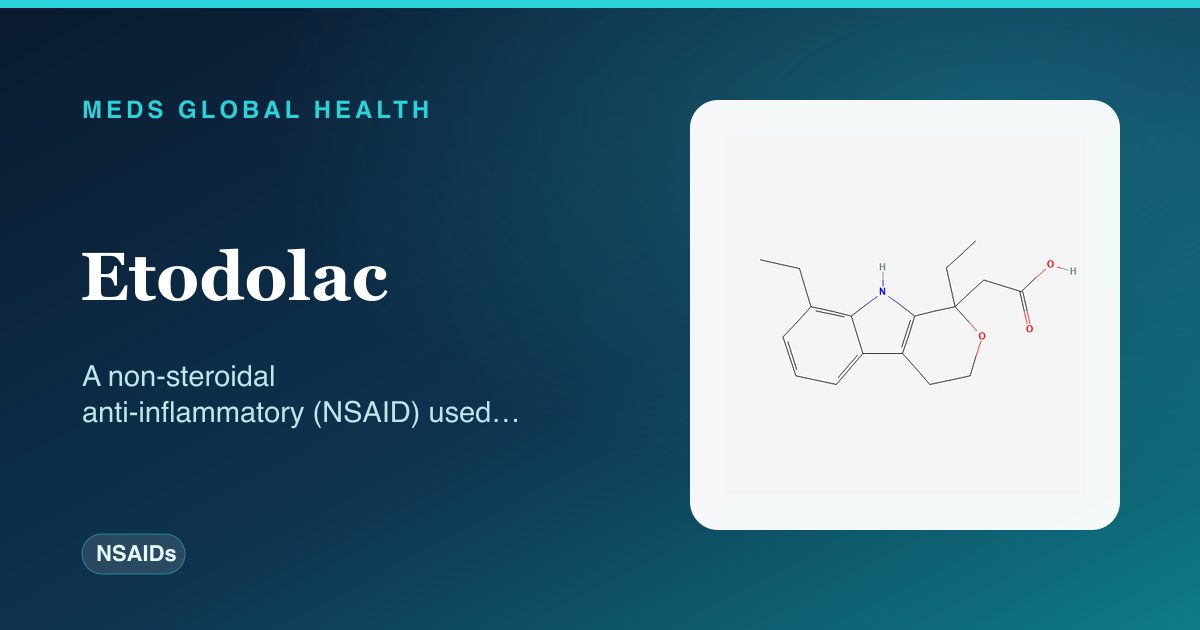
What it is
Etodolac is a non-steroidal anti-inflammatory drug (NSAID). In the UK it is used to relieve the pain, swelling and stiffness of arthritic conditions, particularly osteoarthritis and rheumatoid arthritis. It tends to act a little more on the COX-2 enzyme than on COX-1, which can mean somewhat less stomach irritation than with some older NSAIDs, although the difference is modest and the usual NSAID cautions still apply.
How it works
Etodolac blocks enzymes called cyclo-oxygenase (COX-1 and COX-2) that the body uses to make prostaglandins. Prostaglandins drive pain, swelling and stiffness, so reducing them eases the symptoms of arthritis. Because the same prostaglandins also protect the stomach lining and help control blood flow through the kidneys, blocking them can cause stomach irritation, ulcers and effects on the kidneys and blood pressure.
Company & origin
Developed in the 1980s and used in the UK as an anti-inflammatory for joint conditions.
What it treats
Conditions Etodolac is used for
Practical use
How to take Etodolac
General, dose-free guidance — always follow your prescriber's and the leaflet's specific instructions.
- Take it with or straight after food to help protect the stomach.
- Swallow tablets or capsules whole with a drink of water.
- Use it for the shortest time that keeps your symptoms under control.
- Do not take other NSAIDs (such as ibuprofen or aspirin for pain) at the same time.
- If a dose is missed, take it when you remember unless the next one is near, then skip it; never double up.
- Tell your prescriber promptly about indigestion, black stools, swelling of the ankles or breathlessness.
Weighing it up
Advantages & disadvantages of Etodolac
Advantages
- Effective relief of the pain and stiffness of osteoarthritis and rheumatoid arthritis.
- Slightly more COX-2 selective, so may be a little easier on the stomach than some older NSAIDs.
- Available cheaply as a generic medicine.
Disadvantages
- Still carries the usual NSAID risk of stomach irritation, ulcers and bleeding, so is often taken with a stomach-protecting medicine.
- Can strain the kidneys, raise blood pressure and worsen heart failure or fluid retention.
- Not suitable for everyone, including people with a history of ulcers or certain heart problems.
Practical use
Good to know
Etodolac is best taken with or just after food to reduce stomach upset. Use the lowest dose that controls symptoms for the shortest time needed. Don't take it alongside other NSAIDs (including over-the-counter ibuprofen or aspirin taken for pain), and tell your prescriber if you have stomach, kidney, heart or blood-pressure problems.
Who should not take it / use with caution
- People with a current or past stomach ulcer, or bleeding in the gut.
- People who have had asthma, wheeze, hives or swelling triggered by aspirin or another NSAID.
- People with severe heart failure, poorly controlled high blood pressure or significant kidney disease, and in late pregnancy.
Monitoring
- Blood pressure, especially if you already have raised blood pressure.
- Kidney function, particularly in older people or those on heart or blood-pressure medicines.
- Signs of stomach bleeding, such as black stools or vomiting blood.
Side effects
- Indigestion, stomach pain, nausea or diarrhoea.
- Headache or dizziness.
- Fluid retention with ankle swelling, or a rise in blood pressure.
- Less commonly, stomach ulcers or bleeding, and effects on the kidneys.
Key interactions
- Other NSAIDs and aspirin taken for pain — added risk of stomach bleeding.
- Blood thinners such as warfarin or apixaban — increased bleeding risk.
- Some blood-pressure and heart medicines (ACE inhibitors, diuretics) — reduced effect and added strain on the kidneys.
- Corticosteroids and certain antidepressants (SSRIs) — increased risk of stomach bleeding.
Available as: tablets and capsules, including modified-release forms
Answers
Etodolac: frequently asked questions
Should I take etodolac with food?
Yes. Taking it with or just after food helps to reduce stomach upset and irritation.
Can I take etodolac with ibuprofen?
No. You should not combine etodolac with other NSAIDs such as ibuprofen or aspirin taken for pain, as this raises the risk of stomach bleeding.
Is etodolac safer for the stomach than ibuprofen?
It may be slightly gentler on the stomach because it acts a little more on COX-2, but the difference is modest and the usual NSAID precautions still apply.
Can I take etodolac long-term?
It can be used longer term for ongoing arthritis, but at the lowest effective dose and with regular reviews of your blood pressure, kidneys and stomach symptoms.
What should make me stop and seek advice?
Black or tarry stools, vomiting blood, severe stomach pain, swelling of the ankles or breathlessness all need prompt medical attention.
The wider class
About NSAIDs
Etodolac belongs to the nsaids class. For how the class as a whole works, its shared safety principles and monitoring, see the full guide.
Browse by body system
Authoritative sources
- BNF
- NICE CKS
Building a medicines information resource?
We create evidence-led, dose-free drug and formulary references for teams.