An anti-inflammatory painkiller (NSAID)
Diclofenac
A strong anti-inflammatory painkiller (NSAID) for pain and inflammation, with a comparatively higher heart risk than some other NSAIDs.
What is Diclofenac?
Diclofenac is a non-steroidal anti-inflammatory drug (NSAID) that relieves pain and reduces inflammation. It is used for painful, inflammatory conditions such as arthritis, gout, back pain and injuries, and comes as tablets, gels and other forms.
Education and reference only. This is a plain-language guide to Diclofenac — it deliberately contains no doses. Doses depend on the person, the brand and the reason for treatment, and belong with your prescriber. Always check the BNF, the product labelling (SmPC) and follow medical advice.
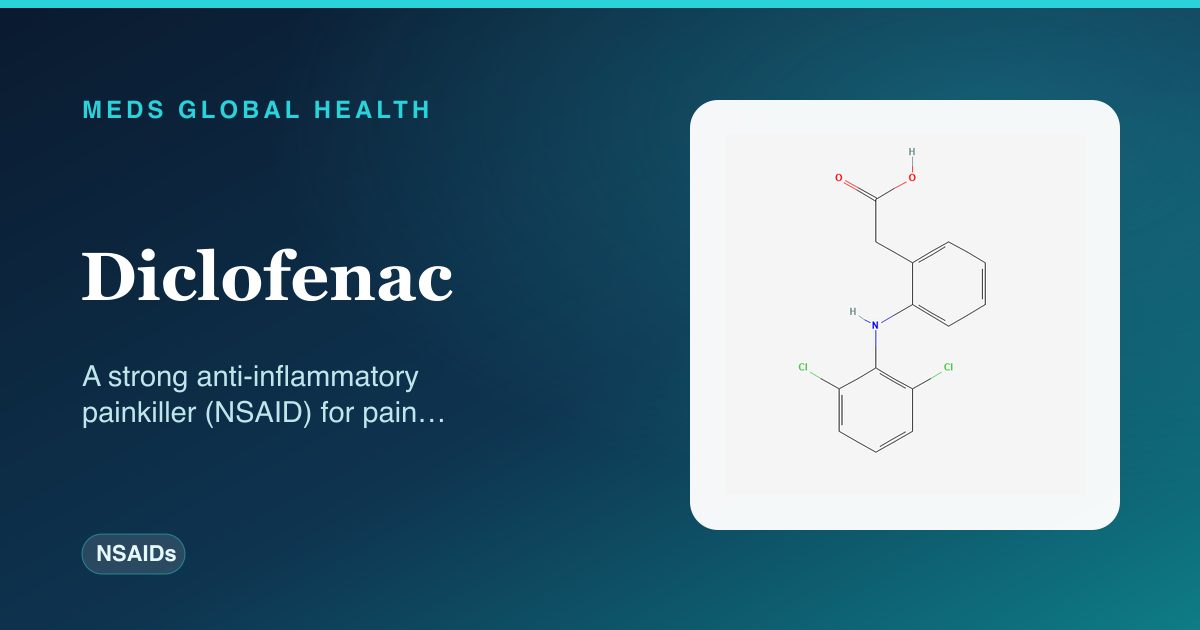
What it is
Diclofenac is a non-steroidal anti-inflammatory drug (NSAID) — a painkiller that also reduces inflammation. It is used for painful, inflammatory conditions such as osteoarthritis, gout attacks and migraine, as well as injuries and other musculoskeletal pain. Among the NSAIDs it is one of the more effective for inflammation, but it carries a comparatively higher cardiovascular risk than some alternatives, which shapes when and for whom it is chosen. A topical gel applied to the skin is a popular, lower-risk option for localised joint and muscle pain.
How it works
Diclofenac blocks enzymes called cyclo-oxygenases (COX), which the body uses to make prostaglandins — natural chemicals that drive pain, swelling and fever at sites of injury or inflammation. By reducing prostaglandin production, diclofenac eases pain and dampens inflammation. The same prostaglandins, however, also protect the stomach lining, support kidney blood flow and influence the cardiovascular system, which is why blocking them can bring stomach, kidney and heart-related side effects.
Company & origin
Originated / developed by: Ciba-Geigy (now Novartis).
Diclofenac was developed by the Swiss company Ciba-Geigy (later part of Novartis), having been synthesised in the mid-1960s. It was introduced to the market in the 1970s as the NSAID Voltaren/Voltarol.
What it treats
Conditions Diclofenac is used for
Practical use
How to take Diclofenac
General, dose-free guidance — always follow your prescriber's and the leaflet's specific instructions.
- Take tablets with or just after food to reduce stomach irritation.
- Use it at the lowest effective amount for the shortest time needed.
- Watch for and report stomach pain, indigestion, or signs of bleeding such as black stools.
- Stay well hydrated, as NSAIDs can affect the kidneys, especially if you are unwell or dehydrated.
- Tell a pharmacist about other medicines, and avoid combining with other anti-inflammatory painkillers.
Weighing it up
Advantages & disadvantages of Diclofenac
Advantages
- Effective for pain and swelling in inflammatory and musculoskeletal conditions.
- Available as gels and creams that can limit whole-body side effects.
- Works relatively quickly for flare-ups of pain.
- Useful where pain is driven by inflammation rather than just discomfort.
Disadvantages
- Can irritate the stomach and cause ulcers or bleeding in the gut.
- May reduce kidney function, particularly in older or dehydrated people.
- Carries a higher risk of heart attack and stroke than some other NSAIDs, so it is used cautiously in heart disease.
- Can raise blood pressure and cause fluid retention.
- Not suitable for many people, including some with asthma, ulcers or heart problems.
Practical use
Good to know
It is best taken with or after food to protect the stomach, and used at the lowest helpful amount for the shortest time that controls symptoms. Diclofenac has a comparatively higher cardiovascular risk than some other NSAIDs such as naproxen, so it is generally avoided in people with established heart disease, stroke or significant risk factors. The topical gel delivers far less drug into the body and is a lower-risk choice for pain in a specific joint or muscle. People with stomach ulcers, kidney problems or asthma triggered by anti-inflammatories need particular care.
Who should not take it / use with caution
- People with established heart disease, previous stroke, heart failure or significant cardiovascular risk — diclofenac's heart risk is comparatively higher.
- People with a current or previous stomach ulcer or bleeding, severe kidney or liver impairment, or asthma made worse by anti-inflammatory painkillers.
- Avoided in late pregnancy; used with caution in older people and alongside other medicines that irritate the stomach or affect the kidneys.
Monitoring
- Blood pressure and kidney function with regular use
- Signs of stomach upset or bleeding
- Cardiovascular risk review before longer-term use
Side effects
- Indigestion, stomach pain or nausea; with longer use, a risk of stomach ulcers or bleeding.
- Fluid retention, raised blood pressure, and effects on kidney function.
- A comparatively higher risk of heart attack or stroke than some other NSAIDs; rarely, serious skin or allergic reactions. The topical gel carries much lower whole-body risk.
Key interactions
- Other medicines that irritate the stomach or thin the blood — such as aspirin, anticoagulants and steroids — raise the risk of bleeding when combined.
- It can reduce the effect of blood-pressure medicines and, with ACE inhibitors or ARBs plus a diuretic, stress the kidneys (the "triple whammy").
- Care with lithium and methotrexate (levels can rise) and with other NSAIDs, which should not be doubled up.
Available as: Tablets and capsules (including modified-release), a topical gel, and suppositories; some forms are pharmacy or prescription only.
Answers
Diclofenac: frequently asked questions
Why is diclofenac considered higher-risk for the heart?
Among the anti-inflammatory painkillers, diclofenac has been linked to a comparatively higher risk of heart attack and stroke than some alternatives such as naproxen. Because of this it is generally avoided in people who already have heart disease or significant risk factors, and used at the lowest helpful amount for the shortest time.
Is the diclofenac gel safer than the tablets?
Yes, generally. The gel is applied to the skin over a painful joint or muscle and only a small amount is absorbed into the body, so the stomach, kidney and heart risks are much lower than with tablets. It is a sensible option when the pain is in one specific area.
Why do I need to take diclofenac with food?
Anti-inflammatory painkillers can irritate the stomach lining and, with longer use, raise the risk of ulcers and bleeding. Taking diclofenac with or after food helps protect the stomach. Your prescriber may also add a stomach-protecting medicine if you need it regularly.
Can I take diclofenac with my blood-pressure tablets?
Anti-inflammatory painkillers can raise blood pressure and reduce the effect of blood-pressure medicines, and combined with certain ones plus a water tablet they can stress the kidneys. Mention all your medicines to your pharmacist, who can advise and may suggest paracetamol where suitable.
What is the difference between diclofenac and Voltarol or Voltaren?
They are the same medicine — diclofenac is the generic (active-ingredient) name, Voltarol is the UK brand name and Voltaren is the US brand name. The active ingredient is identical.
The wider class
About NSAIDs
Diclofenac belongs to the nsaids class. For how the class as a whole works, its shared safety principles and monitoring, see the full guide.
Browse by body system
Authoritative sources
- BNF: Diclofenac sodium.
- MHRA Drug Safety Update: Diclofenac and cardiovascular risk.
- NICE CKS: Diclofenac.
Building a medicines information resource?
We create evidence-led, dose-free drug and formulary references for teams.