An antihistamine eye drop for itchy, allergic eyes
Alcaftadine
An antihistamine eye drop used to relieve itchy, watery eyes caused by allergies.
What is Alcaftadine?
Alcaftadine is an antihistamine eye drop used to relieve the itching and irritation of allergic conjunctivitis, the red, watery, itchy eyes caused by allergens such as pollen, dust or pet dander. It is applied directly to the eye and works by blocking the histamine that drives the allergic reaction. The most common effects are brief stinging when the drop goes in and a short period of blurred vision, which is why you should wait before driving. It treats the symptoms rather than the underlying allergy.
Education and reference only. This is a plain-language guide to Alcaftadine — it deliberately contains no doses. Doses depend on the person, the brand and the reason for treatment, and belong with your prescriber. Always check the BNF, the product labelling (SmPC) and follow medical advice.
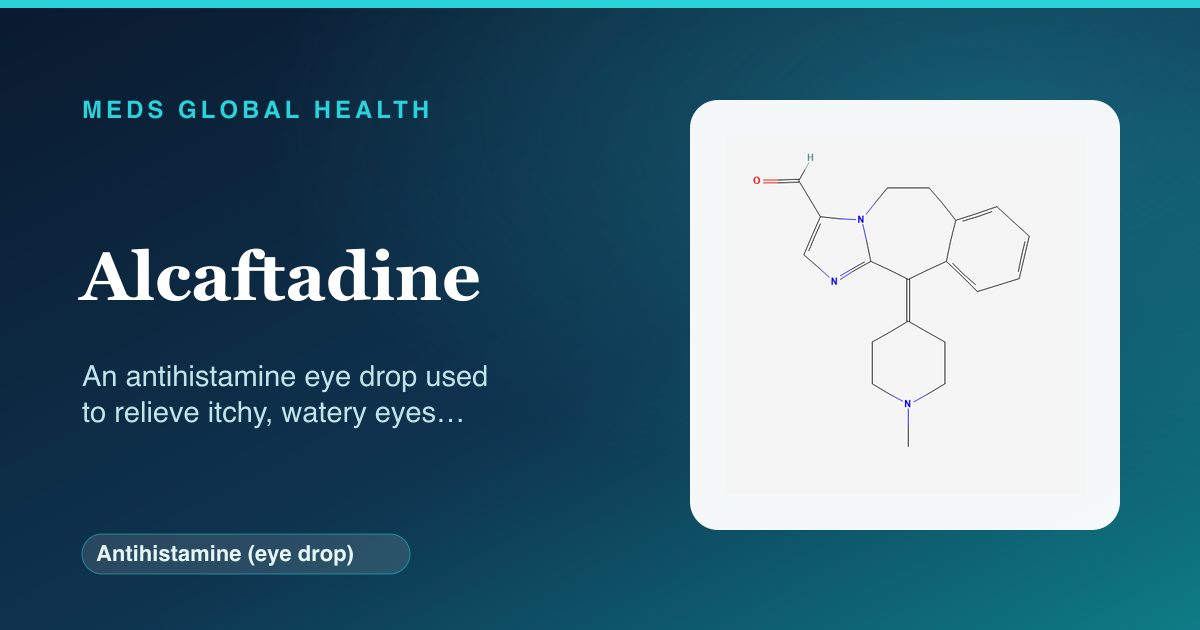
What it is
Alcaftadine is an antihistamine medicine made as an eye drop. It is used to ease the symptoms of allergic conjunctivitis, the itchy, red, watery eyes that happen when the eyes react to allergens such as pollen, house dust or animal dander. Applied straight onto the surface of the eye, it acts locally to calm the allergic response. It is a symptom reliever rather than a cure, easing discomfort while the allergen exposure lasts, and it is one of several antihistamine and anti-allergy eye drops available.
How it works
When the eyes come into contact with an allergen, the body releases histamine, a chemical that makes the eyes itch, redden and water. Alcaftadine is an antihistamine: it blocks histamine from acting on the eye, which reduces the itching, redness and watering. Some eye drops in this group also help steady the cells that release histamine, adding to the effect. Because it works directly on the surface of the eye, relief tends to be felt locally and fairly quickly, and it is used while you are exposed to whatever triggers your allergy.
Company & origin
An antihistamine eye drop used to relieve the itching of allergic conjunctivitis, such as that caused by pollen or other allergens.
Practical use
How to take Alcaftadine
General, dose-free guidance — always follow your prescriber's and the leaflet's specific instructions.
- Apply the drops to the affected eye or eyes as directed, usually regularly during your allergy season.
- Wash your hands first and avoid touching the dropper tip to your eye or anything else to keep it clean.
- Expect brief stinging and short-lived blurred vision, and wait until your sight is clear before driving.
- If you wear contact lenses, remove them before using the drops and wait as advised before putting them back in.
- Get your eyes checked if they become very painful, your vision changes, or symptoms do not improve.
Weighing it up
Advantages & disadvantages of Alcaftadine
Advantages
- Relieves the itching, redness and watering of allergic eyes by blocking histamine.
- Applied directly to the eye, so it acts where the symptoms are.
- Generally well tolerated, with mainly mild, short-lived local effects.
Disadvantages
- Commonly causes brief stinging and short-lived blurred vision when applied.
- Treats the symptoms rather than curing the underlying allergy.
- Needs care around contact lens use and may need regular application during the allergy season.
Practical use
Good to know
The handiest thing to know about alcaftadine is that it is an eye drop for the itch of allergic eyes, so it works best when used regularly during your allergy season rather than only when symptoms are at their worst. A brief stinging or burning when the drop goes in is common and settles quickly, and your vision may be blurred for a short time straight afterwards, so it is wise to wait until your sight is clear before driving or doing anything that needs sharp vision. If you wear contact lenses, you usually need to take them out before using the drops and wait a while before putting them back in, as advised. If your eyes become very painful, your vision changes, or symptoms do not improve, it is worth getting them checked rather than carrying on.
Who should not take it / use with caution
- People who have had a serious allergic reaction to alcaftadine or the ingredients in the drops should not use them.
- It is used with care in young children, following specialist or pharmacist advice on suitability.
- It is for use in the eye only and should not be swallowed or used for other conditions without advice.
Monitoring
- Reviewing whether the itching and irritation improve with regular use.
- Watching for any worsening redness, pain or changes in vision that need checking.
- Checking the drops are being used correctly and kept clean.
Side effects
- Brief stinging, burning or irritation when the drop goes in.
- Short-lived blurred vision straight after applying the drops.
- Redness, dryness or a feeling of something in the eye in some people.
- Rarely, an allergic reaction to the drops themselves, with worsening redness or swelling.
Key interactions
- There are few well-established interactions, as it mainly acts locally in the eye.
- If you use other eye drops, leave a gap between them, as advised, so each works properly.
- Tell your pharmacist or prescriber about other eye treatments or contact lens use.
Available as: Eye drops applied to the eye.
Answers
Alcaftadine: frequently asked questions
What is alcaftadine used for?
It is an antihistamine eye drop used to relieve the itching, redness and watering of allergic conjunctivitis caused by allergens such as pollen or dust.
Why do my eyes sting when I use it?
Brief stinging or burning when the drop goes in is common and usually settles quickly; it is one of the most frequent effects.
Can I drive straight after using the drops?
Your vision may be blurred for a short time after applying the drops, so wait until your sight is clear before driving.
Can I wear contact lenses with it?
You usually need to remove contact lenses before using the drops and wait a while before putting them back in, as advised.
Does it cure my eye allergy?
No. It relieves the symptoms while you are exposed to the allergen but does not cure the underlying allergy.
The wider class
About Antihistamine (eye drop)
Alcaftadine belongs to the antihistamine (eye drop) class. For how the class as a whole works, its shared safety principles and monitoring, see the full guide.
Browse by body system
Authoritative sources
- BNF
- NICE CKS
Building a medicines information resource?
We create evidence-led, dose-free drug and formulary references for teams.