Olopatadine eye drops (antihistamine)
Olopatadine
An antihistamine eye drop that calms itchy, red, watery eyes caused by allergy.
What is Olopatadine?
Olopatadine is an antihistamine eye drop used to treat allergic conjunctivitis, the itchy, red, watery eyes caused by things like pollen. It blocks histamine, the chemical the body releases in an allergic reaction, and also helps steady the cells that release it. It usually works quickly and is taken twice a day, in the morning and evening. It is prescription-only in the UK. Soft contact lenses should be removed before using it and put back in after a short wait.
Education and reference only. This is a plain-language guide to Olopatadine — it deliberately contains no doses. Doses depend on the person, the brand and the reason for treatment, and belong with your prescriber. Always check the BNF, the product labelling (SmPC) and follow medical advice.
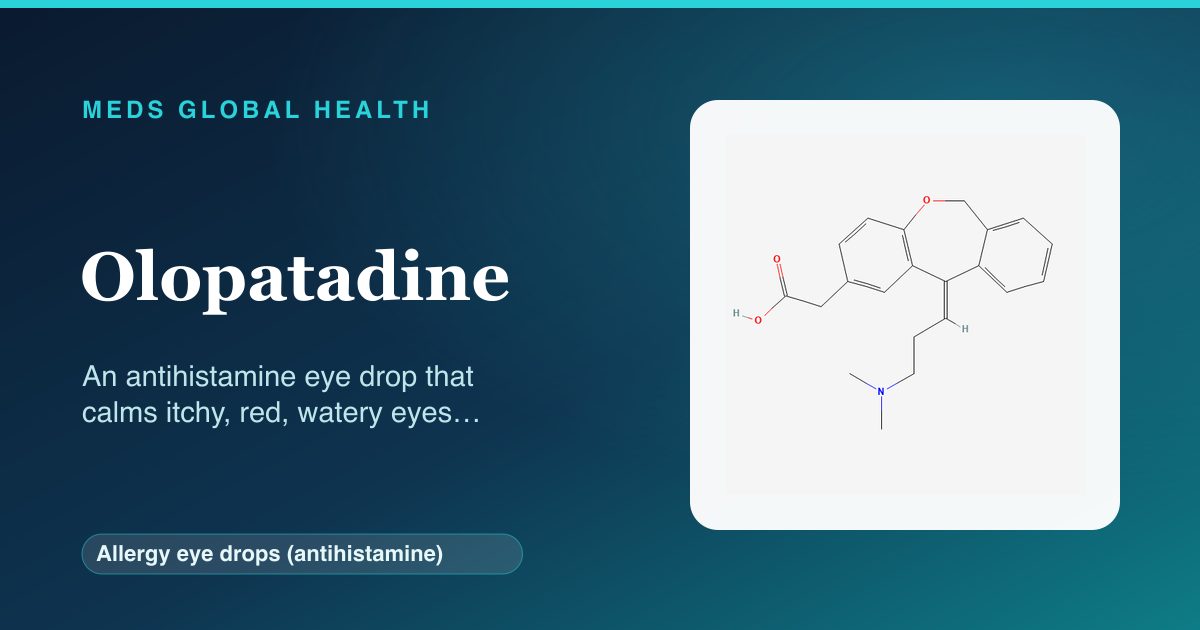
What it is
Olopatadine is an antihistamine eye drop used to relieve the symptoms of allergic conjunctivitis, such as itching, redness and watering of the eyes. Allergic conjunctivitis happens when the surface of the eye reacts to an allergy trigger, often pollen, dust or animal dander, releasing histamine. Olopatadine blocks the effect of that histamine and also helps calm the allergy cells. It is a prescription medicine in the UK.
How it works
When the eye meets an allergy trigger, cells release histamine, which causes itching, redness, swelling and watering. Olopatadine blocks histamine from acting on the eye and also helps stabilise the mast cells so they release less of it. This both relieves symptoms that are already present and helps prevent them building up. Because it works on the eye directly, relief is usually felt fairly quickly.
Company & origin
Originated / developed by: Novartis (originator).
A prescription antihistamine eye drop used in the UK to treat the itchy, watery eyes of allergic conjunctivitis.
Practical use
How to take Olopatadine
General, dose-free guidance — always follow your prescriber's and the leaflet's specific instructions.
- Wash your hands, tilt your head back, pull down the lower lid and let one drop fall into the pocket without touching the eye.
- Use it twice a day, in the morning and the evening, or as your prescriber directs.
- Remove soft contact lenses before using the drops and wait a short while before putting them back in.
- After the drop, close the eye gently and press the inner corner briefly to reduce the medicine draining into your body.
- If you also use other eye drops, leave a gap of several minutes between them.
Weighing it up
Advantages & disadvantages of Olopatadine
Advantages
- Relieves itchy, watery, allergic eyes and usually works quickly.
- Twice-daily dosing is simple and easy to remember.
- Acts directly on the eye, so effects on the rest of the body are limited.
Disadvantages
- Prescription-only in the UK, so it needs a GP or optician.
- Soft contact lenses must be removed before each dose.
- Can cause brief blurring or stinging after it is put in.
Practical use
Good to know
Olopatadine is usually used morning and evening and tends to act quickly to relieve itchy, watery, allergic eyes. Take out soft contact lenses before using it and wait a short while before putting them back in, because the drops and any preservative can be absorbed by the lens. It can blur vision briefly just after application, so wait until your sight clears before driving. Wash your hands first and do not touch the eye or lashes with the dropper tip to keep the drops clean. If your eye becomes painful, very red, sensitive to light, or your vision changes, this may not be simple allergy and you should be checked, because steroid or other treatment is sometimes needed.
Who should not take it / use with caution
- Anyone who has had an allergic reaction to olopatadine or other ingredients in the drops.
- People with a painful, very red eye or light sensitivity should be assessed rather than self-treating.
- Use in young children should follow specialist or prescriber advice.
Monitoring
- Review if symptoms do not improve or keep coming back.
- Seek prompt advice if the eye becomes painful, very red or light-sensitive.
- Check that symptoms really are due to allergy rather than infection.
Side effects
- Mild stinging or a brief burning feeling when the drop goes in.
- Temporary blurred vision just after application.
- Headache, dry eye or an unusual taste in the mouth in some people.
Key interactions
- Leave a gap between olopatadine and any other eye drops so neither is washed out.
- Soft contact lenses can absorb the drops, so remove lenses before each dose.
- No important interactions with medicines taken by mouth are expected.
Available as: Eye drops in a multidose bottle.
Answers
Olopatadine: frequently asked questions
How quickly does olopatadine work?
It usually relieves itchy, watery allergic eyes fairly quickly and is used twice a day, in the morning and evening.
Can I wear contact lenses with it?
Take out soft lenses before each dose and wait a short while before putting them back in, as the lens can absorb the drops.
Do I need a prescription?
Yes, olopatadine eye drops are prescription-only in the UK.
Is it the same as antihistamine tablets?
It is an antihistamine but works directly on the eye, so it targets eye symptoms with little effect on the rest of the body.
When should I see someone instead of using it?
If the eye is painful, very red, sensitive to light, or your vision changes, get it checked, as this may not be simple allergy.
The wider class
About Allergy eye drops (antihistamine)
Olopatadine belongs to the allergy eye drops (antihistamine) class. For how the class as a whole works, its shared safety principles and monitoring, see the full guide.
Browse by body system
Authoritative sources
- BNF
- NICE CKS
Building a medicines information resource?
We create evidence-led, dose-free drug and formulary references for teams.