A fast-acting antihistamine spray and eye drop
Azelastine (nasal/eye)
A fast-acting antihistamine, used as a nasal spray for hay fever or as an eye drop for itchy, watery eyes, that can leave a brief bitter taste.
What is Azelastine (nasal/eye)?
Azelastine is an antihistamine used directly where it is needed — as a nasal spray for hay fever symptoms such as sneezing, itching and a runny nose, or as an eye drop for itchy, watery eyes. It works quickly, often within minutes, and a common quirk is a brief bitter taste after the nasal spray.
Education and reference only. This is a plain-language guide to Azelastine (nasal/eye) — it deliberately contains no doses. Doses depend on the person, the brand and the reason for treatment, and belong with your prescriber. Always check the BNF, the product labelling (SmPC) and follow medical advice.
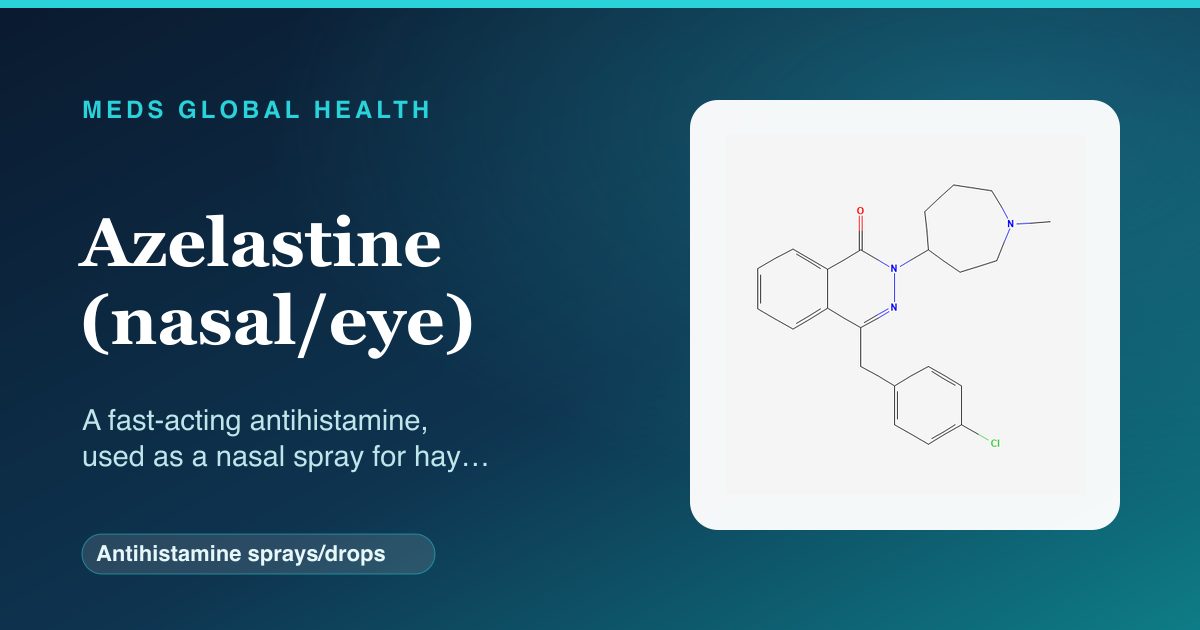
What it is
Azelastine is an antihistamine applied locally, available as a nasal spray for hay fever and other allergic rhinitis, and as an eye drop for allergic eye symptoms. Because it is applied directly to the nose or eye, it acts quickly and mainly where it is needed, rather than throughout the body.
How it works
Allergic symptoms are largely driven by histamine, a chemical released when the body reacts to something like pollen. Azelastine blocks histamine's effects at the lining of the nose or the surface of the eye, which reduces the itching, sneezing, runniness and watering. Because it is applied on the spot, it tends to start working quickly.
Company & origin
Originated / developed by: Originally developed by Asta Werke (later Meda)..
Azelastine is an antihistamine first introduced in the 1980s and used in nasal-spray and eye-drop forms for allergy.
What it treats
Conditions Azelastine (nasal/eye) is used for
Practical use
How to take Azelastine (nasal/eye)
General, dose-free guidance — always follow your prescriber's and the leaflet's specific instructions.
- For the nasal spray, blow your nose gently, then keep your head tilted slightly forward.
- Insert the nozzle into the nostril and give a spray into each nostril, breathing in gently and avoiding a hard sniff.
- Keeping your head forward and not sniffing hard helps reduce the bitter taste some people notice.
- For the eye drops, pull down the lower lid and place a drop into each affected eye without touching the eye with the tip.
- Use it regularly as directed during the allergy season for best control, not only when symptoms are at their worst.
Weighing it up
Advantages & disadvantages of Azelastine (nasal/eye)
Advantages
- Fast-acting, often within minutes, so good for flare-ups.
- Acts locally in the nose or eye with little absorbed into the body.
- Can be combined with a steroid spray for more troublesome hay fever.
Disadvantages
- Can leave a brief bitter taste after the nasal spray.
- Needs regular use through the season for steady control.
- Treats one site, so separate treatment may be needed for nose and eyes.
Practical use
Good to know
Azelastine is fast-acting, which makes it useful for relief when symptoms flare, and it can be used regularly through the allergy season. A well-known quirk of the nasal spray is a brief bitter taste, which is reduced by keeping your head tilted slightly forward and not sniffing hard, so the spray stays in the nose. It is sometimes combined with a steroid in a single spray for more stubborn hay fever. It is generally well tolerated and only a little is absorbed into the body.
Who should not take it / use with caution
- Anyone who has had an allergic reaction to azelastine or ingredients in the spray or drops.
- Young children, unless a product is licensed for their age and advised by a pharmacist or doctor.
- People should check with a pharmacist if pregnant or breastfeeding before regular use.
Monitoring
- Whether allergy symptoms are well controlled
- Tolerability, including the bitter taste with the nasal spray
- Any persistent or worsening symptoms, which should be reviewed
Side effects
- A brief bitter or unpleasant taste after the nasal spray.
- Mild stinging, irritation or sneezing in the nose, or brief stinging of the eye with the drops.
- Occasionally a headache, tiredness or, rarely, a nosebleed.
Key interactions
- Few important interactions because little is absorbed, but tell a pharmacist your other medicines.
- Alcohol and other sedating medicines could, rarely, add to any drowsiness.
- Other nasal or eye products can be used but should be spaced out from azelastine.
Available as: Nasal spray and eye drops; also available combined with a steroid in a single nasal spray.
Answers
Azelastine (nasal/eye): frequently asked questions
Why does azelastine leave a bitter taste?
Some of the spray can trickle to the back of the nose and reach the taste buds, leaving a brief bitter taste. Keeping your head tilted slightly forward when you spray and not sniffing hard helps keep it in the nose and reduces the taste.
How quickly does it work?
Azelastine is fast-acting and often starts to relieve symptoms within minutes, which makes it handy when hay fever flares. For steady control, it is still best used regularly through the season.
Can I use it for itchy eyes too?
Yes — azelastine also comes as an eye drop for itchy, watery, allergic eyes. If both your nose and eyes are affected, you may use the nasal spray and the eye drops together; a pharmacist can advise.
Can I use it with a steroid nasal spray?
Yes, and the two are sometimes combined in a single spray for more stubborn hay fever. Used together they tackle different parts of the allergic reaction; ask a pharmacist or prescriber about the best combination for you.
What is the difference between azelastine and Rhinolast?
They are the same medicine — azelastine is the active-ingredient name and Rhinolast is a brand of the nasal spray. Both contain the same antihistamine.
The wider class
About Antihistamine sprays/drops
Azelastine (nasal/eye) belongs to the antihistamine sprays/drops class. For how the class as a whole works, its shared safety principles and monitoring, see the full guide.
Browse by body system
Authoritative sources
- BNF: Azelastine.
- NICE CKS: Antihistamines.
Building a medicines information resource?
We create evidence-led, dose-free drug and formulary references for teams.