A non-drowsy antihistamine
Bilastine
A once-daily, non-drowsy antihistamine for hay fever and hives; it must be taken on an empty stomach away from food and fruit juice, which reduce how well it is absorbed.
What is Bilastine?
Bilastine is a non-drowsy (second-generation) antihistamine used in the UK for hay fever (allergic rhinitis and conjunctivitis) and itchy nettle-rash (hives, or urticaria). It blocks histamine, the chemical behind sneezing, itching, a runny nose and watery eyes. A key point is that it should be taken on an empty stomach, away from food and fruit juice, because these reduce how much of the medicine the body absorbs.
Education and reference only. This is a plain-language guide to Bilastine — it deliberately contains no doses. Doses depend on the person, the brand and the reason for treatment, and belong with your prescriber. Always check the BNF, the product labelling (SmPC) and follow medical advice.
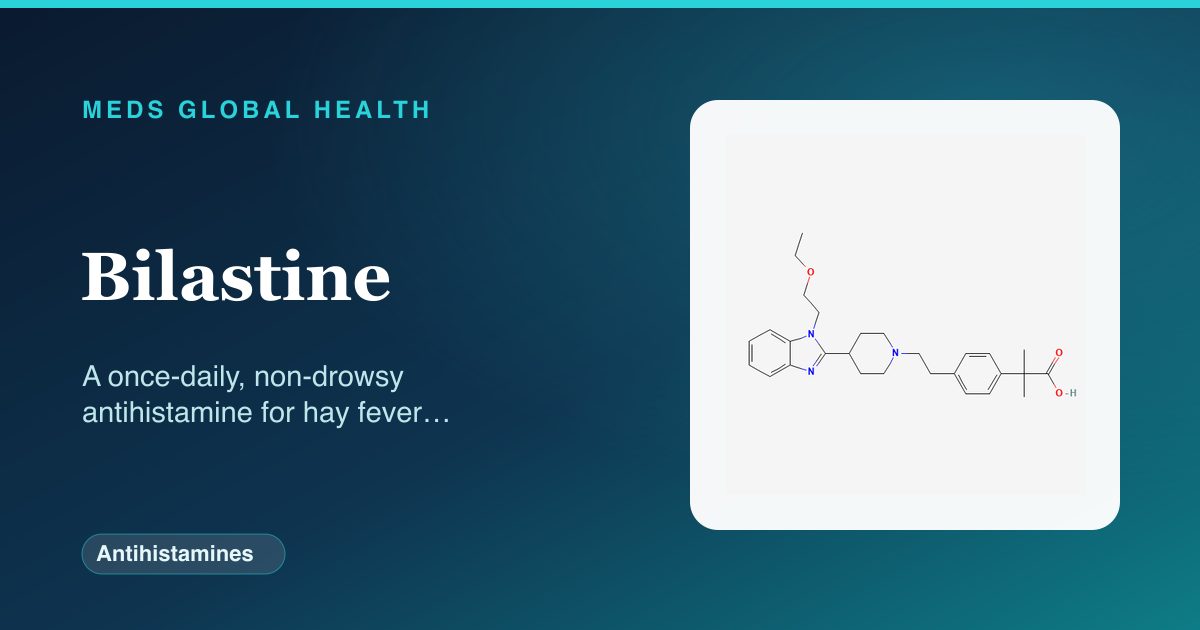
What it is
Bilastine is an antihistamine that treats allergy symptoms such as sneezing, itching, a runny or blocked nose, watery eyes and itchy skin rashes. It is one of the newer, less-sedating antihistamines, so it is much less likely to make you sleepy than older ones. It is mainly used for hay fever and for long-lasting itchy hives.
How it works
An allergic reaction releases a chemical called histamine, which produces sneezing, itching, a runny nose and watery eyes. Bilastine blocks the H1 histamine receptors so these symptoms settle. It does not enter the brain easily, which is why it rarely causes drowsiness. Food and fruit juice interfere with how it is taken up from the gut, so timing it away from these helps it work properly.
Company & origin
Originated / developed by: Marketed in the UK as Ilaxten and as generic bilastine..
Bilastine is a newer non-drowsy (second-generation) antihistamine used in the UK for hay fever and itchy allergic skin rashes.
What it treats
Conditions Bilastine is used for
Practical use
How to take Bilastine
General, dose-free guidance — always follow your prescriber's and the leaflet's specific instructions.
- Take it on an empty stomach, well before or some time after a meal.
- Avoid taking it with fruit juice or other fruit drinks, as they reduce absorption.
- Swallow the tablet with water.
- It is taken once a day, ideally at the same time each day.
- Take it only on the days you have symptoms if your allergy is occasional, or daily during the allergy season.
Weighing it up
Advantages & disadvantages of Bilastine
Advantages
- Once-daily dosing is convenient.
- One of the least sedating antihistamines available.
- Effective for both hay fever and itchy hives.
- Not broken down by the liver to a great extent, so few drug interactions.
Disadvantages
- Must be taken on an empty stomach, away from food and fruit juice, which is easy to forget.
- Can still cause drowsiness or headache in some people.
- Not recommended in younger children below the licensed age.
- Should be used with caution alongside certain heart-rhythm medicines.
Practical use
Good to know
The most important practical point with bilastine is to take it on an empty stomach, well before or after food and away from fruit juices, as these lower its absorption. It is taken once a day and is one of the least sedating antihistamines, making it a good choice when drowsiness is a concern.
Who should not take it / use with caution
- People who have had an allergic reaction to bilastine.
- Young children below the age it is licensed for.
- People taking certain medicines that affect heart rhythm, without medical advice.
- People who cannot reliably take it away from food, who may absorb too little.
Monitoring
- No routine blood tests are needed.
- Check it is being taken correctly on an empty stomach.
- Review with a pharmacist or doctor if symptoms are not controlled.
Side effects
- Headache.
- Drowsiness in some people.
- Dizziness.
- Tiredness.
- Rarely, an allergic reaction to the medicine itself.
Key interactions
- Fruit juice and food, which reduce how much is absorbed.
- Some medicines for fungal infections or HIV, which can raise its levels.
- Other medicines that can affect heart rhythm should be used with caution.
Available as: Tablets taken by mouth, including a melt-in-the-mouth (orodispersible) form.
Answers
Bilastine: frequently asked questions
Why should bilastine be taken on an empty stomach?
Food and fruit juice reduce how much of the medicine your body absorbs, so taking it away from these helps it work fully. Take it well before or some time after eating.
Is bilastine a non-drowsy antihistamine?
Yes, it is one of the least sedating antihistamines, so it rarely causes drowsiness. A small number of people may still feel a little sleepy.
Can I take bilastine with orange juice?
No. Fruit juices, including orange juice, reduce how well bilastine is absorbed, so take it with water and away from juice.
What is bilastine used for?
It is used for hay fever symptoms such as sneezing, runny nose and itchy watery eyes, and for itchy nettle-rash (hives).
How often do I take bilastine?
It is taken once a day. Try to take it at the same time each day, on an empty stomach and away from fruit juice.
The wider class
About Antihistamines
Bilastine belongs to the antihistamines class. For how the class as a whole works, its shared safety principles and monitoring, see the full guide.
Browse by body system
Authoritative sources
- BNF
- NICE CKS
Building a medicines information resource?
We create evidence-led, dose-free drug and formulary references for teams.