An antihistamine used in allergy eye drops
Antazoline
An antihistamine used in eye drops, often with a decongestant, to relieve the itchy, red, watery eyes of allergic conjunctivitis.
What is Antazoline?
Antazoline is an antihistamine used mainly in eye drops to relieve allergic conjunctivitis, the itchy, red, watery eyes caused by things like pollen or dust. It is often combined with a decongestant that reduces redness. It works by blocking histamine, the chemical released during an allergic reaction. The drops can cause brief stinging or blurring when first put in. They are meant for short-term relief of allergy symptoms rather than long-term daily use, and a pharmacist or doctor can advise if symptoms keep coming back.
Education and reference only. This is a plain-language guide to Antazoline — it deliberately contains no doses. Doses depend on the person, the brand and the reason for treatment, and belong with your prescriber. Always check the BNF, the product labelling (SmPC) and follow medical advice.
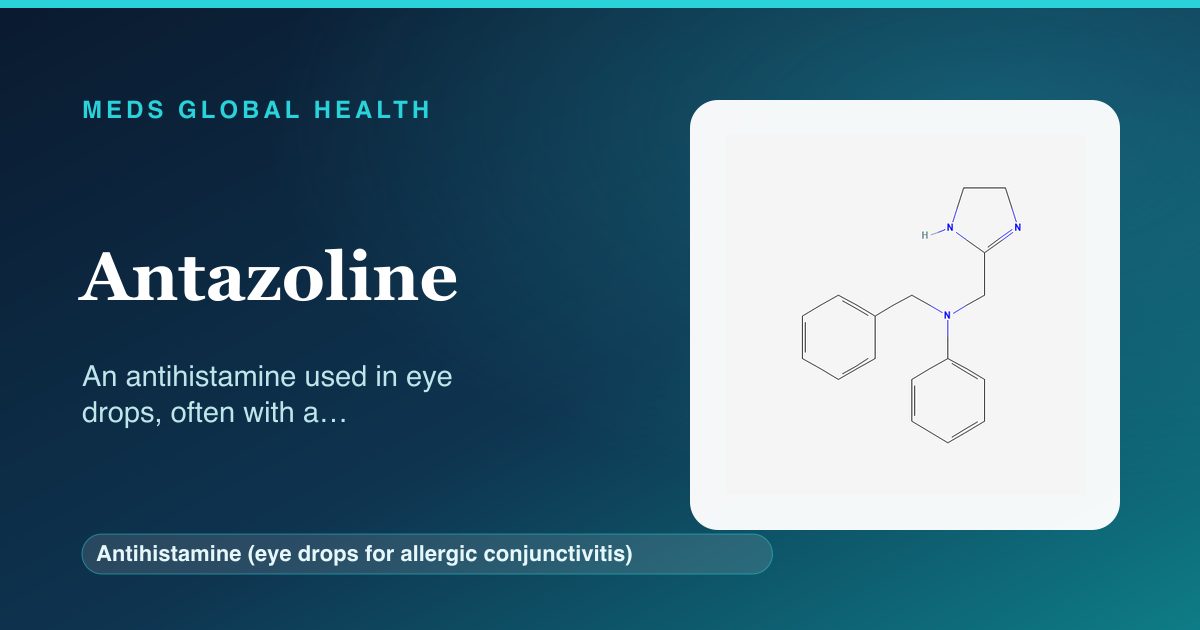
What it is
Antazoline is an antihistamine, a type of medicine that calms allergic reactions. It is used mainly as eye drops to treat allergic conjunctivitis, where allergens such as pollen, dust or animal dander make the eyes itchy, red and watery. It is frequently combined in one product with a decongestant, which narrows blood vessels to reduce redness. It is an older, well-established treatment used for short-term relief of irritating eye allergy symptoms, and some products are available from pharmacies.
How it works
When the eyes meet something you are allergic to, the body releases histamine, which causes itching, redness, watering and swelling. Antazoline blocks the action of histamine in the eye, easing those symptoms. When it is combined with a decongestant, the decongestant tightens the small blood vessels in the eye to reduce redness as well. Because the drops act where they are put, they relieve symptoms fairly quickly but are intended for short-term use rather than ongoing daily treatment.
Company & origin
An older antihistamine used in the UK mainly as eye drops, often combined with a decongestant, to relieve itchy, watery allergy eyes.
Practical use
How to take Antazoline
General, dose-free guidance — always follow your prescriber's and the leaflet's specific instructions.
- Put the drops into the affected eye or eyes as directed, usually a small number of times a day for a short period.
- Do not drive or use machines until any blurring after putting the drops in has cleared.
- Avoid using them continuously for long periods, especially the decongestant combinations, to prevent rebound redness.
- If you wear contact lenses, ask a pharmacist whether to remove them before using the drops.
- See a pharmacist or doctor if symptoms are severe, last a long time, or keep returning.
Weighing it up
Advantages & disadvantages of Antazoline
Advantages
- Eases the itchy, red, watery eyes of allergic conjunctivitis, often quite quickly.
- Combined products also reduce redness thanks to the added decongestant.
- A well-established, convenient eye-drop treatment, with some products available from pharmacies.
Disadvantages
- Can cause brief stinging or blurred vision when first put in.
- Meant for short-term use; prolonged use of decongestant combinations can cause rebound redness.
- Treats symptoms rather than the underlying allergy, so symptoms can return.
Practical use
Good to know
It helps to know that antazoline eye drops are for short-term relief of allergy symptoms rather than long-term daily use, partly because the decongestant they are often combined with can, with prolonged use, cause rebound redness once stopped. A brief sting or short blurring of vision when you first put the drops in is common and usually passes quickly, so it is best not to drive until your vision is clear. If you wear contact lenses, ask for advice, as drops may need to be used with lenses out. If your eye symptoms are severe, last a long time, or keep coming back, it is worth seeing a pharmacist or doctor, as a different or longer-term allergy treatment may suit you better.
Who should not take it / use with caution
- People who have had a serious allergic reaction to antazoline or to the decongestant in a combination product should not use it.
- Combination products with a decongestant are used with caution in people with glaucoma, certain heart conditions or some other health problems, so check with a pharmacist.
- It is used with care, and on advice, in young children, pregnancy and breastfeeding.
Monitoring
- Checking that symptoms improve and do not persist or worsen.
- Making sure the drops are not being used continuously for long periods.
- Reviewing whether a different or longer-term allergy treatment is needed if symptoms keep returning.
Side effects
- Brief stinging, irritation or burning when the drops are put in.
- Short-lived blurred vision just after using them.
- With decongestant combinations, rebound redness if used for too long, and rarely wider effects if a lot is absorbed.
Key interactions
- The decongestant in combination products may interact with certain antidepressants and blood-pressure medicines, so tell a pharmacist what you take.
- Other eye drops should usually be separated by a short time so they do not wash each other out.
- Tell a pharmacist about all your medicines and health conditions before using combination products.
Available as: Eye drops, often combined with a decongestant.
Answers
Antazoline: frequently asked questions
What is antazoline used for?
It is an antihistamine used mainly in eye drops to relieve allergic conjunctivitis, the itchy, red, watery eyes caused by allergies, and is often combined with a decongestant to reduce redness.
Why do the drops sting at first?
A brief sting or short blurring of vision when you first put the drops in is common and usually passes quickly; wait until your vision clears before driving.
Can I use them every day for a long time?
They are meant for short-term relief; using the decongestant combinations for too long can cause rebound redness, so see a pharmacist if symptoms keep returning.
Can I use them with contact lenses?
Ask a pharmacist, as you may need to take your lenses out before using the drops and wait before putting them back in.
What if my eye symptoms do not settle?
If symptoms are severe, last a long time, or keep coming back, see a pharmacist or doctor, as a different or longer-term allergy treatment may suit you better.
The wider class
About Antihistamine (eye drops for allergic conjunctivitis)
Antazoline belongs to the antihistamine (eye drops for allergic conjunctivitis) class. For how the class as a whole works, its shared safety principles and monitoring, see the full guide.
Browse by body system
Authoritative sources
- BNF
- NICE CKS
Building a medicines information resource?
We create evidence-led, dose-free drug and formulary references for teams.