A non-drowsy (less-sedating) antihistamine
Cetirizine
A once-daily, less-sedating antihistamine for hay fever and hives — available over the counter, and far less likely to cause drowsiness than older antihistamines.
What is Cetirizine?
Cetirizine is a widely used, less-sedating ('non-drowsy') antihistamine for allergies. It eases sneezing, a runny or itchy nose, itchy watery eyes and itchy skin or hives, and is commonly used for hay fever.
Education and reference only. This is a plain-language guide to Cetirizine — it deliberately contains no doses. Doses depend on the person, the brand and the reason for treatment, and belong with your prescriber. Always check the BNF, the product labelling (SmPC) and follow medical advice.
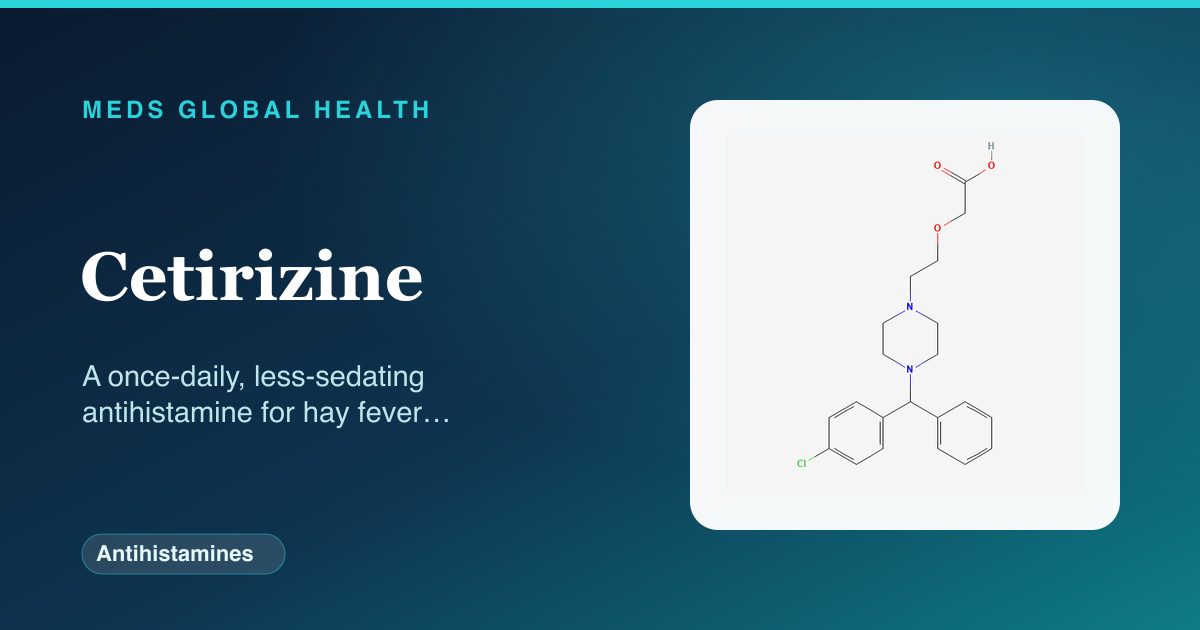
What it is
Cetirizine is a widely used "non-drowsy" (less-sedating) antihistamine for allergies. It eases the sneezing, runny or itchy nose and itchy, watery eyes of hay fever and other allergic rhinitis, and the itching and weals of hives (urticaria). It can be bought over the counter as well as prescribed, and is usually taken once a day. It is not an antibiotic and has nothing to do with infection — it calms an over-active allergic response.
How it works
When the body meets something it is allergic to, cells release histamine, a chemical that causes the itching, sneezing, runny nose and swelling of an allergic reaction. Cetirizine blocks the histamine (H1) receptors that histamine acts on, so these symptoms are dampened down. Unlike older antihistamines, it does not cross into the brain very easily, which is why it is much less likely to cause drowsiness — earning its "non-drowsy" description, though it is more accurately "less sedating".
Company & origin
Originated / developed by: UCB Pharma (Belgium).
Cetirizine, a second-generation antihistamine and active metabolite of hydroxyzine, was developed by UCB Pharma in Belgium, patented in 1983 and coming into medical use in 1987. It is marketed under brands including Zyrtec (and Zirtek/Piriteze in the UK).
What it treats
Conditions Cetirizine is used for
Practical use
How to take Cetirizine
General, dose-free guidance — always follow your prescriber's and the leaflet's specific instructions.
- Usually taken once a day, with or without food.
- For hay fever, taking it regularly through the season often works better than waiting until symptoms flare.
- Although it is described as non-drowsy, it can still make some people sleepy, so see how it affects you before driving.
- If you miss a dose, take it when you remember unless the next is nearly due; do not double up.
- Avoid combining it with alcohol if you find it makes you drowsy.
Weighing it up
Advantages & disadvantages of Cetirizine
Advantages
- Effective for hay fever, allergic rhinitis and itchy skin or hives.
- Less likely to cause drowsiness than older antihistamines.
- Convenient once-daily dosing and available from pharmacies.
- Works relatively quickly once taken.
Disadvantages
- Can still cause drowsiness in some people, despite being 'non-drowsy'.
- May cause dry mouth, headache or tiredness.
- Does not treat the underlying allergy, only the symptoms.
- May need adjustment in significant kidney problems.
Practical use
Good to know
Cetirizine is a convenient once-a-day allergy treatment that can be bought over the counter for hay fever and hives. Its main advantage over older antihistamines (such as chlorphenamine) is that it is far less likely to make you sleepy, so it suits people who need to drive, work or study. That said, "less-sedating" is not the same as "never sedating" — a minority of people do feel a little drowsy, so it is worth seeing how it affects you before driving or operating machinery, and being cautious with alcohol. For seasonal hay fever, starting it before and taking it regularly through the season works better than waiting for symptoms to build.
Who should not take it / use with caution
- People who have had an allergic reaction to cetirizine or the closely related medicine hydroxyzine.
- Used with care, and sometimes at a reduced frequency, in people with significant kidney impairment.
- As with most medicines, anyone who is pregnant or breastfeeding should check with a pharmacist before using it regularly.
Monitoring
- Whether allergy symptoms are controlled
- Whether it causes any drowsiness before driving or using machinery
- Kidney function where relevant for regular use
Side effects
- Usually well tolerated; mild drowsiness in some people despite being a "non-drowsy" antihistamine.
- Dry mouth, headache, or tiredness in a minority of users.
- Uncommonly, stomach upset; very rarely, a serious allergic reaction (call 999 for swelling of the face or throat, wheeze or collapse).
Key interactions
- Few significant drug interactions — one of its advantages.
- Alcohol and other sedating medicines may add to any drowsiness in people who are affected by it.
- Tell your pharmacist what else you take, including other allergy or cold remedies, to avoid doubling up on antihistamines.
Available as: Tablets, and an oral solution (liquid) for those who prefer or cannot swallow tablets.
Answers
Cetirizine: frequently asked questions
Is cetirizine really non-drowsy?
Cetirizine is one of the "non-drowsy" or less-sedating antihistamines, because it does not enter the brain easily and is far less likely to make you sleepy than older types. However, a small number of people still feel a little drowsy, so it is sensible to see how it affects you before driving or operating machinery, and to be careful with alcohol.
How is cetirizine different from older antihistamines like chlorphenamine?
Older antihistamines such as chlorphenamine (Piriton) cross into the brain and commonly cause sleepiness, which is why they are sometimes used at night. Cetirizine works on the same allergy chemical (histamine) but is much less sedating, making it better suited to daytime use when you need to stay alert.
Can I buy cetirizine without a prescription?
Yes. Cetirizine is available over the counter from pharmacies and shops for hay fever and hives, as well as on prescription. Your pharmacist can advise on whether it is suitable for you and how to use it for the best effect.
When should I start taking it for hay fever?
For seasonal hay fever, it generally works best to start it before the pollen season really gets going and to take it regularly, rather than waiting until symptoms are bad. Taken consistently, it keeps the allergic response calmed down day to day.
What is the difference between cetirizine, Piriteze and Zirtek?
They all contain the same active ingredient, cetirizine — Piriteze and Zirtek are brand names. Generic cetirizine contains the identical active ingredient and works the same way.
The wider class
About Antihistamines
Cetirizine belongs to the antihistamines class. For how the class as a whole works, its shared safety principles and monitoring, see the full guide.
Browse by body system
Authoritative sources
- BNF: Cetirizine hydrochloride.
- electronic Medicines Compendium (SmPC): Cetirizine.
- NICE CKS: Cetirizine.
- NICE CKS: Allergic rhinitis.
Keep reading
Related articles
Building a medicines information resource?
We create evidence-led, dose-free drug and formulary references for teams.