An older sedating antihistamine
Methdilazine
An older sedating antihistamine used to ease itching and allergy symptoms.
What is Methdilazine?
Methdilazine is an older sedating antihistamine of the phenothiazine type, used to relieve itching and allergy symptoms such as those of hives or itchy skin conditions. It works by blocking histamine, a chemical the body releases that causes itching and other allergy effects. Because it is a sedating antihistamine, drowsiness is common, and it can also cause antimuscarinic effects such as a dry mouth, blurred vision and constipation. It is an older medicine, and newer non-drowsy antihistamines are often preferred for everyday allergy relief.
Education and reference only. This is a plain-language guide to Methdilazine — it deliberately contains no doses. Doses depend on the person, the brand and the reason for treatment, and belong with your prescriber. Always check the BNF, the product labelling (SmPC) and follow medical advice.
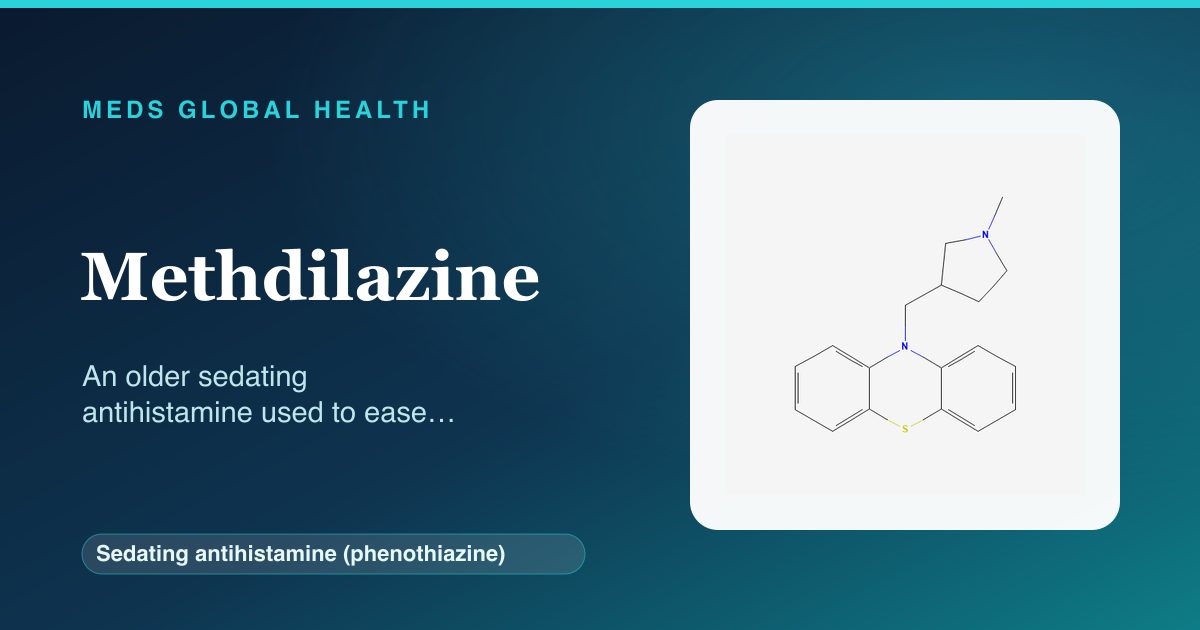
What it is
Methdilazine is an older antihistamine belonging to the phenothiazine group. It is used to relieve itching and the symptoms of allergic conditions, such as hives (urticaria) and itchy skin problems. Like other sedating antihistamines, it tends to cause drowsiness, which is one reason newer, non-drowsy antihistamines are usually chosen first for routine allergy relief today. It is taken by mouth. Because it can cause sedation and dry-type (antimuscarinic) side effects, it is used with some care, particularly in older people and in certain medical conditions.
How it works
When the body reacts to an allergen, it releases a chemical called histamine, which causes itching, redness and other allergy symptoms. Methdilazine blocks the action of histamine at its receptors, which reduces these symptoms and eases the itch. Because it is an older antihistamine that crosses into the brain, it also tends to cause drowsiness, and because of its chemical family it can produce dry-type effects such as a dry mouth and blurred vision. It is taken by mouth and works to relieve symptoms rather than to cure the underlying allergy.
Company & origin
An older sedating antihistamine of the phenothiazine type, used to relieve itch and allergy symptoms.
Practical use
How to take Methdilazine
General, dose-free guidance — always follow your prescriber's and the leaflet's specific instructions.
- Take it by mouth as prescribed, and see how it affects you before driving or using machinery.
- Avoid alcohol while taking it, as this adds to the drowsiness.
- Take it for the shortest time needed to control your symptoms.
- Tell your prescriber about other sedating medicines you take, as the effects can add up.
- Mention any glaucoma, prostate or urinary problems before starting, as these need caution.
Weighing it up
Advantages & disadvantages of Methdilazine
Advantages
- Helps relieve itching and allergy symptoms such as those of hives and itchy skin.
- Its sedating effect can be helpful when itching disturbs sleep.
- Taken by mouth and a long-established type of medicine.
Disadvantages
- Commonly causes drowsiness, which can affect driving and concentration.
- Can cause antimuscarinic effects such as dry mouth, blurred vision and constipation.
- An older medicine, so newer non-drowsy antihistamines are often preferred for everyday use.
Practical use
Good to know
The main practical point is that methdilazine is a sedating antihistamine, so drowsiness is common; this can be useful when itching disturbs sleep but means you should see how it affects you before driving or doing anything that needs full alertness, and avoid alcohol, which adds to the drowsiness. It can also cause antimuscarinic, or dry-type, effects such as a dry mouth, blurred vision, constipation and difficulty passing urine, which tend to be more troublesome in older people. Because of these effects it is used with caution in conditions such as glaucoma, an enlarged prostate or urinary problems. It is an older medicine, and for everyday allergy relief many people are now given a newer, non-drowsy antihistamine instead.
Who should not take it / use with caution
- People who have had a serious allergic reaction to methdilazine or related phenothiazines should not take it.
- It is used with caution, or avoided, in people with glaucoma, an enlarged prostate or urinary retention.
- It is used with care in older people, who are more prone to drowsiness and dry-type effects.
- It is used with caution in pregnancy and breastfeeding, weighing the benefits and risks.
Monitoring
- Reviewing how well it controls itching or allergy symptoms.
- Watching for drowsiness and dry-type effects, especially in older people.
- Considering whether a newer, non-drowsy antihistamine would suit better for ongoing use.
Side effects
- Drowsiness or sedation.
- Dry mouth, blurred vision or constipation.
- Difficulty passing urine, dizziness or confusion, particularly in older people.
- Less commonly, more serious reactions linked to its phenothiazine family, which need medical attention.
Key interactions
- Alcohol and other sedating medicines add to the drowsiness.
- Other medicines with antimuscarinic effects can add to dry mouth, constipation and urinary problems.
- Tell your prescriber about all your medicines, as several can interact with sedating antihistamines.
Available as: Tablets taken by mouth.
Answers
Methdilazine: frequently asked questions
What is methdilazine used for?
It is an older sedating antihistamine used to relieve itching and allergy symptoms, such as those of hives and itchy skin conditions.
Why does it make me sleepy?
It is a sedating antihistamine that crosses into the brain, so drowsiness is common; see how it affects you before driving or doing anything that needs full alertness.
What are the dry-type side effects?
Being a phenothiazine, it can cause antimuscarinic effects such as a dry mouth, blurred vision, constipation and difficulty passing urine, which are more troublesome in older people.
Can I drink alcohol with it?
It is best to avoid alcohol, as it adds to the drowsiness this medicine can cause.
Is it better than a newer antihistamine?
For everyday allergy relief, newer non-drowsy antihistamines are often preferred; methdilazine's sedating effect can occasionally be useful, such as when itching disturbs sleep.
The wider class
About Sedating antihistamine (phenothiazine)
Methdilazine belongs to the sedating antihistamine (phenothiazine) class. For how the class as a whole works, its shared safety principles and monitoring, see the full guide.
Browse by body system
Authoritative sources
- BNF
- NICE CKS
Building a medicines information resource?
We create evidence-led, dose-free drug and formulary references for teams.