A topical local anaesthetic for mouth, throat and skin pain
Benzocaine
A topical local anaesthetic that numbs mouth, throat or skin pain, with a rare but serious risk of methaemoglobinaemia, so it is avoided in infants and used sparingly.
What is Benzocaine?
Benzocaine is a local anaesthetic applied to the surface of the body to numb pain. It is found in some throat lozenges and sprays, mouth and teething gels, and skin preparations, where it temporarily numbs the area. The most important safety point is that, rarely, it can cause a serious blood problem called methaemoglobinaemia, in which the blood cannot carry oxygen properly; for this reason it is avoided in infants and young children and used sparingly. It can also cause local allergic reactions. Signs of methaemoglobinaemia, such as bluish or grey lips or skin, breathlessness or unusual tiredness, need urgent medical help.
Education and reference only. This is a plain-language guide to Benzocaine — it deliberately contains no doses. Doses depend on the person, the brand and the reason for treatment, and belong with your prescriber. Always check the BNF, the product labelling (SmPC) and follow medical advice.
What it is
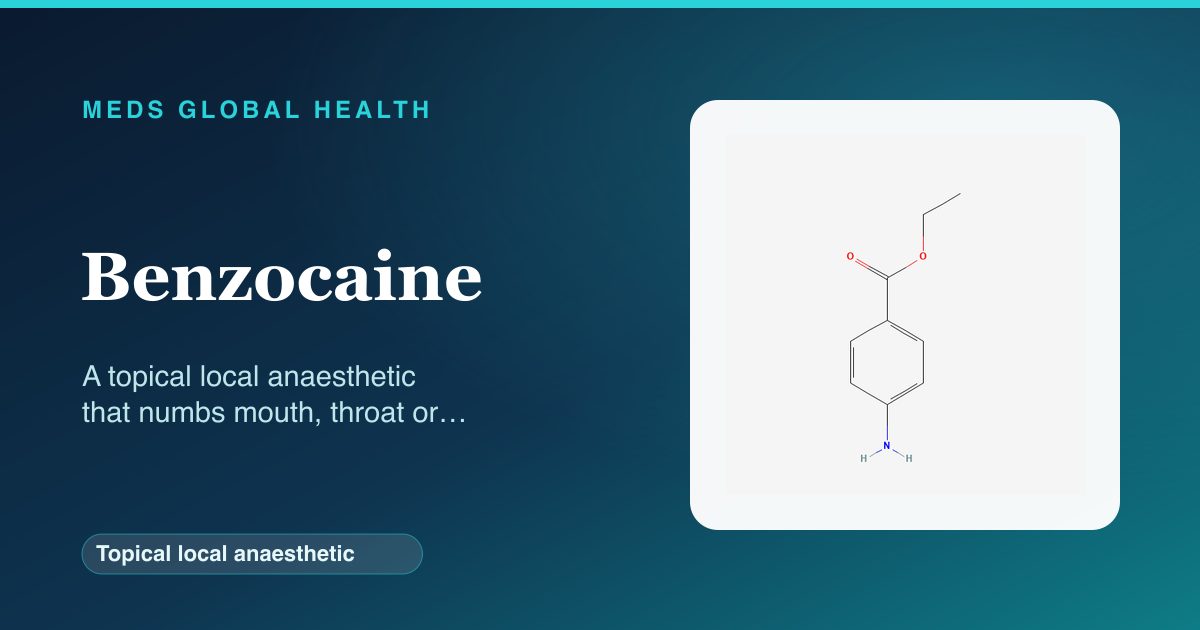
Benzocaine is a local anaesthetic that works on the surface where it is applied, rather than being taken to work throughout the body. It is used to numb pain in the mouth, throat or skin and is found in products such as throat lozenges and sprays, mouth ulcer and teething gels, and some skin creams. Many of these are available over the counter. It provides short-term, surface-level pain relief. Although widely used, it carries a rare but important safety concern, which is why it is used carefully and avoided in the very young.
How it works
Benzocaine works by blocking the nerves in the area where it is applied from sending pain signals, so that part feels numb for a while. Because it acts on the surface, the numbing effect is local and temporary, wearing off as the medicine is cleared. The rare but serious risk, methaemoglobinaemia, happens when the medicine changes the iron in the blood's oxygen-carrying pigment so it can no longer carry oxygen properly; this is more of a concern in babies and when too much is used, which is why careful, sparing use matters.
Company & origin
A local anaesthetic applied to the surface of the mouth, throat or skin to numb pain, found in some lozenges, gels and sprays.
Practical use
How to take Benzocaine
General, dose-free guidance — always follow your prescriber's and the leaflet's specific instructions.
- Apply it only to the area directed, in the amount and frequency stated, and use it sparingly.
- Do not use benzocaine teething or mouth gels in infants and young children unless specifically advised.
- Seek urgent help for bluish or grey lips or skin, breathlessness, fast heartbeat or unusual tiredness.
- Stop using it and seek advice if the area becomes more red, swollen, itchy or painful.
- Avoid using it on large or broken areas, and do not use it more often than directed.
Weighing it up
Advantages & disadvantages of Benzocaine
Advantages
- Quickly numbs surface pain in the mouth, throat or skin.
- Available in convenient forms such as lozenges, sprays and gels, many over the counter.
- Works locally for short-term relief without affecting the whole body.
Disadvantages
- Carries a rare but serious risk of methaemoglobinaemia, a blood oxygen-carrying problem.
- Not suitable for infants and young children, and must be used sparingly.
- Can cause local stinging, irritation or allergic reactions.
Practical use
Good to know
The single most important thing to know about benzocaine is the rare risk of methaemoglobinaemia, a serious condition in which the blood cannot carry oxygen properly. Because babies and young children are especially vulnerable, benzocaine teething and mouth gels are not recommended for infants, and the medicine should be used sparingly and not more often than directed. Warning signs to act on urgently include bluish, grey or pale lips, skin or nail beds, breathlessness, a fast heartbeat, headache, light-headedness or unusual tiredness. More commonly, it can cause local effects such as stinging, irritation or an allergic reaction where it is applied. Avoid using it on large or broken areas, and follow the instructions on the product carefully.
Who should not take it / use with caution
- Infants and young children should not use benzocaine teething or mouth gels unless specifically advised.
- People who have had an allergic reaction to benzocaine or related local anaesthetics.
- People with a history of methaemoglobinaemia or who are especially prone to it.
- It should not be used on large or broken areas of skin or more often than directed.
Monitoring
- Watching for any signs of methaemoglobinaemia, such as bluish or grey skin or breathlessness.
- Checking that the area is improving and not becoming more irritated or allergic.
- Making sure it is being used sparingly and not too often, especially in vulnerable people.
Side effects
- Stinging, burning or irritation where it is applied.
- Local allergic reactions such as redness, swelling or itching.
- Rarely but seriously, methaemoglobinaemia, with bluish or grey lips or skin, breathlessness and tiredness, needing urgent help.
Key interactions
- Using it with other medicines that can cause methaemoglobinaemia may add to that rare risk.
- There are few other well-established interactions when used as directed on the surface.
- Tell your prescriber or pharmacist about all your medicines if you use it often.
Available as: Lozenges, sprays, gels and creams applied to the mouth, throat or skin.
Answers
Benzocaine: frequently asked questions
What is benzocaine used for?
It is a local anaesthetic applied to the surface to numb pain in the mouth, throat or skin, and is found in some lozenges, sprays and gels.
Why can't I use it for my baby's teething?
Benzocaine carries a rare risk of a serious blood problem called methaemoglobinaemia, to which infants are especially vulnerable, so teething and mouth gels are not recommended for them.
What is methaemoglobinaemia?
It is a rare but serious condition in which the blood cannot carry oxygen properly; warning signs include bluish or grey lips or skin, breathlessness and unusual tiredness, which need urgent help.
Can I use it as much as I like?
No. It should be used sparingly and not more often than directed, and not on large or broken areas, to keep the risk of side effects low.
What if the area gets more sore?
Stop using it and seek advice if the area becomes more red, swollen, itchy or painful, as this may be a local allergic reaction.
The wider class
About Topical local anaesthetic
Benzocaine belongs to the topical local anaesthetic class. For how the class as a whole works, its shared safety principles and monitoring, see the full guide.
Browse by body system
Authoritative sources
- BNF
- NICE CKS
Building a medicines information resource?
We create evidence-led, dose-free drug and formulary references for teams.