A local anaesthetic (also called lignocaine)
Lidocaine
A common, fast-acting local anaesthetic used to numb the body for dental work, minor surgery and skin procedures, and sometimes for pain or heart rhythms.
What is Lidocaine?
Lidocaine is one of the most widely used local anaesthetics, given to numb a part of the body by blocking nerve signals so a procedure can be done without pain. It is used for dental work, minor surgery, stitches, skin procedures, and as creams, gels and patches to ease certain types of pain. It can also be given into a vein by specialists to treat some abnormal heart rhythms. It works quickly and is very safe when a trained professional limits the amount used; the main serious risk is local anaesthetic systemic toxicity if too much reaches the bloodstream. Adrenaline is sometimes added to make it last longer, but this is avoided in fingers, toes, the nose and the penis.
Education and reference only. This is a plain-language guide to Lidocaine — it deliberately contains no doses. Doses depend on the person, the brand and the reason for treatment, and belong with your prescriber. Always check the BNF, the product labelling (SmPC) and follow medical advice.
What it is
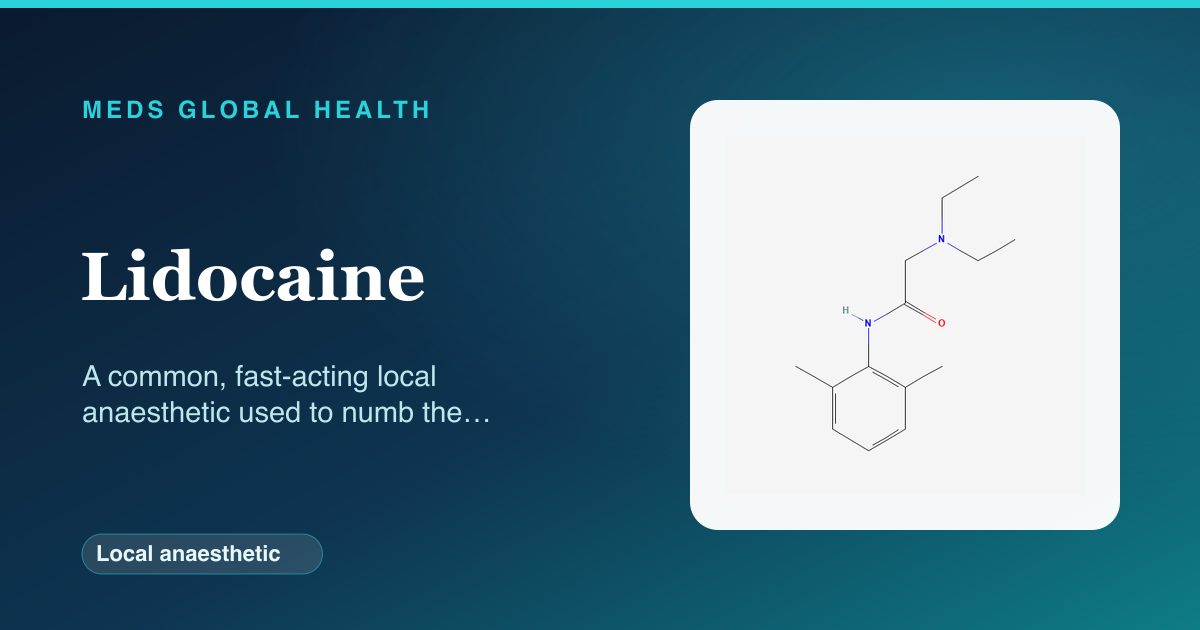
Lidocaine is a local anaesthetic, a medicine that temporarily numbs a part of the body so that something painful, such as dental treatment or stitches, can be done comfortably. It comes in many forms: injections used by dentists and doctors, creams and gels to numb the skin, sprays and lozenges for the mouth and throat, and medicated patches for some nerve pain. The same medicine can also be given into a vein by hospital specialists to settle certain dangerous heart rhythms. It is fast-acting and one of the most familiar anaesthetics in everyday use.
How it works
Lidocaine works by blocking the tiny electrical signals that nerves use to send pain messages to the brain. When it is injected or applied near a nerve, that area goes numb for a while, then normal feeling returns as the medicine wears off. The same effect on electrical signals is why it can calm certain abnormal heart rhythms when given into a vein. Because its effect depends on how much reaches the area, professionals carefully limit the amount used so that too little reaches the rest of the body through the bloodstream.
Company & origin
A long-established and widely used local anaesthetic in the UK, used to numb parts of the body for dental work, minor procedures and pain, and also to treat some abnormal heart rhythms.
Practical use
How to take Lidocaine
General, dose-free guidance — always follow your prescriber's and the leaflet's specific instructions.
- For injections, a dentist, doctor or nurse gives lidocaine near the area to be numbed; you may feel a brief sting before the numbness sets in.
- Numbing creams and gels (such as EMLA) are applied to clean skin and usually left under a dressing for a while before a needle or minor procedure.
- Medicated patches for nerve pain are applied to intact, unbroken skin over the painful area and worn for the period your prescriber advises.
- Mouth and throat sprays, gels or lozenges are used as directed; avoid eating or drinking until normal feeling returns, as you could bite or burn yourself.
- When given into a vein for a heart rhythm problem, it is administered and monitored by hospital specialists.
- Tell the team about heart or liver problems, other medicines, and any past reaction to a local anaesthetic before treatment.
Weighing it up
Advantages & disadvantages of Lidocaine
Advantages
- Fast-acting and reliable for numbing the body for dental work, minor surgery, stitches and skin procedures.
- Available in many convenient forms, including injections, creams, gels, sprays and patches.
- Very safe when a trained professional limits the amount, and it wears off so normal feeling returns.
Disadvantages
- If too much reaches the bloodstream it can cause local anaesthetic systemic toxicity, with dizziness, fits or heart-rhythm problems.
- Numbness can outlast the procedure, so a numb lip can be bitten or numb skin burned without you noticing.
- Forms with adrenaline must be avoided in fingers, toes, the nose and the penis to protect their blood supply.
Practical use
Good to know
The most important safety point is local anaesthetic systemic toxicity, which can happen if too much lidocaine reaches the bloodstream — early warning signs include a numb mouth or metallic taste, ringing in the ears, dizziness, and in serious cases fits or heart-rhythm problems; this is why anaesthetics are given by trained people who limit the amount. Adrenaline is sometimes mixed in to make the numbing last longer and reduce bleeding, but it is deliberately avoided in fingers, toes, the nose and the penis, because these areas rely on end-arteries that could be harmed if their blood supply is squeezed. Numbing creams and patches are useful before needles or for some nerve pain, and the numbness can last a while after a procedure, so take care not to bite a numb lip or burn numb skin. Tell the team about heart, liver or any previous reactions to local anaesthetics.
Who should not take it / use with caution
- People who have had a serious allergic reaction to lidocaine or similar local anaesthetics should not receive it.
- It is used with extra caution, and the amount reduced, in people with significant heart conduction problems or severe liver disease.
- Adrenaline-containing forms should not be used in fingers, toes, the nose, the penis or other end-artery areas.
Monitoring
- Watching for early signs that too much has been absorbed, such as a metallic taste, ringing ears or dizziness.
- Heart monitoring when lidocaine is given into a vein for an abnormal rhythm.
- Checking the skin where creams or patches are used for irritation, and that numb areas are protected from injury.
Side effects
- A brief sting on injection, and temporary numbness, tingling or a heavy feeling in the treated area.
- Skin redness or mild irritation where creams or patches are applied.
- If too much is absorbed: a numb mouth, metallic taste, ringing ears, dizziness, and rarely fits or heart-rhythm problems needing urgent care.
Key interactions
- Other medicines that affect heart rhythm or other local anaesthetics can add to its effects, so the total amount is kept in check.
- Some medicines that affect the liver can change how lidocaine is broken down when it is given into a vein.
- Adrenaline added to some forms can interact with certain heart and blood-pressure medicines, which the team takes into account.
Available as: Injections, creams and gels for the skin, sprays, lozenges and gels for the mouth and throat, medicated patches, and a solution given into a vein.
Answers
Lidocaine: frequently asked questions
What is lidocaine used for?
It is a local anaesthetic used to numb the body for dental work, minor surgery, stitches and skin procedures, and as creams and patches for some pain; it can also be given into a vein to treat certain abnormal heart rhythms.
Will it hurt when it is given?
An injection can sting briefly before the area goes numb; numbing creams and patches are painless to apply and work over a little time.
Why is adrenaline sometimes added?
Adrenaline makes the numbing last longer and reduces bleeding, but it is avoided in fingers, toes, the nose and the penis because these rely on end-arteries.
How long does the numbness last?
It varies with the form and area, but feeling usually returns within a few hours; take care not to bite a numb lip or burn numb skin until then.
Is it dangerous?
It is very safe when a trained professional limits the amount; the main serious risk is if too much reaches the bloodstream, which they take care to prevent.
The wider class
About Local anaesthetic
Lidocaine belongs to the local anaesthetic class. For how the class as a whole works, its shared safety principles and monitoring, see the full guide.
Browse by body system
Authoritative sources
- BNF
- NICE CKS
Building a medicines information resource?
We create evidence-led, dose-free drug and formulary references for teams.