A local anaesthetic
Prilocaine
A local anaesthetic used for dental work, minor procedures and short spinals, and as part of EMLA numbing cream with lidocaine.
What is Prilocaine?
Prilocaine is a local anaesthetic used to numb a part of the body by blocking nerve signals, for dental work, minor procedures and some short spinal anaesthetics. It is also one of the two anaesthetics in EMLA numbing cream, alongside lidocaine, used to numb the skin before needles. It works well and is given by trained professionals who limit the amount used. Its particular caution is that large amounts can cause methaemoglobinaemia, a blood problem that can give the skin a blue tinge, so it is used carefully, especially in young babies and certain conditions.
Education and reference only. This is a plain-language guide to Prilocaine — it deliberately contains no doses. Doses depend on the person, the brand and the reason for treatment, and belong with your prescriber. Always check the BNF, the product labelling (SmPC) and follow medical advice.
What it is
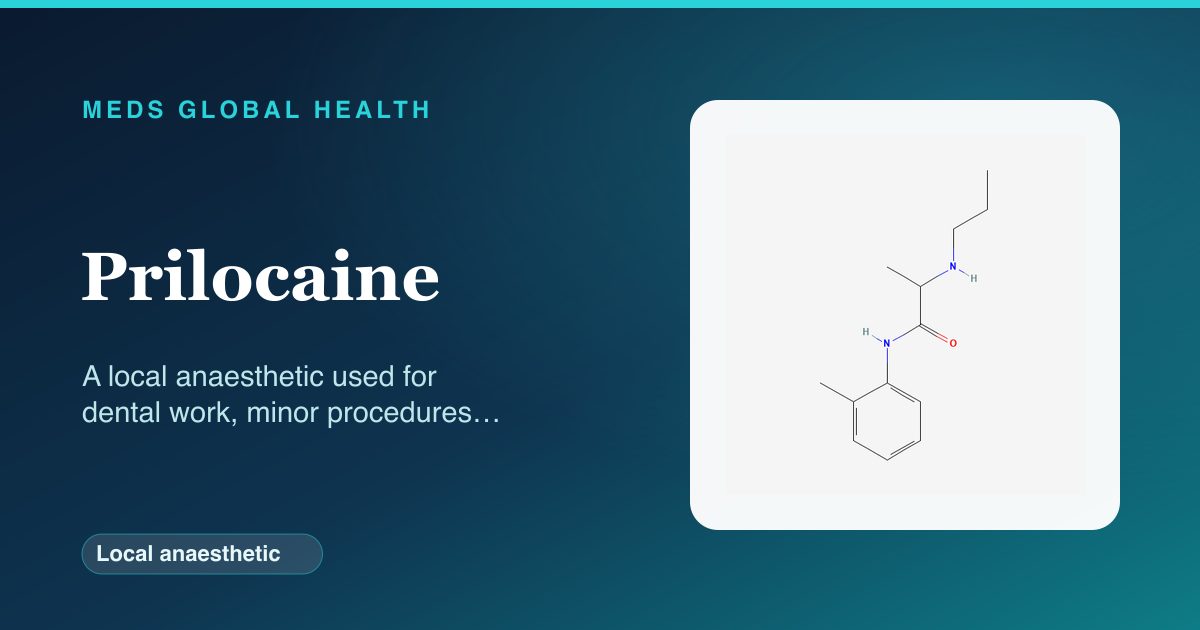
Prilocaine is a local anaesthetic that numbs part of the body so a procedure can be done without pain. It is used by dentists, in minor surgery, and for some short spinal anaesthetics for day-case operations. It is also one half of EMLA cream, a popular numbing cream (combined with lidocaine) applied to the skin before injections or minor skin procedures. It is given by injection or applied to the skin, by or under the guidance of trained professionals.
How it works
Prilocaine works like other local anaesthetics, blocking the electrical signals that nerves use to send pain messages so the treated area goes numb, then returns to normal as it wears off. In EMLA cream it is paired with lidocaine to numb the skin surface before a needle. A particular feature of prilocaine is that, in large amounts, it can change a small part of the blood's haemoglobin into a form that carries oxygen poorly (methaemoglobin), which is why the amount used is carefully limited.
Company & origin
A local anaesthetic used in the UK for dental work, minor procedures and short spinal anaesthesia, and as part of EMLA numbing cream.
Practical use
How to take Prilocaine
General, dose-free guidance — always follow your prescriber's and the leaflet's specific instructions.
- For injections, a dentist or doctor gives prilocaine near the area to be numbed; for short spinals it is given by an anaesthetist in hospital.
- EMLA cream (prilocaine with lidocaine) is applied to clean, intact skin and usually covered with a dressing for a while before a needle or minor procedure.
- The amount is carefully limited, especially in babies and small children, because of the risk of methaemoglobinaemia.
- Avoid applying numbing cream to broken skin or large areas unless advised, and follow the timing instructions you are given.
- After numbing, take care not to bite a numb lip or injure numb skin until normal feeling returns.
- Tell the team about any blood conditions, other medicines and past reactions to local anaesthetics before treatment.
Weighing it up
Advantages & disadvantages of Prilocaine
Advantages
- Effective for numbing the body for dental work, minor procedures and short spinal anaesthesia.
- As part of EMLA cream, it painlessly numbs the skin before needles, which is especially helpful for children.
- Works reliably and wears off so normal feeling returns.
Disadvantages
- In large amounts it can cause methaemoglobinaemia, a blood problem that can give the skin a blue tinge.
- Like all local anaesthetics, too much reaching the bloodstream can cause systemic toxicity with dizziness or fits.
- Numbness can outlast the procedure, so numb skin or lips can be injured without you noticing.
Practical use
Good to know
Prilocaine's main specific caution is methaemoglobinaemia: in large amounts it can turn some haemoglobin into a form that carries oxygen poorly, which can give the skin and lips a blue-grey tinge and cause breathlessness — this is why the amount is limited, and why extra care is taken in very young babies and in people with certain blood conditions or who take some other medicines that have the same effect. As with all local anaesthetics, too much reaching the bloodstream can also cause local anaesthetic systemic toxicity, with a numb mouth, metallic taste, ringing ears, dizziness or, rarely, fits. EMLA cream is widely used to take the sting out of needles, applied under a dressing for a while beforehand. Numbness can last after a procedure, so protect numb skin or lips. Tell the team about any blood conditions and previous reactions to local anaesthetics.
Who should not take it / use with caution
- People who have had a serious allergic reaction to prilocaine or similar local anaesthetics should not receive it.
- It is avoided or used with great caution in people prone to methaemoglobinaemia, including very young babies and certain inherited blood conditions.
- Extra care is needed in people taking other medicines that can also raise methaemoglobin.
Monitoring
- Watching for a blue-grey tinge to the skin or lips and breathlessness, which can signal methaemoglobinaemia.
- Watching for early signs of systemic toxicity such as a metallic taste, ringing ears or dizziness.
- Checking the skin where cream is applied, and protecting numb areas until feeling returns.
Side effects
- A brief sting on injection, and temporary numbness in the treated area.
- Skin paleness, redness or mild irritation where EMLA cream is applied.
- Rarely, a blue-grey tinge to the skin or lips and breathlessness from methaemoglobinaemia, which needs urgent care.
Key interactions
- Other medicines that can raise methaemoglobin add to the risk of methaemoglobinaemia.
- Other local anaesthetics or medicines affecting heart rhythm can add to its effects, so the total amount is limited.
- Applying it with other numbing products can increase the total amount absorbed.
Available as: Injection for dental, minor surgical and short spinal anaesthesia, and a numbing cream for the skin (EMLA, combined with lidocaine).
Answers
Prilocaine: frequently asked questions
What is prilocaine used for?
It is a local anaesthetic used for dental work, minor procedures and short spinal anaesthesia, and is one of the two anaesthetics in EMLA numbing cream.
What is EMLA cream?
EMLA is a numbing cream that combines prilocaine and lidocaine; it is applied to the skin before needles or minor skin procedures to take away the sting.
What is methaemoglobinaemia?
It is a blood problem in which some haemoglobin carries oxygen poorly; large amounts of prilocaine can cause it, giving a blue-grey tinge, which is why the amount is carefully limited.
Is it safe for babies?
It is used with extra caution in very young babies because they are more prone to methaemoglobinaemia, so the amount is strictly limited and supervised.
How long does the numbness last?
It usually lasts a few hours depending on the form and area; take care not to bite a numb lip or injure numb skin until feeling returns.
The wider class
About Local anaesthetic
Prilocaine belongs to the local anaesthetic class. For how the class as a whole works, its shared safety principles and monitoring, see the full guide.
Browse by body system
Authoritative sources
- BNF
- NICE CKS
Building a medicines information resource?
We create evidence-led, dose-free drug and formulary references for teams.