A numbing medicine put on the skin or surface tissues
Butamben
A numbing medicine applied to the skin or surface tissues to relieve pain and discomfort.
What is Butamben?
Butamben is a local anaesthetic of the ester type that is applied to the skin or to surface (mucous) tissues to numb the area and relieve pain or discomfort. It works only where it is put, blocking the nerve signals that carry pain. The most common problem is a local skin reaction, such as redness, irritation or an allergic rash, which is more common with ester-type anaesthetics. Very rarely, when used over large or broken areas, it can contribute to a blood problem called methaemoglobinaemia, which reduces how well the blood carries oxygen. It should be used on the area and in the way directed.
Education and reference only. This is a plain-language guide to Butamben — it deliberately contains no doses. Doses depend on the person, the brand and the reason for treatment, and belong with your prescriber. Always check the BNF, the product labelling (SmPC) and follow medical advice.
What it is
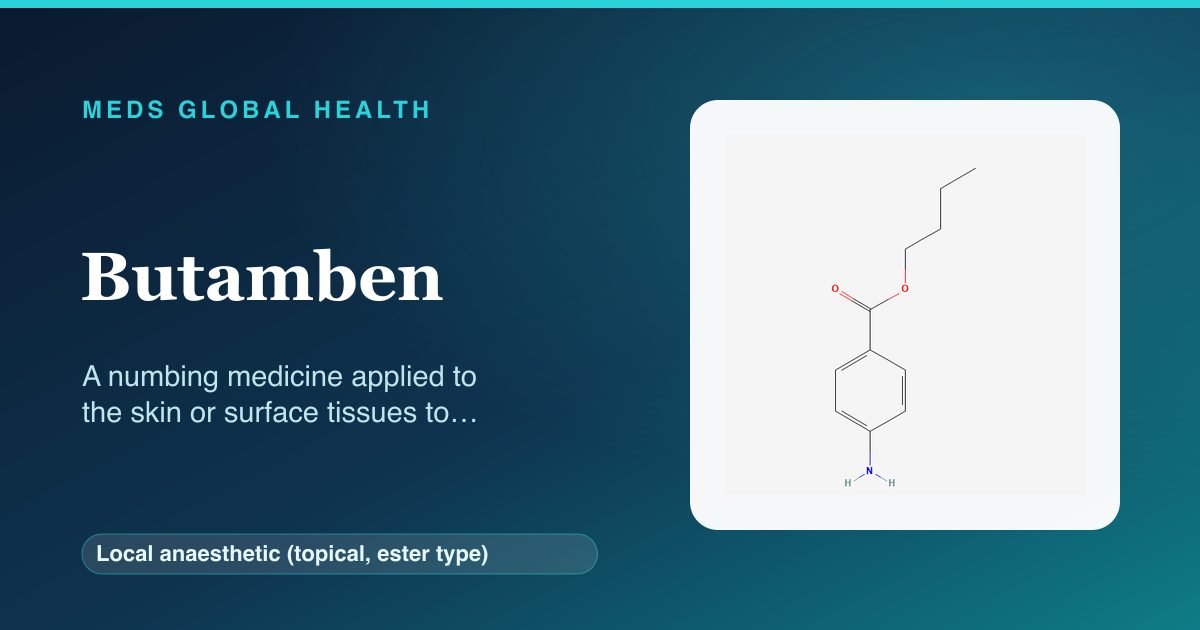
Butamben is a topical local anaesthetic, meaning it is a numbing medicine designed to be put on the surface of the body rather than swallowed or injected. It belongs to the ester group of local anaesthetics and is used to relieve pain and discomfort on the skin or on mucous membranes, the moist surface tissues of the body. By numbing only the area it is applied to, it can ease soreness or minor pain without affecting the rest of the body. It is used for short-term, surface relief and is applied as a cream, ointment or similar preparation to the affected area.
How it works
Butamben works by blocking the tiny electrical signals that nerves use to send pain messages to the brain. When it is applied to the skin or a surface tissue, it temporarily stops the nerve endings in that area from passing on the sensation of pain, so the area feels numb. Because it acts only where it is applied and is not meant to be absorbed in large amounts, its effect is local and temporary, wearing off as the medicine clears from the tissue. Keeping it to the recommended area and amount helps make sure it works as intended and limits how much is absorbed into the body.
Company & origin
A topical local anaesthetic of the ester type used to numb the skin and surface tissues to relieve pain or discomfort.
Practical use
How to take Butamben
General, dose-free guidance — always follow your prescriber's and the leaflet's specific instructions.
- Apply it only to the area you have been told to treat, using the amount directed.
- Use it on the surface of the skin or tissue as instructed, not over large or broken areas unless advised.
- Avoid getting it in the eyes or other sensitive areas unless specifically told to.
- Stop using it and seek advice if you get spreading redness, itching, swelling or a rash where it is applied.
- Seek urgent help if you notice blue-tinged lips, breathlessness or unusual tiredness after using it.
Weighing it up
Advantages & disadvantages of Butamben
Advantages
- Numbs a specific area to relieve surface pain and discomfort.
- Acts only where it is applied, with limited effect on the rest of the body when used correctly.
- Available as a simple topical preparation for short-term use.
Disadvantages
- Can cause local skin reactions, including allergic rashes, more often as an ester-type anaesthetic.
- Provides only temporary, surface relief and wears off.
- Very rarely, can contribute to methaemoglobinaemia, especially if overused or used on broken skin.
Practical use
Good to know
The main thing to know about butamben is that it is for surface use only, to numb a specific area, and works best when used on intact skin or surface tissue and in the amount directed. As an ester-type local anaesthetic, it is a little more likely than some others to cause local allergic reactions, so any spreading redness, itching, swelling or rash where it is applied should be taken seriously and the medicine stopped. A rare but important safety point is that local anaesthetics like this can, very occasionally, cause methaemoglobinaemia, a blood problem that lowers how well the blood carries oxygen; this is more likely if a lot is used or it is applied to large or broken areas, and signs such as blue-tinged lips, breathlessness or unusual tiredness need urgent medical attention. Using only the amount and area directed reduces these risks.
Who should not take it / use with caution
- People who have had an allergic reaction to butamben or other ester-type local anaesthetics should not use it.
- It should not be applied over large, broken or badly damaged areas of skin unless specifically advised.
- It is used with caution in young children and in anyone prone to methaemoglobinaemia, under guidance.
Monitoring
- Watching the treated area for signs of an allergic or local reaction.
- Being alert to rare signs of methaemoglobinaemia, especially with larger or repeated use.
- Reviewing whether the numbing is still needed and stopping when it is not.
Side effects
- Local reactions such as redness, stinging or irritation where it is applied.
- Allergic skin reactions, including itching, rash or swelling at the site.
- Very rarely, methaemoglobinaemia, a blood problem causing blue-tinged lips, breathlessness or tiredness.
Key interactions
- Using it together with other numbing medicines can add to the small risk of methaemoglobinaemia.
- Care is needed if combined with other medicines known to affect this blood problem.
- Tell your prescriber about other creams or medicines you use on the same area.
Available as: Creams, ointments or similar preparations applied to the skin or surface tissues.
Answers
Butamben: frequently asked questions
What is butamben used for?
It is a topical local anaesthetic used to numb the skin or surface tissues and relieve pain or discomfort in the area it is applied to.
Does it affect my whole body?
No. When used correctly it acts only where it is applied, numbing that area temporarily without much effect on the rest of the body.
Why might it cause a rash?
As an ester-type local anaesthetic it is a little more likely to cause local allergic reactions, so a spreading rash, itching or swelling means you should stop using it and seek advice.
What is methaemoglobinaemia?
It is a rare blood problem that lowers how well the blood carries oxygen; signs such as blue-tinged lips, breathlessness or tiredness after using it need urgent medical attention.
Can I put it on broken skin?
It should not be used over large or broken areas unless specifically advised, as this can increase how much is absorbed and the risk of side effects.
The wider class
About Local anaesthetic (topical, ester type)
Butamben belongs to the local anaesthetic (topical, ester type) class. For how the class as a whole works, its shared safety principles and monitoring, see the full guide.
Browse by body system
Authoritative sources
- BNF
- NICE CKS
Building a medicines information resource?
We create evidence-led, dose-free drug and formulary references for teams.