Also called dibucaine; a strong numbing medicine for piles and the skin
Cinchocaine
A strong numbing medicine used in piles creams and suppositories and some skin products.
What is Cinchocaine?
Cinchocaine, also known as dibucaine, is a potent local anaesthetic used on the surface of the body, most often in creams and suppositories for haemorrhoids (piles) and in some skin preparations. It works by numbing the area to relieve pain, itching and discomfort. Because it is a strong local anaesthetic, the main concerns are local reactions where it is applied and, if a lot is used or it is applied to broken skin or large areas, the small risk of it being absorbed enough to cause more widespread (systemic) effects. It should be used on the area and for the time directed, and not overused.
Education and reference only. This is a plain-language guide to Cinchocaine — it deliberately contains no doses. Doses depend on the person, the brand and the reason for treatment, and belong with your prescriber. Always check the BNF, the product labelling (SmPC) and follow medical advice.
What it is
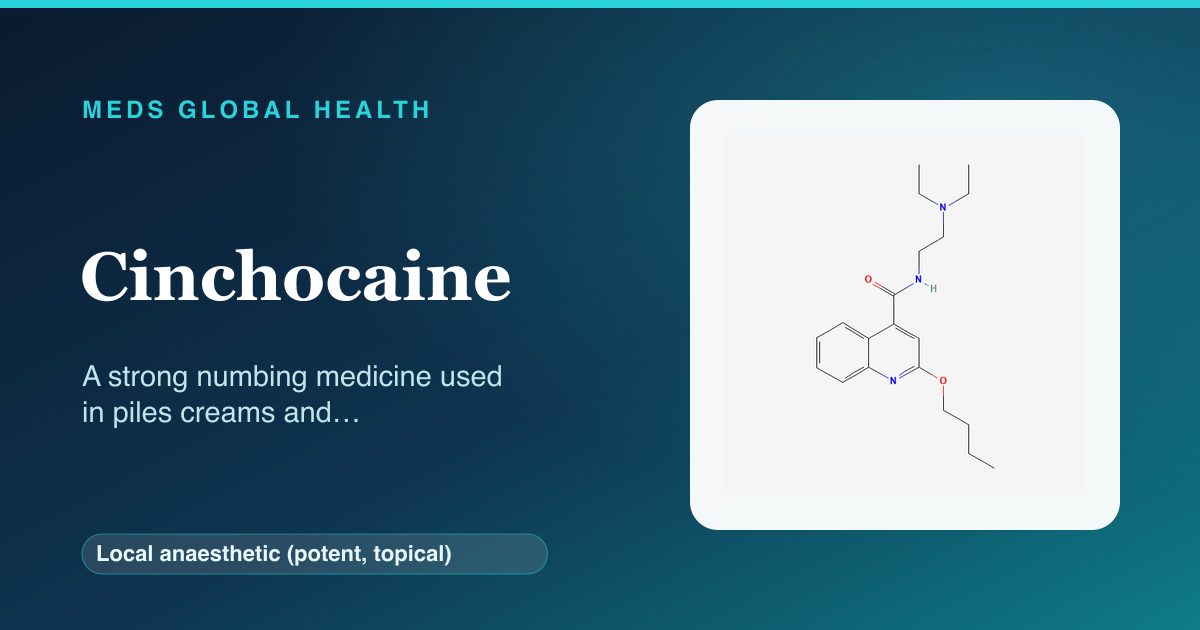
Cinchocaine, also called dibucaine, is a local anaesthetic, a medicine that numbs an area to relieve pain. It is one of the more potent local anaesthetics and is used on the surface of the body rather than by injection in everyday products. It is most familiar as an ingredient in creams, ointments and suppositories for haemorrhoids, where it eases the pain, itching and soreness, often combined with other ingredients such as a steroid. It is also used in some skin preparations. It is meant for short-term, surface relief of a specific area and is not intended to be swallowed or used in large amounts.
How it works
Cinchocaine works by blocking the nerve signals that carry sensations such as pain and itching from the skin or surface tissues to the brain. When it is applied to an area, such as around the back passage in piles, it temporarily numbs the nerve endings there so the area feels less sore and itchy. Because it is a strong local anaesthetic, it is effective in small amounts, but this potency also means it is important not to overuse it: applying too much, or using it on broken skin or over large areas, can let more of it be absorbed into the body, where it could cause more widespread effects.
Company & origin
A potent topical local anaesthetic, also called dibucaine, used in haemorrhoid (piles) creams and suppositories and in some skin preparations.
Practical use
How to take Cinchocaine
General, dose-free guidance — always follow your prescriber's and the leaflet's specific instructions.
- Use it only on the area you have been told to treat, applying the amount directed and no more.
- Use it for the short period advised, as products containing it are usually not for long-term use.
- Avoid applying it to large areas or broken skin unless specifically told to, to limit how much is absorbed.
- Follow the instructions for creams or suppositories carefully, including how often to use them.
- Stop using it and seek advice if you get spreading redness, itching, swelling or a rash where it is applied.
Weighing it up
Advantages & disadvantages of Cinchocaine
Advantages
- A strong, effective numbing medicine that relieves pain and itching, including in piles.
- Acts where it is applied to ease soreness and discomfort.
- Available in convenient forms such as creams, ointments and suppositories.
Disadvantages
- Can cause local reactions such as stinging, redness or an allergic rash.
- Being potent, it can cause systemic effects if overused or applied to broken skin or large areas.
- Usually only suitable for short-term use, especially in combined piles products.
Practical use
Good to know
The key point with cinchocaine is that it is a potent local anaesthetic for surface use, so a little goes a long way and it should be used only on the area and for the length of time directed. For piles, it is usually used short-term, because long-term use of the products it is in (often combined with a steroid) is not recommended. Because it is strong, the main safety concern beyond local irritation is that overusing it, or applying it to broken skin or large areas, can let enough be absorbed to cause systemic effects, so the directions on amount and duration matter. Local reactions such as stinging, redness or an allergic rash can occur, and any spreading or worsening reaction means it should be stopped. Keeping to the recommended use makes it both safe and effective.
Who should not take it / use with caution
- People who have had an allergic reaction to cinchocaine or related local anaesthetics should not use it.
- It should not be applied to large, broken or badly damaged areas of skin unless specifically advised.
- Combined products containing a steroid have extra cautions, including in certain infections, so follow advice.
Monitoring
- Watching the treated area for signs of irritation or an allergic reaction.
- Reviewing how long it is being used, as long-term use is usually not recommended.
- Being alert to signs that too much has been absorbed if it is overused.
Side effects
- Local reactions such as stinging, burning, redness or irritation where it is applied.
- Allergic skin reactions, including itching, rash or swelling at the site.
- Rarely, if too much is absorbed, more widespread effects such as dizziness or effects on the heart and nerves.
Key interactions
- Using it with other local anaesthetics can add to the amount absorbed and the risk of systemic effects.
- Combined products contain other ingredients, such as a steroid, which carry their own cautions.
- Tell your prescriber about other creams or medicines you use on the same area.
Available as: Creams, ointments and suppositories applied to the skin or back passage, often combined with other ingredients.
Answers
Cinchocaine: frequently asked questions
What is cinchocaine used for?
It is a potent local anaesthetic used to numb and relieve pain and itching, most often in creams and suppositories for haemorrhoids (piles) and in some skin preparations.
Is cinchocaine the same as dibucaine?
Yes, cinchocaine is also known as dibucaine; they are two names for the same potent local anaesthetic.
Why should I not overuse it?
Because it is a strong local anaesthetic, using too much or applying it to broken skin or large areas can let enough be absorbed into the body to cause more widespread effects.
How long can I use it for?
It is usually for short-term use; products containing it, especially those combined with a steroid, are generally not recommended for long-term use, so follow the directions.
What if it irritates the skin?
Local stinging or redness can occur; if you get spreading redness, itching, swelling or a rash, stop using it and seek advice.
The wider class
About Local anaesthetic (potent, topical)
Cinchocaine belongs to the local anaesthetic (potent, topical) class. For how the class as a whole works, its shared safety principles and monitoring, see the full guide.
Browse by body system
Authoritative sources
- BNF
- NICE CKS
Building a medicines information resource?
We create evidence-led, dose-free drug and formulary references for teams.