A topical local anaesthetic (also called amethocaine)
Tetracaine
A strong topical local anaesthetic used to numb the skin before needles and the surface of the eye for some procedures.
What is Tetracaine?
Tetracaine is a strong local anaesthetic used mainly on the surface of the body to numb it. As Ametop gel it is applied to the skin to numb it before needles, such as blood tests or drips, and is especially useful for children. Eye-drop forms are used to numb the surface of the eye for some examinations and minor procedures. It is applied by or under the guidance of trained professionals who use the right amount. As with all local anaesthetics, the main serious risk is if too much is absorbed into the bloodstream, so it is used on intact skin and not over large areas.
Education and reference only. This is a plain-language guide to Tetracaine — it deliberately contains no doses. Doses depend on the person, the brand and the reason for treatment, and belong with your prescriber. Always check the BNF, the product labelling (SmPC) and follow medical advice.
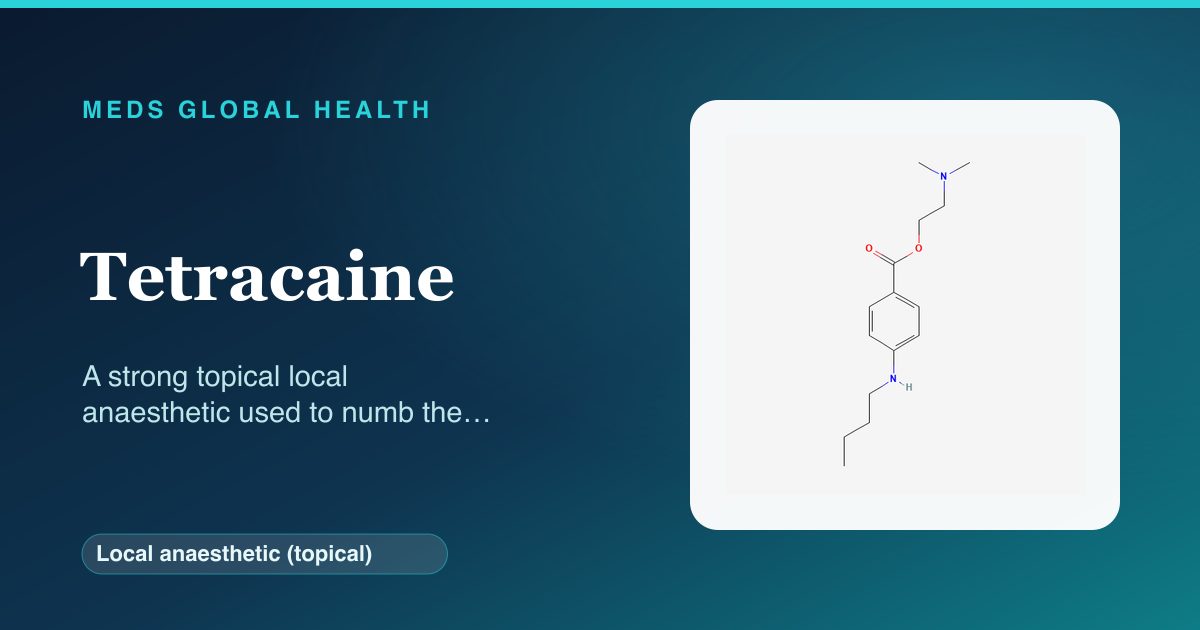
What it is
Tetracaine is a potent local anaesthetic used mainly topically, meaning on the surface of the body rather than by deep injection. As Ametop gel it is applied to the skin to numb it before a needle, such as a blood test, a drip or a vaccination, and it is widely used to make these more comfortable, especially for children. As eye drops it numbs the surface of the eye for some examinations and minor eye procedures. It is applied to the skin or eye, not taken by mouth.
How it works
Tetracaine blocks the electrical signals that nerves use to send pain messages, so the skin or eye surface it is applied to becomes numb. It is a strong, longer-acting topical anaesthetic, which is why a small, carefully measured amount on the skin can numb the area well before a needle. Feeling returns as it wears off. Because it is potent and absorbed through the skin, it is applied to intact skin in limited amounts to keep too much from reaching the bloodstream.
Company & origin
A strong topical local anaesthetic used in the UK to numb the skin before needles (Ametop gel) and the eye surface for some procedures.
Practical use
How to take Tetracaine
General, dose-free guidance — always follow your prescriber's and the leaflet's specific instructions.
- Ametop gel is applied to clean, intact skin over the chosen spot and covered with a dressing for the time advised before a needle, then wiped off.
- It is used on intact skin only, not on broken skin, and not spread over large areas, to limit how much is absorbed.
- For children, a parent or professional applies it to the planned needle site ahead of a blood test, drip or vaccination.
- Eye drops are placed in the eye by a professional to numb the surface for an examination or minor procedure.
- After eye drops, protect the numb eye (do not rub it, and keep dust and grit out) until normal feeling returns.
- Tell the team about any past reaction to a local anaesthetic before it is used.
Weighing it up
Advantages & disadvantages of Tetracaine
Advantages
- A strong, effective way to numb the skin before needles, making blood tests, drips and vaccinations more comfortable.
- Especially useful for children, who often find needles distressing.
- Eye-drop forms quickly numb the eye surface for examinations and minor procedures.
Disadvantages
- It is potent, so the amount is limited and it must be applied only to intact skin, not broken skin or large areas.
- Can cause skin redness or mild itching where the gel is applied.
- The numbed eye must be protected after eye drops, as you would not feel grit or a scratch.
Practical use
Good to know
Tetracaine is a strong topical anaesthetic, so the amount is kept small and it is applied to clean, intact skin rather than broken skin or large areas, to avoid too much reaching the bloodstream and causing local anaesthetic systemic toxicity. Ametop gel is left on under a dressing for a while before a needle and then wiped off; it can cause some redness or mild itching at the site, which is usually harmless. Eye drops sting briefly and numb the eye surface, and because the eye stays numb for a while it must be protected (avoid rubbing it and keep dust out) until normal feeling returns, since you would not feel a scratch. Anaesthetic eye drops are for single, supervised use only and are never given to take home, because repeated use can slow healing and harm the surface of the eye. Tell the team about any previous reactions to local anaesthetics.
Who should not take it / use with caution
- People who have had a serious allergic reaction to tetracaine or similar local anaesthetics should not receive it.
- It should not be applied to broken or inflamed skin, or over large areas, because more would be absorbed.
- It is used with extra care in very young infants, with the amount and area strictly limited.
Monitoring
- Checking the skin where the gel is applied for redness or irritation.
- Protecting and checking the numbed eye after eye drops until feeling returns.
- Watching, with larger applications, for any signs that too much has been absorbed.
Side effects
- Skin redness, mild swelling or itching where the gel is applied, which usually settles.
- A brief sting from eye drops, with temporary numbness of the eye surface.
- Rarely, if too much is absorbed, signs of systemic toxicity such as dizziness or a metallic taste needing attention.
Key interactions
- Using it with other numbing products can add to the total amount absorbed.
- Other local anaesthetics applied at the same time can add to its effects, so the total is limited.
- Few important interactions occur with topical use, but tell your team what else you use.
Available as: Numbing gel for the skin (Ametop) and anaesthetic eye drops for the surface of the eye.
Answers
Tetracaine: frequently asked questions
What is tetracaine used for?
It is a strong topical local anaesthetic used mainly to numb the skin before needles (as Ametop gel) and to numb the surface of the eye for some examinations and minor procedures.
Is Ametop gel good for children before blood tests?
Yes, it is widely used to numb the skin before needles and is especially helpful for children who find blood tests or drips distressing.
Can I put it on a cut or rash?
No, it should be applied only to clean, intact skin, not broken or inflamed skin, because more would be absorbed into the body.
Why must I protect my eye after the drops?
The numbed eye cannot feel grit or a scratch, so you should avoid rubbing it and keep dust out until normal feeling returns.
How long does it take to work?
The gel is usually left on under a dressing for a while before a needle so the skin is numb; your team will tell you how long to leave it.
The wider class
About Local anaesthetic (topical)
Tetracaine belongs to the local anaesthetic (topical) class. For how the class as a whole works, its shared safety principles and monitoring, see the full guide.
Browse by body system
Authoritative sources
- BNF
- NICE CKS
Building a medicines information resource?
We create evidence-led, dose-free drug and formulary references for teams.